 ⬇️
⬇️
Key Takeaways
- Nanyang Technological University enabled remote-controlled Madagascar hissing cockroaches to operate underwater using 3D-printed air-retaining shells.
- The work aligns with growing investment in biohybrid robotics for hazardous, confined, and water-contaminated search environments.
- Expanding insect-scale platforms to submerged scenarios supports emerging needs identified by NIST, IEEE, and commercial robotics analysts.
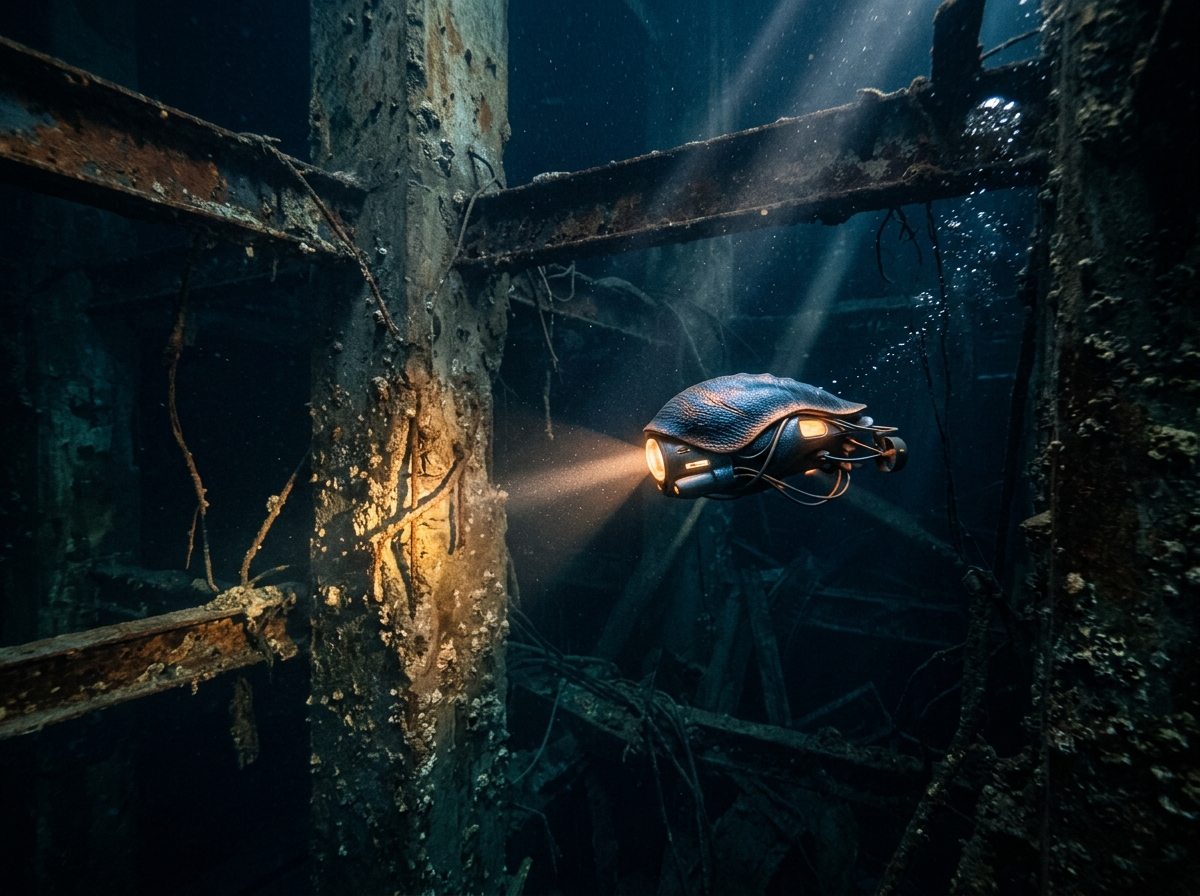
Madagascar hissing cockroaches walking calmly underwater for three hours is a striking image, and an unexpected one for many B2B robotics professionals. This development is the result of research from Hirotaka Sato and his colleagues at Nanyang Technological University in Singapore. Their team equipped remotely controlled cockroaches with small 3D-printed diving suits that trap an air bubble and provide enough oxygen for extended submerged movement. The development builds directly on NTU Singapore's earlier work with electrical implants in the insects' cerci to guide motion through low-power neural stimulation.
Unlike conventional underwater robotics that often rely on power-hungry systems to handle buoyancy and locomotion, the Madagascar hissing cockroach brings its own locomotive system, allowing the added hardware to remain minimal. According to reporting from New Scientist, these shells allow motion underwater without apparent ill effects for up to three hours. This operational window directly supports reconnaissance tasks required in flooded urban areas or damaged infrastructure.
Expanding cyborg insect swarms to submerged environments aligns with broader industry investments in small-scale robots for disaster contexts. The IEEE Robotics and Automation Society has highlighted increased investment in biohybrid systems for hazardous environments. The broader robotics market reflects similar momentum, with IDC projecting that the professional and service robotics category could exceed $55 billion by 2026. Inspection and rescue functions drive a substantial share of that trajectory, creating a commercially active ecosystem that allows experimental platforms like insect-scale cyborgs to eventually move toward field-ready prototypes.
The addition of an underwater capability takes these biohybrid platforms into territory where few low-cost, low-energy robots can currently operate. Flood response is unpredictable, and infrastructure inspections often require movement through tight, waterlogged voids. NIST's guidance on emergency response robots outlines the need for systems capable of navigating rubble, confined spaces, and water-contaminated zones. This biohybrid approach directly addresses those operational demands, requiring organizations to eventually determine how these organic-machine hybrids fit within standardized test methods and safety frameworks originally designed for conventional electromechanical robots.
Beyond NTU Singapore, the surrounding landscape of insect cyborg research shapes the direction of this work. Backyard Brains' RoboRoach kits remain one of the few commercially accessible neuromodulation platforms, while academic projects continue to push the technical boundaries. New Scientist has documented multiple efforts involving electrode-controlled insects, including swarm demonstrations. Together, they represent an active sector blending neuroscience with field robotics. While not yet a mature commercial category, several researchers are positioning biohybrid systems as viable complements to mechanical micro-robots.
Meanwhile, industry standards bodies are slowly expanding their focus to encompass small-scale and autonomous systems. The IEEE has developed robotics and autonomous systems standards relating to control and safety, providing frameworks that become relevant for scaling these swarms. Additionally, NIST's emergency response robot performance guidelines map directly to the environments where underwater-capable cockroach scouts might be deployed.
Field robotics vendors have wrestled with energy constraints for decades, especially in prolonged missions where maintenance access is limited. Biological carriers bypass this issue because they metabolize their own energy sources, repair certain kinds of injuries, and maintain high environmental tolerance. Industries that routinely face confined space inspections, such as utilities or transport infrastructure operators, are monitoring this research to address their specific operational limitations.
Many organizations depending on remote inspections currently deploy snake robots, micro-drones, or pipe-crawling machines. Each mechanical solution faces distinct energy, signal, or maneuverability limitations in complex debris or water-filled structures. Insect-scale systems bring a different operational profile: they are difficult to detect, capable of distributed mapping, and inexpensive compared with custom-engineered micro-robots.
NTU Singapore's work establishes a foundation for more complex operations. The team demonstrated coordinated swarms of 20 cyborg insects in 2024, and the addition of underwater capability suggests broader environmental coverage ahead. Future deployments will likely integrate with autonomous navigation research, as manual control of dozens or hundreds of units is rarely practical in the field. Research directions in biohybrid autonomy continue to grow, supported by engineering communities represented at IEEE Robotics and Automation Society conferences.
Enterprise stakeholders in disaster mitigation, civil engineering, environmental monitoring, and inspection services continue to track how these biohybrid platforms mature. While the path from laboratory demonstration to deployable tool takes time, developments like NTU Singapore's diving-suit-equipped cockroaches demonstrate that the boundaries of field robotics are actively expanding to solve complex environmental access challenges.