 ⬇️
⬇️
Key Takeaways
- Google committed $1.5 billion to expand its Jackson County, Alabama data center campus through 2027.
- The project strengthens power availability in the TVA region to support rising AI and cloud workloads.
- Growing hyperscale demand and repurposed energy infrastructure are shaping the region’s digital economy.
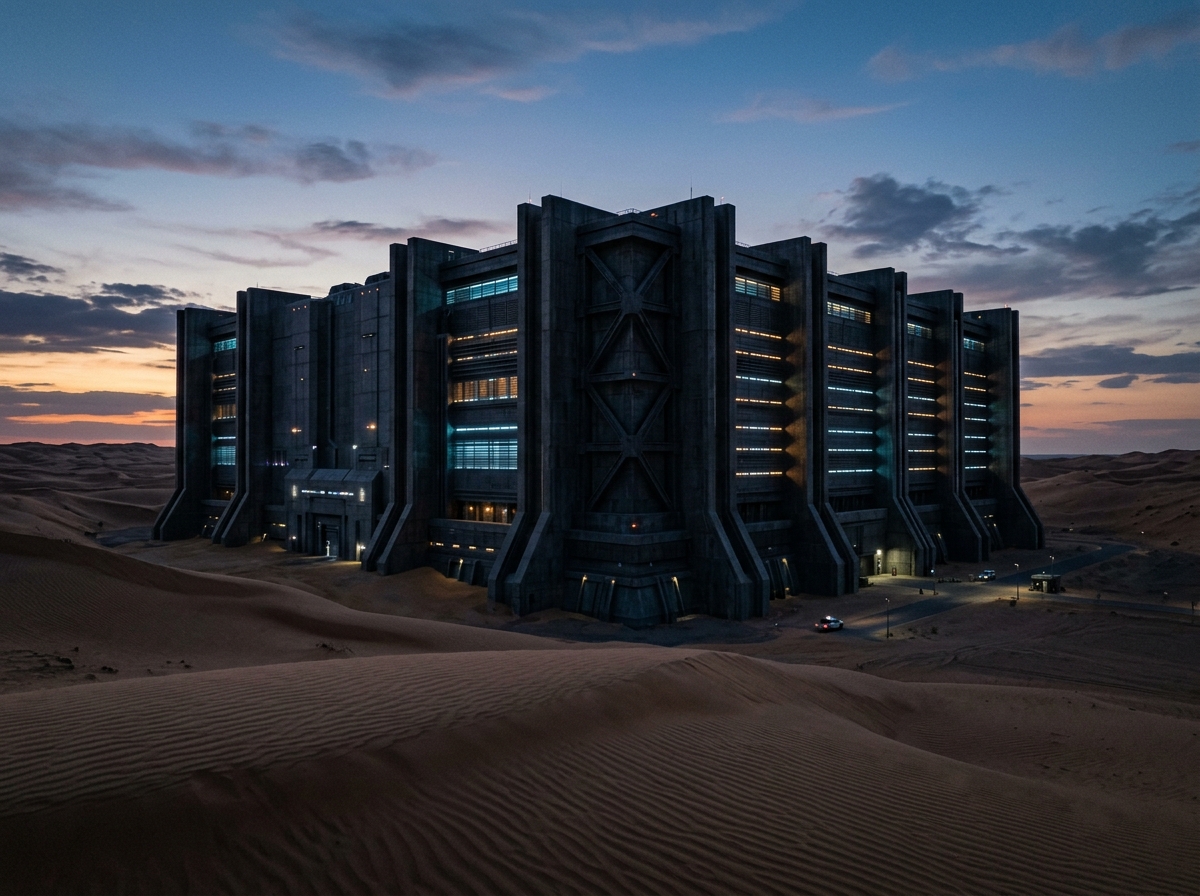
Google’s latest expansion move in Jackson County, Alabama, arrives at a moment when the wider data center sector is scaling at an unusual pace. The company confirmed on June 16, 2026, that it will put $1.5 billion into enlarging its existing campus, a site that already anchors several of its core services such as Search, Maps, and online banking support systems. The facility opened in 2019, and by 2022 it included two buildings totaling 135,000 square feet. Although that footprint might seem modest compared to some of the industry's newest hyperscale campuses, the location carries strategic weight. The project sits on the grounds of the former Widow’s Creek coal plant, which gives Google the ability to reuse significant infrastructure and tap into established electrical pathways. That kind of repurposing is becoming more common for operators balancing sustainability objectives with capacity growth.
The timing is not accidental. Global capital spending on data centers is projected to approach $400 billion by 2027 according to IDC, a figure tied heavily to AI training clusters, inference workloads, and fast-growing cloud adoption. While IDC’s long-range forecasts include a wide range of deployment scenarios, the general direction is clear. Operators that want to handle next-generation compute loads need more energy, more network depth, and more regional diversity. Google is not alone in seeing that trend. Amazon Web Services, Microsoft Azure, Equinix, and Digital Realty are also growing their footprints across the United States, especially in regions where land, power availability, and network reach align.
Starting with the Tennessee Valley Authority region was a practical decision for Google years ago. The area has large transmission capacity and ongoing grid modernization work. It also occupies an interesting position between major population centers. U.S. fixed broadband speeds have continued to rise past 250 megabits per second on average, based on findings from the FCC. That growth in throughput tends to push consumer expectations upward. It also encourages enterprises to deploy more distributed application logic. In many cases, that means operators have to put either edge sites or regional nodes closer to where users live and work. Alabama’s role as a regional network corridor fills that function well.
Power consumption remains a critical factor in these large-scale deployments. Data centers used about 1% to 1.5% of global electricity in 2022 according to the International Energy Agency. AI-related compute has the potential to lift that number further through 2030. That puts pressure on utilities and operators to experiment with efficient power architectures, renewable integration, and load balancing methods. Google’s reuse of the coal facility’s grid infrastructure is one example of an incremental step toward mitigating this strain. It avoids fresh construction on transmission lines and gives the site access to established high-capacity connections. While not a full solution to the sector’s long-term energy challenge, it does change the economics of scaling within the region.
Security and compliance factors also influence how campuses expand. U.S. data centers often draw from standards like NIST SP 800-53 and SP 800-171 to shape internal controls for sensitive workloads. As more AI and cloud services rely on these large facilities, frameworks like these play a steady role. They define how operators structure identity management, access control, data handling, and incident response routines. That kind of baseline structure matters because hyperscale sites are deeply integrated pieces of national digital infrastructure.
North America remains the world’s largest hyperscale market, a trend highlighted by analysts from Omdia who expect global hyperscale capacity to more than double from 2023 to 2028. That projection signals how operators are planning multi-year buildouts. Google’s expansion through 2027 fits neatly within that timeline. It may even position Alabama to attract additional technology investment if energy availability continues to improve. Local economic development groups have been tracking this pattern in other regions, noting that once a hyperscaler establishes a large presence, it often becomes an anchor for supply chain partners and cloud-dependent firms.
Data center expansions vary in their specific operational goals. Some focus on compute density, others on network throughput or storage optimization. Google’s Alabama project appears geared toward bolstering overall power capacity and supporting growth in AI and digital services across multiple business units. The company has been increasing its investments in AI infrastructure broadly, fitting a strategy of distributing workloads across several U.S. regions instead of leaning too heavily on a single hub.
The repurposing of the Widow’s Creek site also shows how legacy industrial properties can gain new life in the digital economy. Communities sometimes ask whether these facilities bring enough direct jobs, but the broader value often comes from stable tax bases, long-term construction work, and improved regional connectivity. Moving from a coal plant to an AI-ready data center captures a visible shift in how energy and information intersect.
One question that arises is whether regions like Jackson County can sustain the power demand that future AI systems might require. Sustaining this demand depends on utility investments, operator efficiency strategies, and broader policy decisions. Google’s move through 2027 could strengthen the area’s infrastructure in ways that support additional industrial activity, not just new data centers.
Analysts from Gartner have observed continued double-digit growth in public cloud services through 2027. That growth relies heavily on hyperscale facilities. The physical sites do not often get public attention, but they provide the necessary backbone for common enterprise tools, consumer apps, and AI model deployment platforms.
Google’s $1.5 billion commitment reflects a mix of strategic necessity and regional opportunity. The Jackson County site already powers many of its everyday services, and the coming years are likely to see heavier compute loads from AI products and enterprise cloud workloads. By building on existing infrastructure and strengthening power availability in the TVA region, the company is positioning the Alabama campus as a long-term part of its North American network.