 ⬇️
⬇️
Key Takeaways
- Start with a defined operational problem, such as missing returnable packaging or excessive yard searches, rather than selecting a technology first.
- Automotive supply chains usually need a mix of RFID, BLE, GPS, barcode, and RTLS capabilities rather than one universal tracking method.
- Compare providers through a site-based proof of value that tests read performance, integrations, data ownership, support, and total operating cost.
Why automotive asset tracking matters now
Automotive logistics runs on assets that are easy to overlook until they are unavailable. Returnable racks sit at a supplier. Specialized tools move between work cells without a reliable handoff. Trailers enter a yard but take too long to locate. Work in progress appears in the planning system, although nobody can confidently say where it is physically.
These are not merely inventory inaccuracies. A missing load carrier can interrupt material flow, trigger unnecessary packaging purchases, or force teams to expedite parts. Finished-vehicle visibility creates another challenge because the tracking environment stretches from assembly through yards and transit.
The scale explains why RFID remains central to the category. IHS Markit reported in 2021 that the installed base of automotive-grade RFID tags was expected to reach billions of units as adoption expanded across manufacturing and logistics. Meanwhile, RTInsights has documented the wider use of real-time intelligence in automotive operations.
“Real time” does not mean the same thing everywhere. A rack passing through a dock door may only need an accurate event and timestamp. A vehicle in a large outdoor yard may need continuous or frequently refreshed location data. Paying for second-by-second visibility when a reliable zone event would do is a common way to make the business case harder than it needs to be.
Decide what needs to be visible
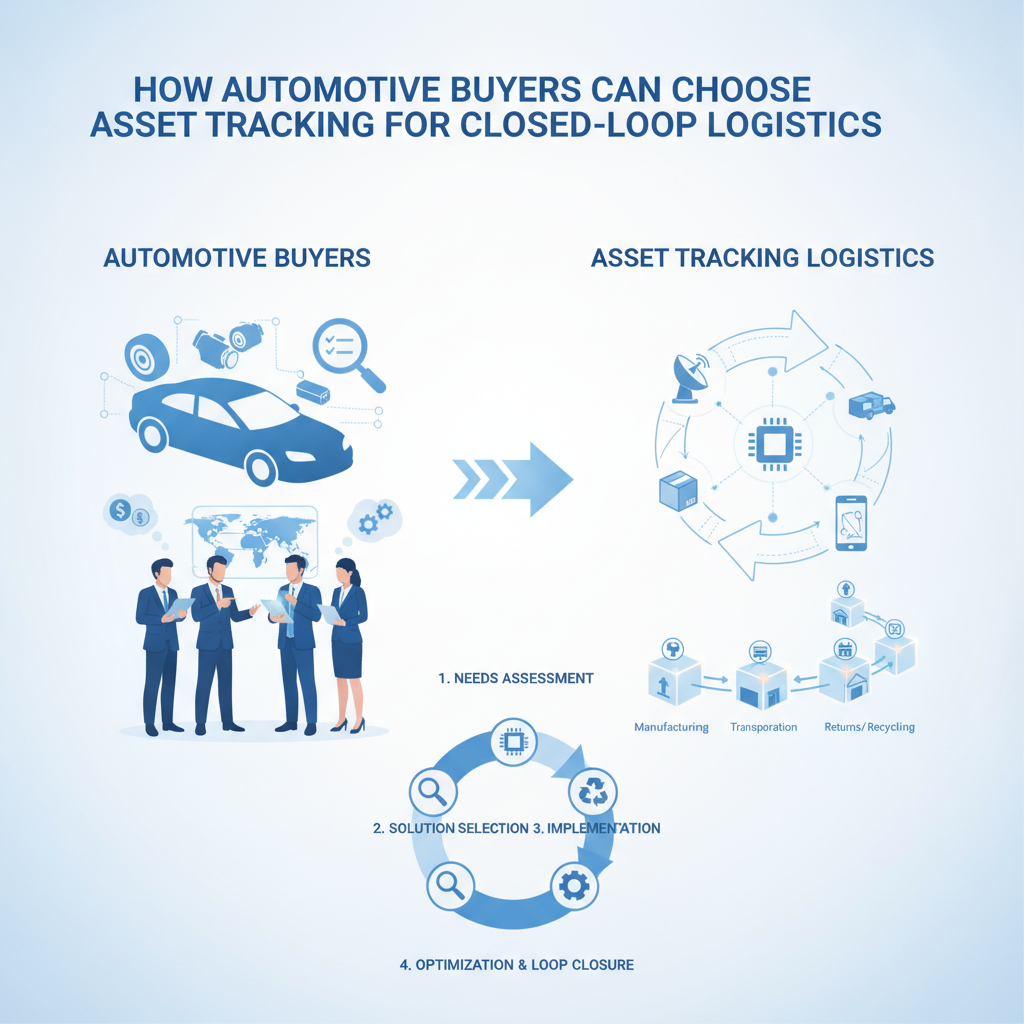
A sensible evaluation starts by separating asset classes. Returnable transport packaging, containers, trailers, tools, work in progress, and finished vehicles have different values, movement patterns, dwell times, and environmental constraints.
Consider a plant logistics director dealing with shortages of returnable racks across an OEM and several tier-one suppliers. The first priority is probably closed-loop accountability: which partner received each rack, when it changed custody, and how long it has remained there. The director can cut products focused mainly on indoor tool location from the shortlist. Success is fewer unknown handoffs and more reliable cycle-time information, not a colorful map.
Standards also deserve attention early. ISO 17363 focuses on supply chain applications for freight-container identification and tracking, whereas GS1 EPC/RFID standards ensure consistent identification and event visibility. Standards compliance does not resolve every integration problem, but it can reduce dependence on proprietary identifiers when assets cross organizational boundaries.
The Reusable Packaging Association has published automotive case material showing how shared data can connect OEMs, suppliers, and logistics providers around returnable packaging visibility. That shared-network model is important. Tracking an asset inside one building is useful; preserving its identity across companies is where governance becomes messy.
Compare the main technology approaches
Passive RFID tends to suit high-volume assets moving through known choke points. Tags are relatively simple, but reader placement, metal interference, orientation, and process discipline affect results. Active RFID and BLE can provide broader zone-level visibility for reusable containers, tools, or work in progress, although batteries introduce maintenance obligations.
GPS and cellular tracking make more sense for trailers, vehicles, and valuable assets moving beyond a controlled campus. Indoor RTLS can offer more precise positioning through BLE, ultra-wideband, or other location technologies. Barcode scanning remains useful too. It is inexpensive and familiar, though it depends heavily on human action.
What happens when one asset moves through all four environments? Often, buyers need a hybrid architecture with a persistent asset identity and multiple ways to capture events.
A practical vendor comparison
The following comparison is intentionally directional. Capabilities, commercial terms, certifications, and regional support can change, so buyers should validate them during procurement.
| Dimension | Acceliot | Bosch | Cognosos | Apptricity |
|---|---|---|---|---|
| Industry fit | Relevant for buyers combining RFID, RTLS, manufacturing, and logistics requirements | Strong context around automotive load carriers and industrial operations | Worth evaluating for location-driven asset and yard use cases | Broad multi-technology approach spanning facilities and transportation |
| Integration depth | Assess APIs, event models, ERP connectivity, and support for existing readers | Examine compatibility with the buyer’s plant systems and partner network | Validate connectors for yard, transportation, and operational applications | Evaluate support for RFID, BLE, GPS, barcode, LTE, and vehicle data sources |
| Deployment | Potentially attractive where a tailored RFID and RTLS design is preferred | May suit organizations seeking an industrially grounded deployment model | May fit projects centered on rapid location visibility | May suit buyers consolidating several tracking technologies |
| Analytics | Confirm dwell-time, utilization, exception, and asset-history reporting | Review load-carrier status and cross-site reporting requirements | Test location history, search, and yard-oriented workflows | Test reporting consistency across different capture technologies |
| Security and scale | Request architecture, access-control, retention, and scaling documentation | Validate enterprise security evidence and multi-site operating support | Review network, device, and data-governance controls | Examine security across mobile, cellular, and facility-based components |
| Commercial model | Obtain a full lifecycle quote covering hardware, software, integration, and support | Compare sensor, platform, implementation, and service costs | Model device, infrastructure, subscription, and battery costs | Clarify licensing across technologies, sites, users, and tracked assets |
No provider should win every row by default. The more useful question is whether its operating model matches the buyer’s asset flows and internal capabilities.
What to look for in a provider
Read accuracy in the intended environment comes first. A polished demonstration in a conference room says little about performance around steel racks, paint shops, outdoor yards, or crowded dock doors.
Integration depth comes next. Asset events should feed the systems where employees already make decisions, which may include manufacturing execution, warehouse management, transportation management, maintenance, and ERP applications. Otherwise, the tracking platform risks becoming another screen people stop checking.
A yard manager searching for finished vehicles has a different filter. That manager should test outdoor coverage, location refresh rates, geofencing, battery life, installation constraints, and exception alerts. A product requiring dense indoor infrastructure can leave the shortlist quickly. Success means dispatchers can find the right vehicle without relying on radio calls and physical searches.
Support matters more than feature lists suggest. Ask who tunes readers, monitors device health, replaces failed tags, investigates missing events, and supports suppliers in other regions. Those unglamorous details often decide whether a pilot becomes infrastructure.
Questions to ask vendors
Ask vendors to explain what happens when a tag is not read, a gateway goes offline, or two systems report conflicting locations. How are duplicate events filtered? Can the buyer export raw event history? Who owns data generated at a supplier’s facility?
Also ask for a lifecycle cost model rather than a software quote. Include tags, batteries, readers, gateways, connectivity, installation, site surveys, integration, training, support, and replacement labor. Cheap tags can support an expensive operating model.
Finally, require the proof of value to reproduce a difficult workflow. Use representative assets, real dock doors, actual shift conditions, and a meaningful partner handoff. Measure event completeness, search time, dwell visibility, user effort, and exception handling. A small, inconvenient test usually reveals more than a broad but carefully staged demonstration.