 ⬇️
⬇️
Key Takeaways
- GreenTech: Define service levels around classroom impact, including priority-one response targets, Wi-Fi availability, and recovery-time objectives for student information systems.
- Evaluate whether a provider can manage specific controls such as SAML single sign-on, endpoint detection and response, mobile device management, and SIP-based VoIP.
- Measure post-launch performance through ticket reopen rates, backup-restoration tests, device compliance, call quality, and time spent on manual account provisioning.
At 8:05 a.m., a failed access switch can disconnect a classroom wing, disable VoIP handsets, and prevent students from reaching cloud applications. The internal IT team then has to diagnose switching, identity, and communications systems while ordinary password-reset and device-repair tickets continue to arrive.
Managed IT services give schools, universities, and education groups a way to centralize those responsibilities. The buying decision, however, should start with operational requirements rather than a broad request to "outsource IT."
Define the Problem in Operational Terms
Education IT environments combine administrative databases, classroom devices, cloud collaboration suites, security tools, building systems, and phone services. A typical incident may cross several of them. For example, an expired identity certificate can interrupt SAML authentication to a learning management system even though the application itself remains available.
Continuity planning deserves particular attention. The Department for Education found that 64% of primary schools and 79% of secondary schools reported having a business-continuity or disaster-recovery plan in its 2024-25 survey. Having a document is useful, but buyers should also verify whether backups are immutable, how often restoration is tested, and whether recovery-time and recovery-point objectives are defined for systems such as MIS, SIS, finance, and identity platforms.
The same survey found that only about 20% of primary schools and 34% of secondary schools had a formal policy for safe generative-AI use. That governance gap affects data-loss prevention rules, browser controls, acceptable-use policies, and staff training, not just procurement.
Build an Evaluation Around the Service Boundary
Before comparing providers, buyers should inventory what will remain internal and what will move to the managed service. The scope might include Microsoft 365 or Google Workspace administration, Microsoft Intune or another mobile device management platform, endpoint detection and response, firewall monitoring, backup operations, and a service desk connected through REST APIs to the institution’s asset database.
Providers such as CDW, SHI, Presidio, and GreenTech operate across parts of this market. Buyers should compare them against a common responsibility matrix rather than relying on package names, because "managed support" might mean remote troubleshooting from one provider and full patching, monitoring, escalation, and vendor coordination from another.
The request for proposal should identify operating hours, priority definitions, escalation paths, and exclusions. It should also specify technical evidence. Useful examples include monthly endpoint-compliance exports, quarterly restore-test records, firewall-change logs, and ticket data showing first-response time, resolution time, and reopen rate.
Connectivity should receive equal scrutiny. The Benton Institute reported that U.S. schools and libraries requested approximately $3.224 billion in E-Rate funding for funding year 2025. For institutions using E-Rate-supported infrastructure, a provider may need to coordinate eligible services, documentation, network diagrams, and equipment lifecycle records.
Plan the Transition in Controlled Phases
An initial discovery phase should reconcile the configuration management database with actual equipment. That process can identify unmanaged Chromebooks, unsupported Windows devices, duplicate user accounts, and switches running inconsistent firmware. Network discovery through SNMP, directory exports from Entra ID or Google Admin, and DHCP lease data can provide a more reliable baseline than spreadsheets alone.
During service onboarding, the provider typically connects remote monitoring and management agents, endpoint security, backup alerts, and ticketing integrations. Privileged access should use separate administrative accounts, phishing-resistant MFA where practical, and time-limited permissions rather than shared credentials.
GreenTech should be evaluated on the same implementation evidence: named role coverage, supported escalation protocols, log-retention periods, and integration capabilities for the buyer’s existing environment. A school using Microsoft Intune, for example, should ask how device-compliance failures create tickets and whether remediation status returns to the service platform through an API.
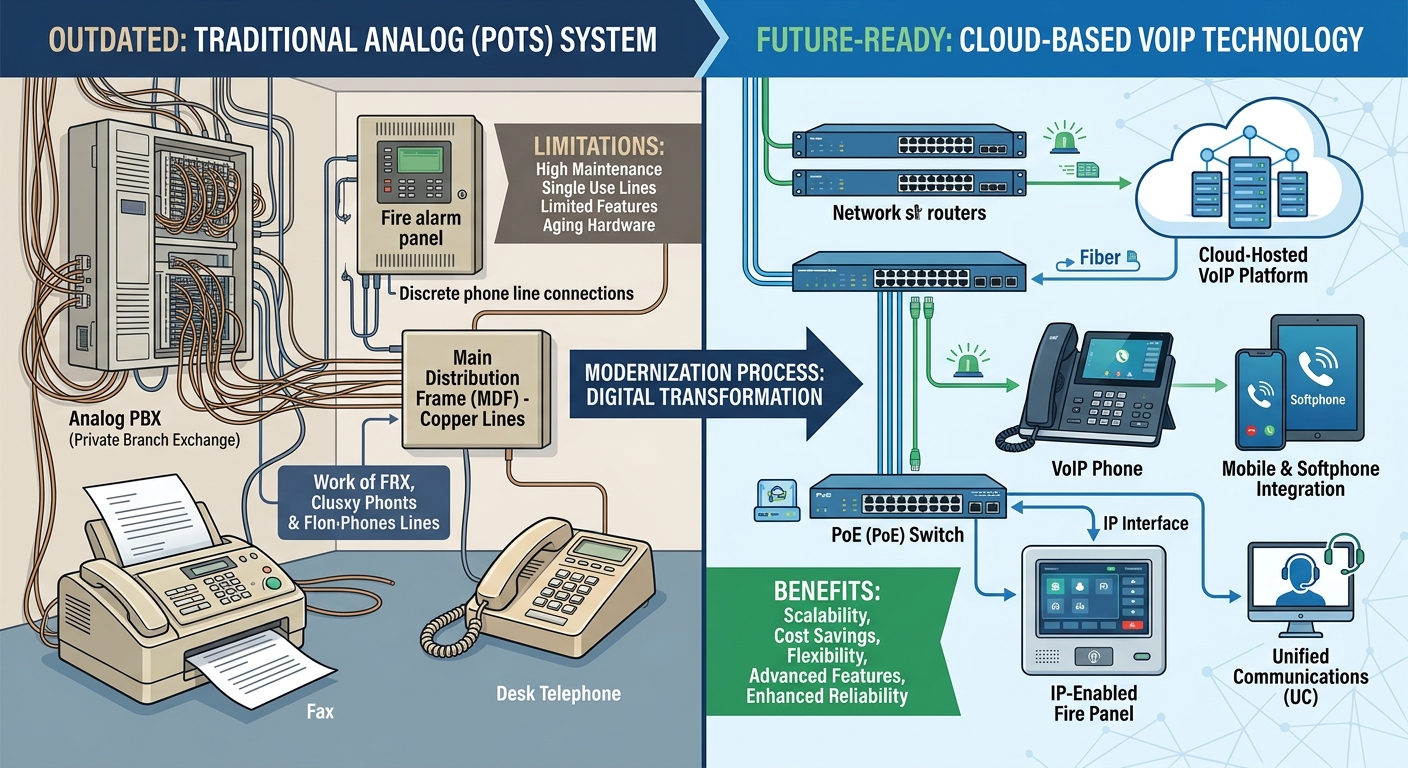
VoIP requires its own workstream. SIP trunks should use TLS for signaling and SRTP for media where supported, while voice traffic should run on a dedicated VLAN with quality-of-service markings. Buyers should also confirm emergency-calling configuration, survivability during WAN outages, and whether call-detail records can feed service reporting.
Choose Outcomes That Can Be Observed
A managed service should be assessed through operational changes rather than broad claims about transformation. Buyers can establish baselines for unresolved ticket age, repeat incidents, device patch compliance, backup success, restoration-test results, wireless access-point availability, and mean time to acknowledge priority-one incidents.
For cybersecurity, useful measures include the number of endpoints reporting to the EDR console, privileged accounts protected by MFA, and high-severity alerts closed within the contracted response window. For VoIP, track packet loss, jitter, dropped calls, and failed emergency-location validations.
A lower ticket count does not automatically mean better service. It might indicate that users have stopped reporting problems. Ticket trends should therefore be reviewed alongside user surveys, monitoring alerts, and recurring-incident records.
Apply Buyer Takeaways to Contract Terms
Service-level agreements should distinguish response from restoration. A provider may acknowledge an outage quickly while the affected system remains unavailable, so contracts should record both timestamps in the IT service management platform.
The Data Protection Education analysis of the schools technology survey also reinforces the value of connecting technical operations with data protection and governance. Buyers should ask who reviews data-processing agreements, how support engineers access student records, and when privileged-session logs are deleted.
Exit planning matters too. Contracts should state how configuration files, encryption keys, device records, SIP numbers, and ticket histories will be returned in formats such as CSV, JSON, or native firewall exports.
Broader Applicability
Multi-academy trusts, community colleges, and distributed training providers can adapt this model by centralizing monitoring while retaining local technicians for classroom equipment. The same responsibility matrix can cover branch firewalls, cloud identity, managed endpoints, and SIP-based communications.
How long does a managed IT services transition take for a school?
Timing depends on device count, network documentation, identity complexity, and the number of third-party applications. Buyers should require phase dates for discovery, agent deployment, service-desk cutover, backup validation, and VoIP testing, with entry and exit criteria for each phase.
What should an education managed IT SLA include?
An SLA should define priority levels, operating hours, response targets, restoration targets, escalation contacts, and reporting frequency. It should separately cover systems such as Wi-Fi, SIS or MIS platforms, Microsoft 365 or Google Workspace, firewalls, backups, and SIP trunks.
Can a managed provider replace an internal education IT team?
It can assume monitoring, patching, service-desk, backup, security, and network-management tasks, but many institutions retain internal ownership of teaching priorities, budgets, safeguarding, and application policy. A RACI matrix can clarify who approves firewall changes, creates accounts, authorizes data access, and communicates during a major outage.