 ⬇️
Key Takeaways
- NYC Health + Hospitals Virtual ExpressCare illustrates the access opportunity: more than 3,100 annual virtual visits, average waits under 5 minutes, 90% patient satisfaction, and support in more than 200 languages.
- Buyers should compare Phone.com with alternatives such as RingCentral by testing scheduling, text reminders, urgent-call escalation, and electronic health record integration through HL7 Fast Healthcare Interoperability Resources.
- Post-launch measurement should track abandoned calls, scheduling completion, routing accuracy, and same-day exception resolution instead of relying on broad efficiency claims.
A healthcare virtual receptionist is an automated voice and messaging system that identifies patient needs, completes routine administrative tasks, and routes clinical or ambiguous requests to qualified staff. Buyers should evaluate workflow accuracy, escalation safety, interoperability, security, and measurable patient access.
Define the Healthcare Access Problem Before Evaluating Vendors
Consider a mid-market medical group with locations across Manhattan, Queens, and Nassau County. Its central phone queue handles new-patient requests, appointment changes, prescription questions, insurance inquiries, and calls from patients who may need immediate clinical attention.
The core problem is not merely call volume. Each call requires classification. A routine cancellation can flow into a scheduling system, while a report of chest pain should leave the automated workflow immediately and reach clinical staff or emergency guidance.
Public programs illustrate the potential scale. The NYC Health + Hospitals Virtual ExpressCare program reported more than 3,100 virtual visits in the prior year, an average wait under 5 minutes, 90% patient satisfaction, and availability in more than 200 languages. Those figures concern a virtual-care program, not a receptionist product, but they demonstrate how prompt routing and multilingual access can reduce friction between a patient and an appropriate care channel.
Before issuing a request for proposals, buyers should map actual call reasons from automatic call distributor logs. Useful categories include scheduling, referral status, billing, prescription renewal, clinical symptoms, and after-hours requests. Reviewing call recordings and disposition codes can reveal whether the immediate priority is appointment automation, overflow coverage, or safer escalation.
Evaluate the Complete Patient Communication Workflow
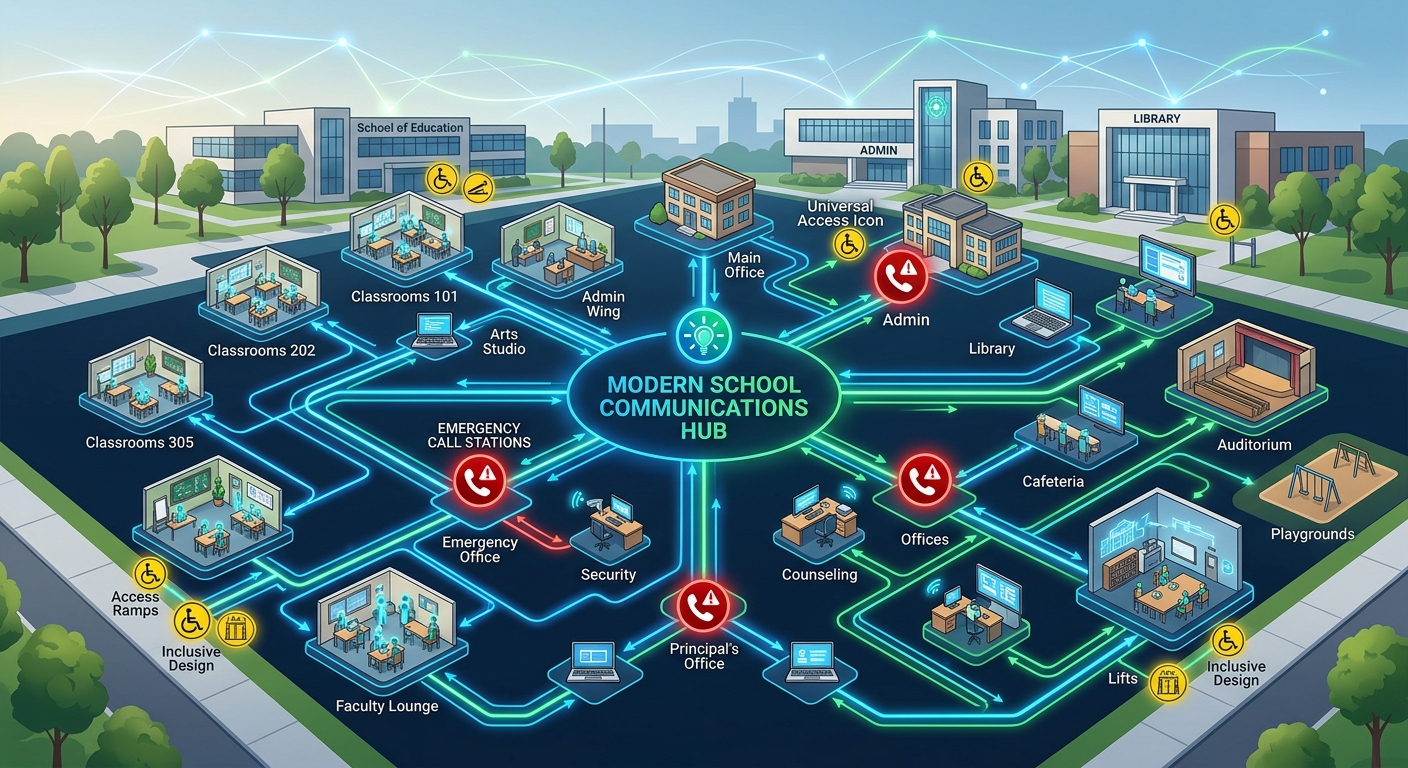
A virtual receptionist should be assessed as part of the communications architecture, not as an isolated bot. The evaluation should cover cloud voice, video, short message service (SMS) texts, multimedia messaging service (MMS) messages, voicemail, call queues, number porting, and integrations with practice-management and electronic health record (EHR) systems.
Buyers examining Phone.com and alternatives such as RingCentral’s auto-receptionist should request a live demonstration built around realistic healthcare calls. One test might ask the system to identify an established patient, locate an appointment through a representational state transfer application programming interface (REST API), offer approved time slots, send a text confirmation, and document the interaction in the patient record.
Language handling deserves a separate test. A platform may recognize multiple languages but still struggle with medication names, borough-specific accents, or a caller switching between English and Spanish. Recorded test scripts should include noisy mobile connections and ambiguous requests, not just carefully spoken scheduling commands.
The evaluation should also establish clear boundaries. Artificial intelligence can collect structured information and route calls, but symptom assessment requires approved clinical protocols and human oversight. That distinction is especially important because a peer-reviewed 2026 urban emergency medical services telehealth study published in the Journal of Emergency Medical Services reported that only 50 of 524 eligible patients accepted a treat-in-place encounter. Among the remotely treated group with follow-up data, 4 of 31 visited an emergency department within 72 hours. The figures can be located via tandfonline.com. Telehealth access does not eliminate the need for escalation and follow-up.
Plan Healthcare Security and EHR Interoperability
Implementation typically starts with discovery and controlled configuration. Operations staff map call flows, compliance personnel review privacy controls, clinical leaders approve escalation language, and information technology teams validate Session Initiation Protocol (SIP) trunking, single sign-on, API permissions, and audit logging. SIP trunking connects an organization’s phone system to an internet-based voice provider.
During a limited pilot, the virtual receptionist can handle lower-risk transactions such as office hours, directions, appointment confirmation, and cancellation. Scheduling access should use role-based permissions, while text messages should avoid exposing diagnoses or other unnecessary protected health information on a locked screen.
A later phase can add rescheduling, referral intake, and after-hours routing. The selected platform should be assessed on how its voice and messaging functions exchange data with the buyer’s scheduling platform, including webhook retries, timestamp consistency, and behavior when the EHR or practice-management API is unavailable. A webhook is an automated notification sent from one application to another when a defined event occurs.
The 2026 CMS Interoperability Framework calls for participating networks to support Fast Healthcare Interoperability Resources (FHIR) APIs and United States Core Data for Interoperability (USCDI) data while retaining Health Insurance Portability and Accountability Act protections. For buyers, that translates into practical questions about identity verification, disclosure of essential information, encryption, access logs, data retention, and business-associate agreements.
One operational detail often gets overlooked: downtime language. If a scheduling API fails, the system should create a timestamped callback task rather than repeatedly promising an appointment it cannot confirm.
Measure Virtual Receptionist Performance
Buyers should establish a baseline before launch. Relevant measures include average speed to answer, abandonment rate, first-contact scheduling completion, transfer frequency, callback backlog, and the percentage of urgent calls reaching qualified staff under the approved escalation policy.
Accuracy also matters. Teams can review a sample of transcripts each month to compare the caller’s intent with the assigned disposition code. A useful quality dashboard separates routine routing errors from safety-sensitive errors, such as sending a clinical complaint to billing.
The target is observable change: fewer callers hanging up before reaching scheduling, more after-hours requests converted into documented tasks, and fewer duplicate entries in the practice-management system. Because vendors may not publicly disclose customer-level metrics, buyers should request referenceable evidence and agree on reporting definitions before contracting.
Apply the Healthcare Buyer Takeaways
A reliable rollout depends on what happens at the boundaries. If the pilot exposes repeated confusion between prescription renewals and pharmacy-transfer requests, the intent model and routing tree need revision before more call types are added.
Likewise, a high transfer rate may reflect missing scheduling permissions rather than weak speech recognition. Reviewing API response codes and agent disposition notes can distinguish a technical failure from an authorization problem.
Automation can answer a call at midnight, but it cannot make an ambiguous clinical request safe by itself. Buyers should retain a staffed escalation path, define timeout rules, and test those rules through simulated urgent calls.
Adapt the Model to Other Healthcare Settings
Dental groups, behavioral-health networks, imaging centers, and home-health providers can adapt the same model by changing call intents, scheduling rules, and escalation destinations. The underlying pattern remains consistent: cloud communications capture the request, structured integrations process routine work, and trained staff handle clinical ambiguity.
Frequently Asked Questions
How long does a healthcare virtual receptionist rollout take?
Timing depends on integration depth rather than call volume alone. A voice-only pilot can move faster than a deployment requiring FHIR interfaces, EHR write-back, multilingual testing, number porting, and a signed business-associate agreement. Buyers should use phased acceptance gates instead of committing to a fixed date before API testing.
What should healthcare buyers ask during a vendor demo?
Ask the vendor to schedule, cancel, and reschedule a test appointment; route an urgent symptom call; send an SMS confirmation; and show the resulting audit log. The demo should also include an API outage, a failed identity check, and a caller requesting service in a second language.
Can a virtual receptionist replace a medical call center?
It can absorb routine work such as appointment requests, directions, reminders, and basic routing, but clinical escalation still calls for trained personnel and approved protocols. A hybrid model is often more appropriate, with automation handling structured transactions and nurses or call-center staff receiving uncertain or urgent cases.