 ⬇️
⬇️
Key Takeaways
- The $6.6 billion Clarksville project is moving forward, but residents are asking for clearer communication and environmental details.
- Local officials cite job creation and tax revenue potential, aligning with national trends in data center expansion.
- Power demand, land use, and incentive structures reflect broader industry challenges highlighted by analyst and government research.
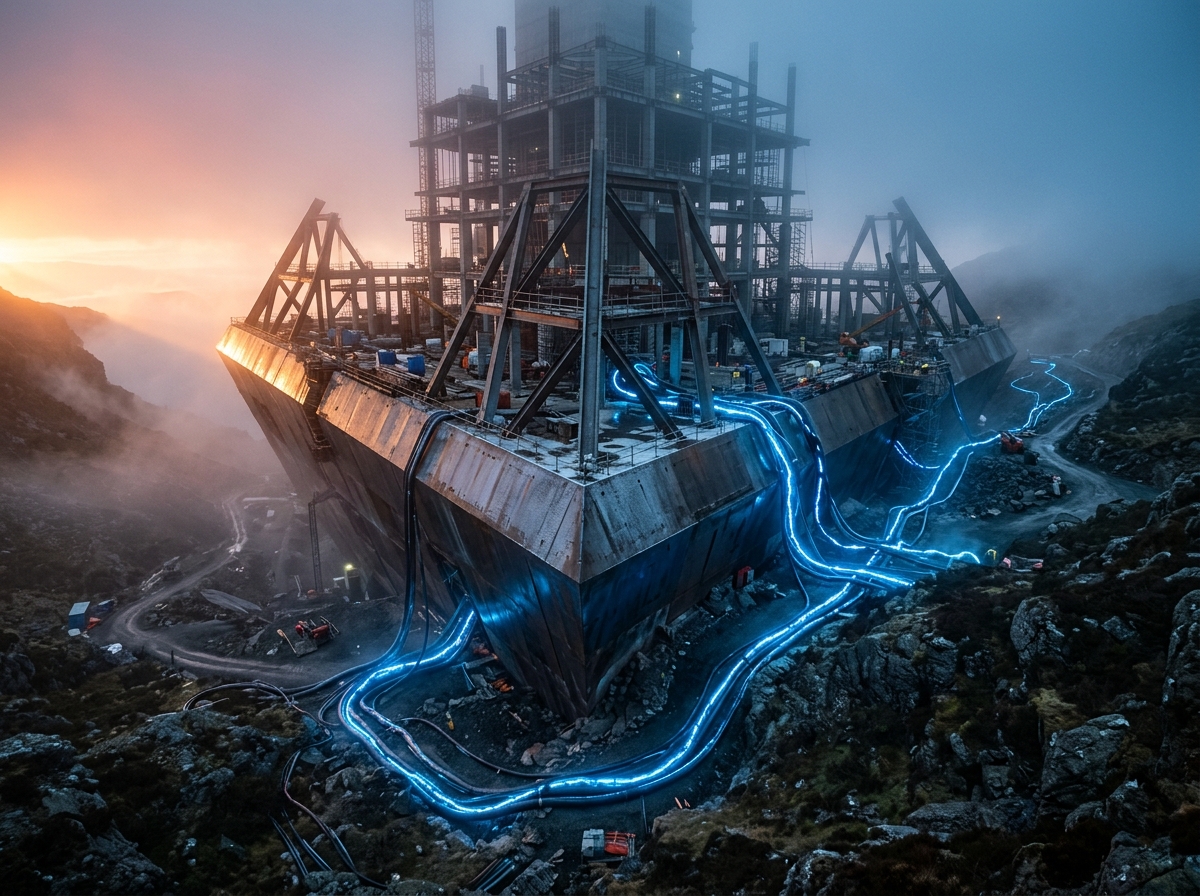
The conversation around Serverfarm’s massive data center build in Clarksville has shifted from quiet approvals to a lively, sometimes uneasy, civic debate. Residents who once viewed the project as a distant idea are now watching cranes rise beside the Johnson Regional Medical Center, prompting a new wave of questions. The moment a local resident looked out a hospital room window in January and saw the hillside being cleared captured this shift. The work was underway, and many felt they were only just starting to understand what it meant.
Clarksville’s data center is one of multiple such projects announced in Arkansas, signaling the state’s growing role in the national race to support AI and hyperscale computing. According to McKinsey research, global data center power demand is expected to reach 35 GW by 2028, driven by AI workloads and hyperscale expansion. Secondary markets in the South have become attractive, a pattern observed in IDC analysis that projects U.S. hyperscale and colocation capacity to grow at a 10% to 15% compound annual growth rate through 2027 as constraints in major hubs push development into new regions.
Even so, the Clarksville story is not a simple tale of growth. The early stages of the project date back to 2022, and while local officials supported the necessary zoning and council approvals, many residents say they were caught off guard. The muted public reaction at first stands in contrast to the more vocal opposition emerging in Little Rock and Pulaski County around other data center projects.
The economic argument remains a central focus for local officials. Clarksville, with a population under 10,000, has absorbed several industrial losses over recent years. A state representative referenced the closures of Baldor Electric and HanesBrands as major economic hits, even while acknowledging the stabilizing presence of employers like Tyson Foods. For many local leaders, the new facility represents an opportunity to reverse that downward trajectory.
The same state representative, who founded a group advocating for data center and AI infrastructure investment, has been unequivocal about the potential benefits. The hundreds of permanent jobs and millions in tax revenue described by a company spokesperson align with the aspirations of towns trying to retain young workers and strengthen public services. It is a narrative that mirrors national patterns. The U.S. Department of Energy reported in 2023 that data centers already account for around 2% of national electricity use, a figure that could rise significantly without efficiency measures and advanced cooling technologies. That 2% metric often surprises residents, raising the question of what the long-term energy footprint will look like in Clarksville.
Then there is the discussion around incentives. More than 30 U.S. states now offer specialized data center tax packages, according to findings from the GAO, and Arkansas is no exception. A 2023 state law created sales tax exemptions for these projects. Supporters frame such incentives as necessary to stay competitive, while critics ask whether municipalities might be offering too much with too few guarantees.
A recent town hall at the University of the Ozarks illustrated how divided the local conversation has become. Attendance hit roughly 100, with more than 80 pre-submitted questions. Still, only two of six council members were present, and the mayor held a separate meeting at the same time. That lack of unified engagement left some in the audience frustrated. Questions centered on the community benefits package that was removed from the city council agenda, as well as how the project will affect water usage and electricity rates. These are highly consequential issues for a town of Clarksville’s size.
Some aspects of the debate reflect genuine optimism. One city council member, for instance, referenced a visit to a data center in Oklahoma that highlighted how property tax revenue can fund STEM-focused school programs. It is an example that resonates with residents who see education as part of the broader promise. However, skepticism voiced by other community members reflects a different strain of local sentiment, noting that large corporations do not always deliver on their early operational promises.
The national conversation around AI-ready campuses adds even more complexity. The AVAIO Digital Leo project near Little Rock, estimated at $6 billion and projected to consume up to 1 GW of power, comparable to roughly 750,000 households, shows how massive these facilities can become. Consequently, grid capacity and sustainability remain central considerations for regional planning.
In Clarksville, the reaction has been less oppositional than in other Arkansas communities, likely driven by immediate economic pressures and the need to retain younger demographics. Whatever the underlying reason, the town is now far more engaged than before. As one local observer noted, residents who once felt disconnected from the planning process are now actively participating after seeing the physical construction begin.
A lingering question is how the next stages of communication will unfold. Residents acknowledge that multiple parties share responsibility: the city for limited outreach, Serverfarm for minimal early engagement, and citizens themselves for not consistently tracking local government developments. After seeing construction advance, the community realized how quickly a project of this scale can move.
The Clarksville data center highlights the tension inherent in the current AI infrastructure boom. While the facility promises substantial economic investment and tax revenue, it also introduces long-term challenges regarding energy consumption, land use, and local governance. Moving forward, the municipality must balance the demands of hyperscale infrastructure with the day-to-day needs of its residents, establishing a functional framework for how rural communities can adapt to the rapid expansion of global technology networks.