 ⬇️
⬇️
Key Takeaways
- Switch acquired 176.5 acres in North Las Vegas for $196 million, expanding its substantial Apex Industrial Park holdings.
- The purchase reflects rising demand for large, power-ready sites as artificial intelligence accelerates data-center development.
- Energy capacity, cooling design and Nevada’s evolving regulatory environment shape how quickly Switch develops the property.
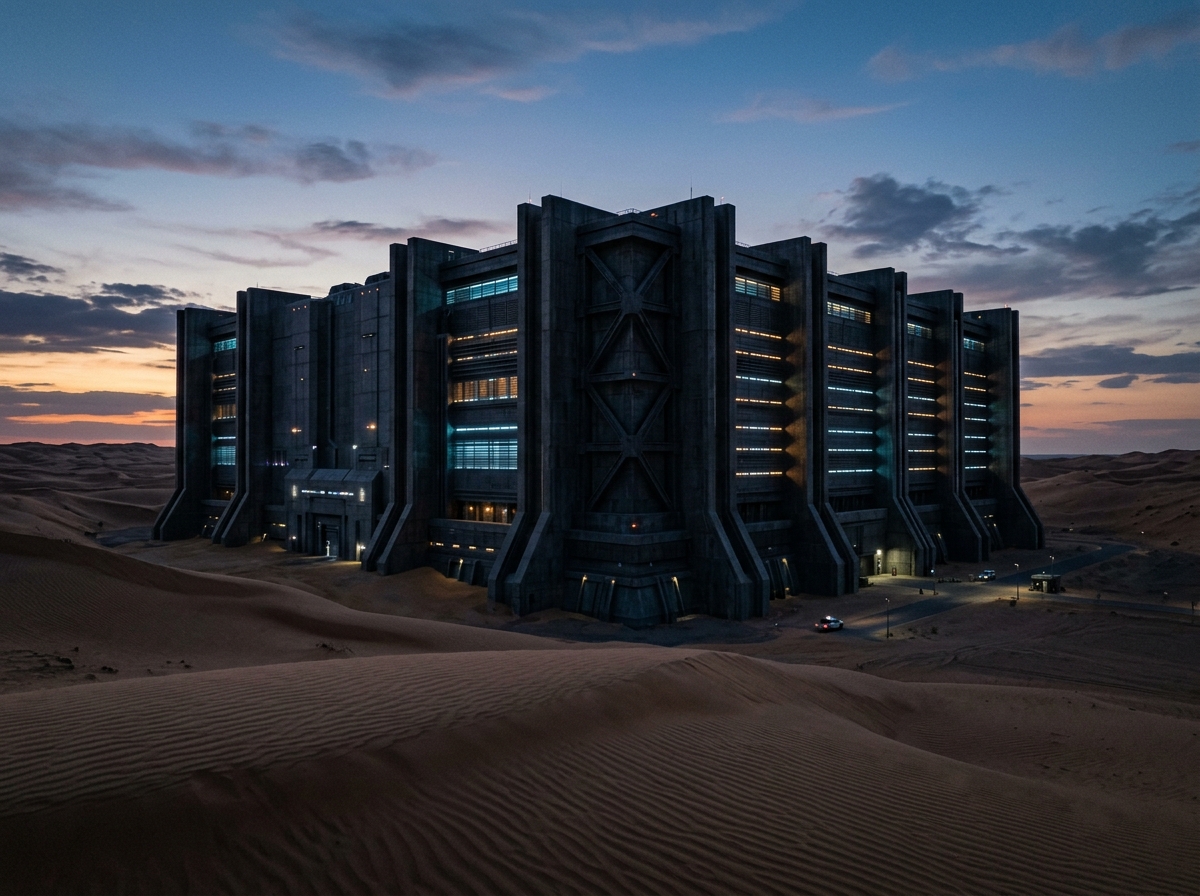
Switch added another major piece to its Southern Nevada expansion plan, purchasing 176.5 acres at Apex Industrial Park for $196 million. The two-part transaction closed Aug. 31, according to property records.
Since late last year, the Las Vegas-based data-center operator has purchased roughly 546 acres across Southern Nevada for a combined $463 million through several transactions.
That is a substantial land position, even by hyperscale infrastructure standards. It gives Switch room to phase development as customer commitments, utility capacity and permitting conditions evolve. Data-center campuses are rarely just server buildings; they require substations, backup generation, cooling infrastructure, security buffers, telecommunications connections and space for future facilities.
Apex Industrial Park offers scale. Its distance from the region’s population centers could reduce certain land-use conflicts, although operators still must address power generation, transmission and water sourcing.
Acreage is only one part of site readiness. For artificial intelligence workloads, access to large and dependable blocks of electricity is often as critical as the land itself.
NV Energy projects Nevada's data-center load growth will reach 25,590 GWh by 2033 across 12 major projects included in the utility's 2024 plan.
Those projections help explain why operators secure sites years before every construction detail is public. Las Vegas already has 651 MW of live data-center capacity and 666 MW of total potential at full buildout across 13 facilities and 9 operators, according to 2026 market research.
The wider industrial market is tight as well. Colliers reported 5.13 million square feet of net absorption in Southern Nevada during 2025, alongside 6.2 million square feet delivered and 5.7 million square feet under construction. About 59% of that construction pipeline was already preleased. Data centers do not compete with conventional warehouses on every site requirement, but both sectors value large parcels, transportation access and infrastructure certainty.
Large data-center campuses tend to be developed in stages, with timing influenced by tenant demand, equipment availability and utility interconnection schedules.
Physical design adds another layer. The Telecommunications Industry Association identifies ANSI/TIA-942-C, released in 2024, as the current framework covering data-center site location, telecommunications, electrical and mechanical systems, fire protection and security. Thermal planning commonly draws on ASHRAE TC 9.9 guidance for operating environments and cooling design.
Cooling is especially sensitive in Southern Nevada. A regional ban on evaporative cooling systems has effectively ruled out more water-intensive data-center designs. Switch says its facilities use 100% renewable energy and that it leads water-improvement projects intended to support campuses operating on 100% recycled water.
For Switch, the Apex Industrial Park purchase secures flexibility in a market where suitable land, electricity and community acceptance are deeply intertwined. The $196 million transaction highlights the rapid expansion of the sector, shifting the focus to how operators and utility providers manage the complex infrastructure demands that follow.