 ⬇️
Key Takeaways
- The UPS CEO sees AI infrastructure creating a decades-long logistics opportunity for UPS.
- Data center construction requires coordinated freight, warehousing, specialized handling, and final delivery.
- Power constraints could influence where facilities are built and how their supply chains operate.
UPS is looking beyond parcel volume for its next major source of growth. The UPS CEO told Reuters that the AI data center buildout could create a logistics opportunity worth roughly $15 billion per year, spanning component manufacturing, air and ocean freight, storage, and final delivery.
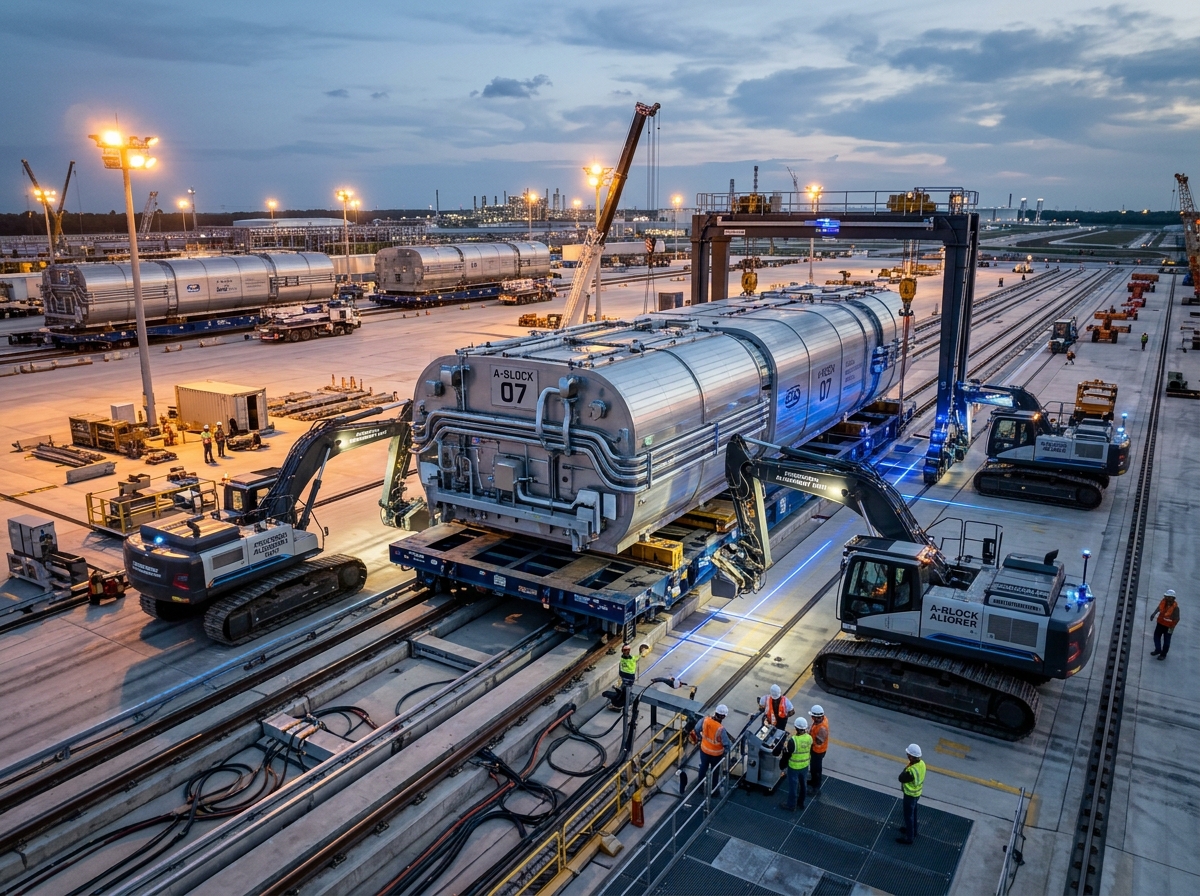
The estimate reflects how data centers are evolving from conventional construction projects into sprawling, technology-heavy supply chains. Facilities need servers, networking equipment, cooling systems, backup generators, transformers, batteries, electrical switchgear, and construction materials. Much of that equipment comes from geographically dispersed suppliers and can require carefully timed delivery.
That creates an opening for UPS to sell more than routine package transportation. The company can coordinate international freight, customs processing, warehousing, inventory staging, and delivery to active construction sites. Once a facility opens, replacement components and spare parts also need to move quickly. Downtime is expensive, so predictable service can matter as much as transportation price.
Building an AI campus requires a staggered supply chain rather than one large shipment. Equipment arrives in waves, often from different countries, while contractors work against tight installation schedules. A delayed cooling unit or electrical component can hold up a much larger deployment. That makes logistics planning part of the project schedule rather than an activity added near the end.
The potential market is expanding quickly. Global data center spending is expected to reach approximately $1 trillion in 2026 and more than double before the end of the decade. Alphabet, Microsoft, Meta, and Amazon are among the hyperscalers directing substantial capital toward AI facilities. Their projects can support years of freight activity before producing recurring demand for maintenance and replacement equipment.
Power consumption helps illustrate the physical scale behind those investments. The International Energy Agency reported that data center electricity demand rose 17% in 2025. Global consumption is projected to double by 2030, while electricity use at AI-focused facilities could triple. More computing capacity means more accelerators and servers, but also substantially more supporting electrical and cooling infrastructure.
In the United States, grid power supplied to hyperscale, leased, and crypto-mining data centers reached about 64.4 GW in 2025, up 25% year over year and nearly triple the 2020 level. 451 Research and S&P Global forecast that U.S. data center grid demand will reach about 183.2 GW by 2030.
That growth will not occur evenly. Access to substations, transmission capacity, water, suitable land, and skilled labor will influence where new campuses can proceed. What happens when servers are ready but grid connections are not? Equipment may need to be redirected, stored for longer periods, or delivered in a different sequence. Logistics providers with flexible warehouse capacity could benefit from that uncertainty, although delays could also reduce near-term shipment activity.
Efficiency reporting adds another layer. Operators increasingly track power usage effectiveness, commonly called PUE, while the European Union's data center energy-performance reporting regime is increasing scrutiny of facility consumption. This can affect purchasing decisions around cooling, power distribution, and monitoring equipment, broadening the categories of hardware moving through data center supply chains.
Still, the $15 billion figure describes an opportunity, not booked UPS revenue. UPS will compete with freight forwarders, specialized carriers, heavy-haul operators, and contract logistics providers. Some oversized equipment also sits outside the company's traditional parcel network. Capturing meaningful business will depend on whether UPS can combine its air, ocean, storage, and ground capabilities into a coordinated service for manufacturers, contractors, and data center operators.
The longer-term argument is straightforward. AI may be delivered as software, but its infrastructure is emphatically physical. Chips have to cross borders. Transformers have to reach construction sites. Spare parts have to be available when systems fail. For UPS, that turns the data center boom into a potentially durable logistics market, one built around complex, higher-value movements rather than parcel counts alone.