 ⬇️
⬇️
Key Takeaways
- The newly introduced D6Sigma is an edge AI product line built with Qualcomm to support real-time industrial vision workloads.
- The platform uses CognitoAI IoT and Qualcomm Dragonwing IQ9 processors to support quality, safety, and line-efficiency use cases.
- The launch aligns with rising investment in industrial automation and edge computing, with strong adoption expected through 2027.
Visteon made a clear move into industrial automation with the debut of its D6Sigma product line, announced on June 18, 2026. The company is already well established in automotive electronics, yet this shift signals a broader play. The new offering targets industrial automation by bringing real-time machine vision and edge AI directly onto factory floors. According to IDC, worldwide edge computing spending is expected to reach $317 billion in 2028, and manufacturing remains one of the most active adopters.
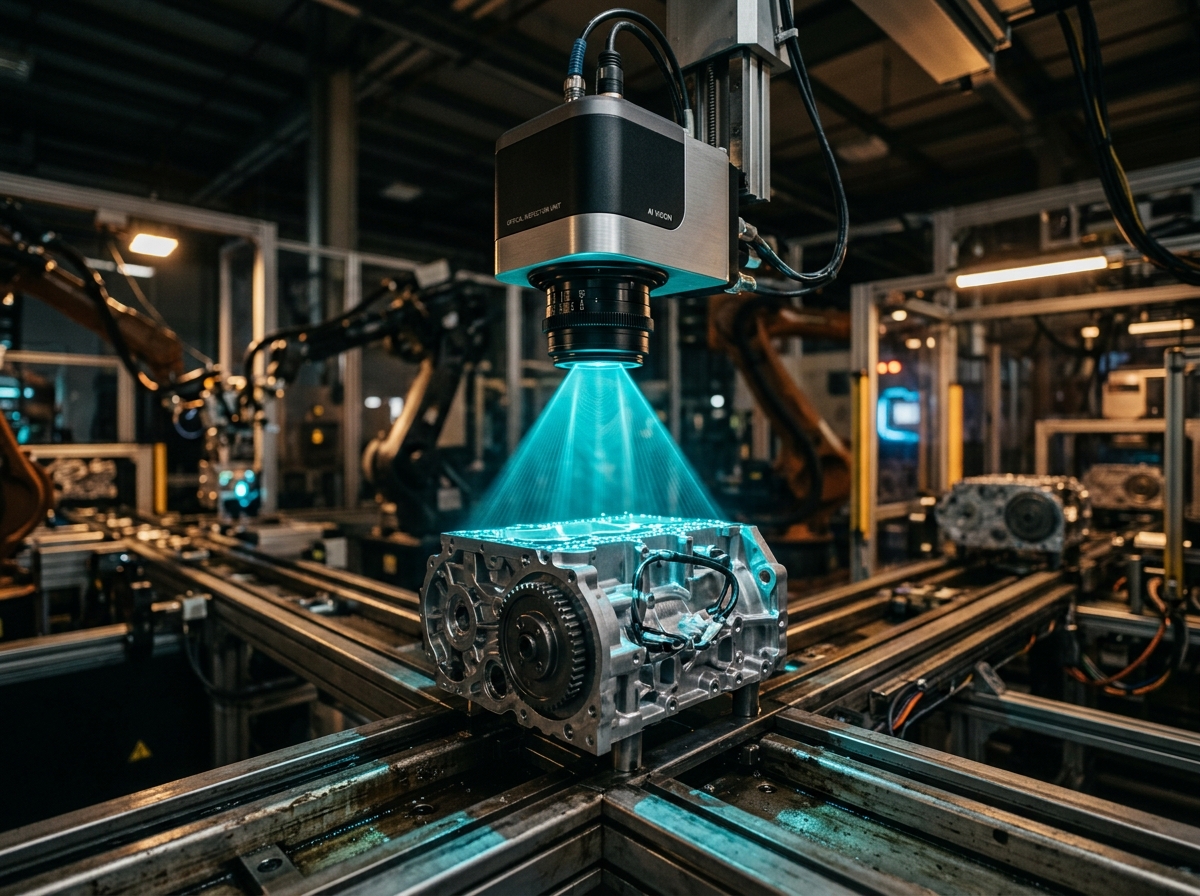
The pace of adoption has accelerated as manufacturers look for practical applications of AI. Developed with Qualcomm Technologies, Inc., D6Sigma is built on the company's CognitoAI IoT platform and powered by Qualcomm Dragonwing IQ9 processors. This pairing allows camera data to be analyzed locally rather than being sent to the cloud. For factory operations that depend on split-second decisions, this local analysis reduces latency and enhances operational reliability without relying on external network connectivity.
The manufacturer emphasized that the platform is actively deployed inside its own production facilities. Vision-based quality checks, real-time line oversight, and worker safety monitoring are active use cases. This internal implementation approach gives the system operational credibility. The company's president and CEO described the launch as defining for the organization, noting the carryover of cockpit AI and hardware capabilities into industrial systems. This approach suggests a long-term strategy to leverage existing automotive technology in new sectors.
The architecture of the stack integrates CognitoAI IoT running on Qualcomm Dragonwing IQ9 processors to execute AI inference at the edge. Additional integrations include Edge Impulse for MLOps, the Qualcomm Insight Platform for generative AI video analytics, and FoundriesFactory for device management. Because manufacturers have traditionally navigated fragmented deployments, consolidating these tools into one platform allows facilities to support a broader portfolio of machine vision use cases simultaneously.
The product line addresses quality inspection, defect and rework detection, Andon support, micro stoppage identification, PPE compliance, change-over verification, AMR and AGV traffic monitoring, and custom scenarios. Micro stoppages, while small in duration, are a consistent source of lost productivity. They are often missed because each interruption is too brief for traditional monitoring systems. CognitoAI IoT identifies and classifies these events in real time, making them visible to operations teams to help surface hidden inefficiencies.
The global industrial automation market is projected to reach $368 billion by 2029, according to Fortune Business Insights. Meanwhile, machine vision adoption has climbed as companies prioritize defect reduction and yield improvement. Over 70% of manufacturers plan to deploy AI-enabled inspection systems by 2027 based on research cited from Gartner. The baseline environment is shifting toward higher AI integration, driving demand for localized processing hardware.
Other players remain active in this space as well. Siemens continues to build out its industrial edge platforms, and Rockwell Automation has integrated more AI-driven analytics across its ecosystem. Companies like Advantech and Beckhoff supply rugged hardware that supports AI vision workloads in demanding environments. The presence of these vendors signals a maturing market where interoperability and standards matter. Adherence to OPC UA enables secure integration between edge AI systems and PLCs or MES platforms, while IEEE Time-Sensitive Networking (TSN) ensures deterministic, low-latency network performance for real-time systems.
Manufacturing leaders rarely start with a full digital overhaul, typically beginning with targeted implementations such as a single inspection station or a worker safety pilot. D6Sigma supports this incremental approach. By offering both a catalog of predefined use cases and the option for custom workflows, the provider gives customers a manageable deployment path, reinforced by proving the technology internally before external release.
The partner companies are engaging with manufacturers across several segments, including EV production, consumer electronics assembly, heavy industrial operations, and regulated sectors such as pharmaceuticals or food and beverage. These areas vary widely in process complexity. While an open architecture approach suggests broad adaptability, the operational demands and regulatory validations of pharmaceutical manufacturing differ significantly from those of printed circuit board assembly.
D6Sigma fits into Visteon's broader artificial intelligence strategy. Earlier this year, the company launched an edge-to-cloud AI platform for intelligent vehicles using NVIDIA technologies. With the new product line, the organization now has AI products spanning both industrial and automotive domains. The automotive sector requires stringent safety and reliability standards, and applying these automotive-grade engineering constraints to industrial deployments serves as a differentiator for manufacturers seeking highly dependable AI systems.
Market analysts at McKinsey project that AI in manufacturing could deliver up to $275 billion in annual value. Predictive maintenance, yield optimization, and quality automation drive this potential impact, showing the runway available for vendors who can deliver measurable results. If the platform performs well in early customer deployments, it could establish the system as a credible competitor among entrenched automation providers.
The launch gives manufacturers another option for deploying AI vision and analytics at the edge. The business case for these technologies is growing, and real-time visibility directly influences decisions across throughput, maintenance, and safety. The long-term success of the platform will depend on execution in the field, but the entry into edge AI indicates that the company intends to aggressively target the expanding digital manufacturing sector.