 ⬇️
⬇️
Key Takeaways
- The newly introduced ELX3 ProLinx Edge Gateway combines operational technology (OT) protocol conversion with Docker-based edge application hosting.
- The device targets large industrial networks requiring localized analytics and interoperability across legacy and modern systems.
- The deployment aligns with rising edge computing investment, driven by the need to process data closer to the source to reduce latency and improve resilience.
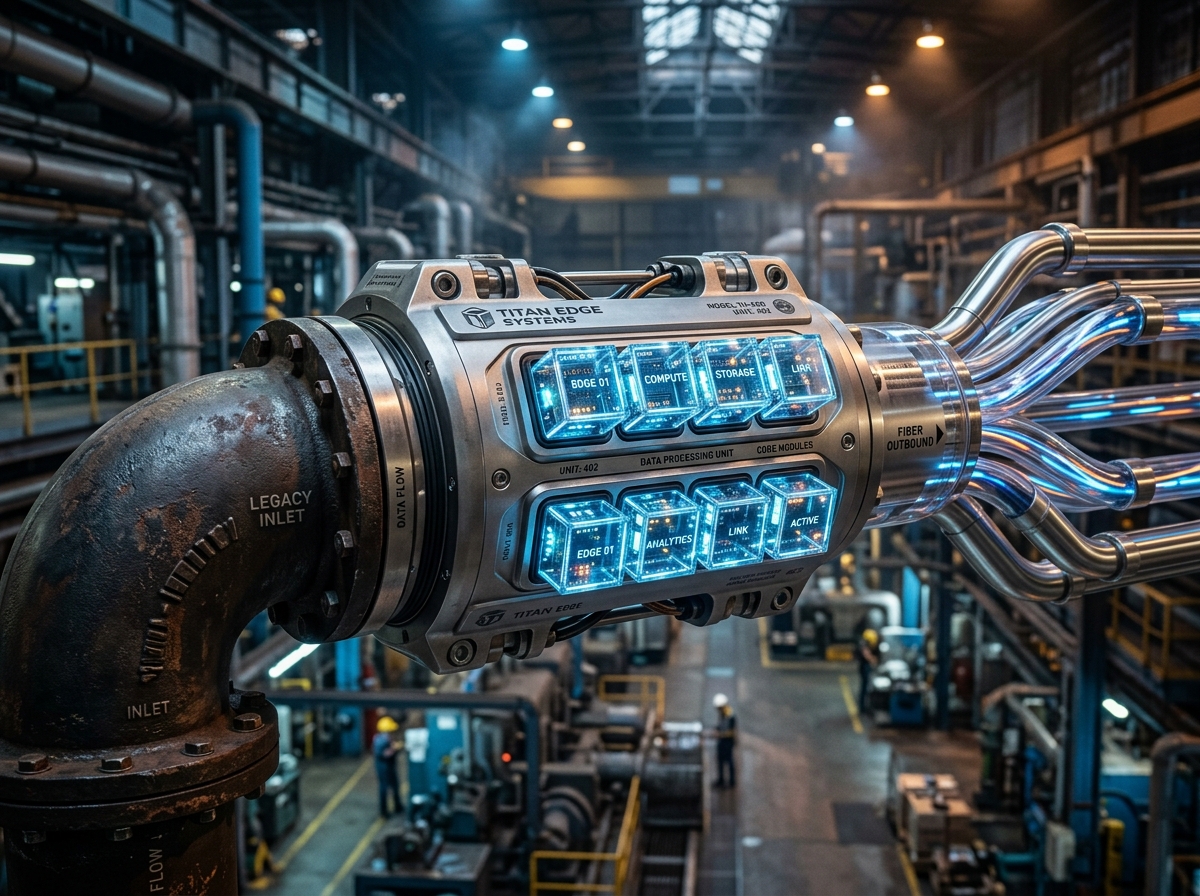
Belden Inc. has added a new entry to the industrial edge market with the introduction of the ProSoft Technology ELX3 ProLinx Edge Gateway. The company revealed the product in St. Louis on July 09, 2026, positioning it as a single device that blends OT protocol conversion, container-based application hosting, and ruggedized design for harsh industrial conditions. Many factories and utilities struggle with a mix of legacy programmable logic controllers (PLCs), modern IIoT devices, and rising data requirements. A gateway capable of translating protocols and running applications locally reduces latency and streamlines deployments.
The launch fits into a broader industry shift toward distributed processing. Analysts at Gartner noted in 2024 that by 2025 about 75% of enterprise-generated data is expected to be created and processed outside traditional data centers. With compute happening closer to machines, organizations experience fewer network bottlenecks and maintain operational resilience during connectivity outages.
Inside the ELX3, Docker support allows users to deploy custom analytics, AI inference models, digital twin connectors, or predictive maintenance code directly into the gateway instead of routing data through cloud services. The National Institute of Standards and Technology (NIST) emphasizes that keeping time-sensitive processing closer to machines and sensors significantly reduces latency and improves response times for industrial equipment.
The ProLinx Edge platform also includes established EtherNet/IP to Modbus TCP/IP protocol conversion, which forms the backbone of many OT integration workflows. Facilities operating older supervisory control and data acquisition (SCADA) systems or legacy PLCs rely heavily on these protocols. Belden engineered the device to support both legacy continuity and modern edge applications within a single unit.
IDC projects continued growth in edge computing spending through 2028, pointing to rising investment in distributed infrastructure. This capital flow has expanded the market for industrial gateways from providers like Siemens, Cisco, and HPE. The manufacturer's choice to emphasize a mixed workload model reflects a growing operational requirement for gateways to function as application runtimes rather than just simple routers.
The device is designed to operate between plant-floor systems and IT networks, areas increasingly governed by cybersecurity standards like IEC 62443. The ELX3’s ruggedized rating for Class I, Division 2 environments, along with its tolerance for shock, vibration, and electromagnetic interference, aligns with demanding installations typically found in oil and gas, metals, or water treatment facilities.
Some organizations have delayed edge compute deployments because patching container environments and managing diverse analytics packages can strain smaller operational teams. However, for operators already running distributed workloads, embedding these applications inside a protocol gateway consolidates hardware and streamlines network architecture.
The director of program management at ProSoft Technology highlighted the platform's role in bringing data from disparate IIoT devices and legacy equipment into centralized systems for analysis. This functionality supports a common goal across industrial digitalization initiatives: breaking down isolation between sensors, motors, and controllers to build consistent dashboards and track energy consumption accurately.
Specific industrial environments demonstrate the need for this combined functionality. Automotive plants run a patchwork of robot controllers, conveyor systems, torque tools, and inspection cameras. Food and beverage operations enforce strict temperature and contamination controls that generate massive datasets. Warehousing and logistics sites integrate automated storage equipment, barcode systems, and conveyor networks. In each scenario, protocol conversion is a baseline requirement, while on-site analytics resolve latency issues for quality checks or energy management.
Industrial firms experimenting with digital twins increasingly find that cloud-only approaches introduce too much latency for real-time alignment with machine states. Placing a small connector or inference model directly at the edge, inside a gateway like the ELX3, provides a faster path to synchronization.
The gateway features a modular architecture designed to expand as additional protocol container gateways roll out. In an industrial sector where equipment lifecycles often span decades, the ability to update specific protocol converters or edge applications without replacing the core hardware provides immediate operational value.
Market watchers in the industrial automation space, including analysts from the IEEE who track emerging connectivity standards, note that interoperability remains a persistent challenge. Although OPC UA serves multi-vendor environments well, many plants still require specific protocol bridging to mesh systems reliably. The product design acknowledges this reality by bridging existing protocols rather than forcing a complete facility transition to newer standards.
The ELX3 ProLinx Edge Gateway arrives as industrial companies reconsider how and where they process machine data. The integration of Docker-ready computing and familiar OT protocol conversion provides a concrete solution for facilities that require immediate localized data processing alongside legacy equipment interoperability.