 ⬇️
⬇️
Key Takeaways
- Brookfield, NextEra Energy and utility partners plan a 1.8 GW AI and high-performance computing campus in Kentucky.
- NextEra Energy plans 2 GW of natural gas generation and up to 2.6 GW of battery storage at or near the site.
- The project promises 8,000 construction jobs, but its location on a Superfund site is intensifying calls for independent environmental review.
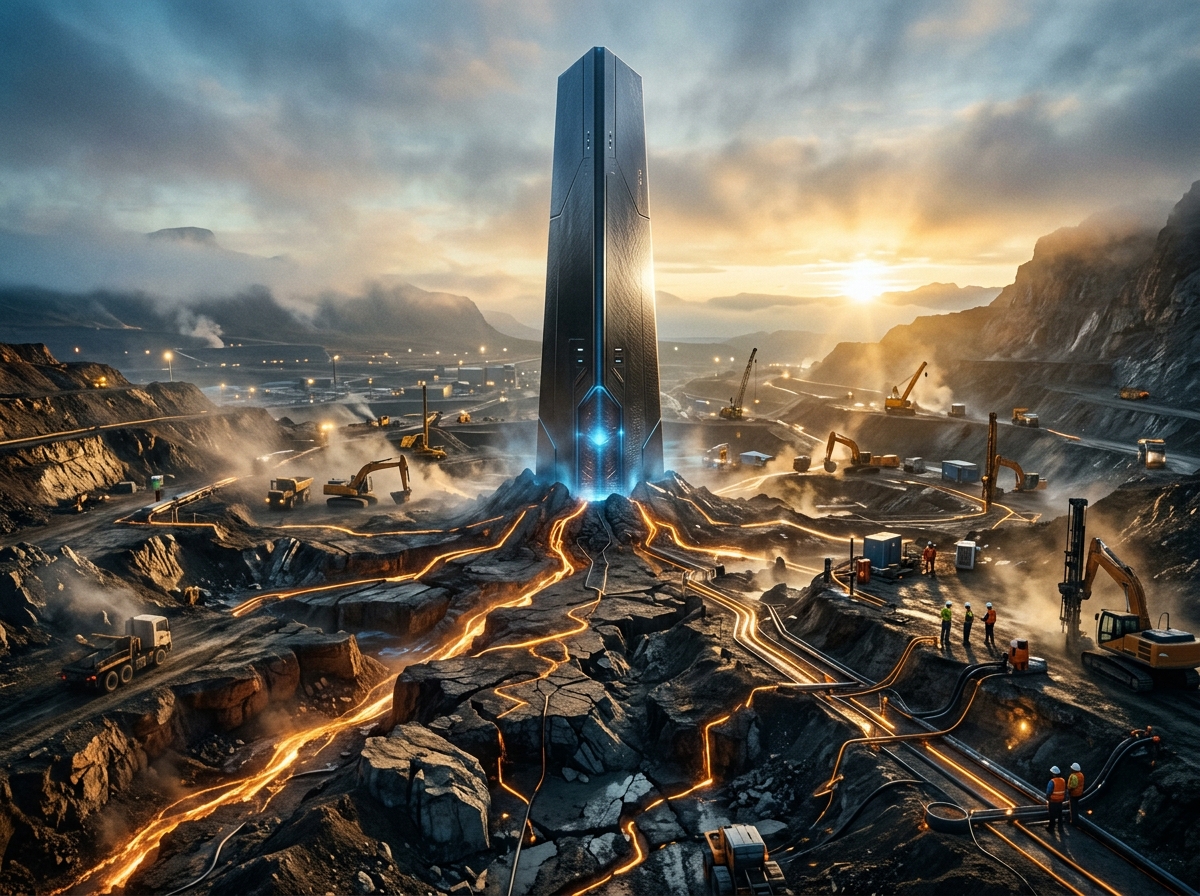
The U.S. Department of Energy has selected a consortium involving Brookfield, NextEra Energy and Big Rivers Electric Power Corporation to develop an artificial intelligence and high-performance computing campus at the former Paducah Gaseous Diffusion Plant in McCracken County, Kentucky. The privately financed project represents more than $100 billion in planned investment.
Known as the Paducah American Energy Hub, the development could support as much as 1.8 GW of data center capacity. That would place it among the largest single-site data center power developments proposed in the United States, not merely Kentucky. NextEra Energy also plans to install 2 GW of natural gas-fired generation and up to 2.6 GW of battery storage at or near the former uranium-enrichment complex.
Those numbers illustrate how AI infrastructure is changing data center development. A 1.8 GW campus cannot be treated as another large commercial customer connected through ordinary utility planning. It resembles a major industrial energy system, combining computing facilities, power generation, storage, transmission and long-term fuel arrangements. Power Magazine has described the project as one of the country’s largest single-site data center power builds.
The stated 4.6 GW of dedicated energy infrastructure is not directly comparable with the campus’s 1.8 GW load. Battery storage capacity describes maximum power output, while its usable duration depends on stored energy, a figure not included in the announcement. Even so, batteries could help manage demand spikes, provide backup capability and support a more stable operating profile for both the campus and surrounding grid.
AI training and inference require dense clusters of accelerators that draw substantial power and produce significant heat. Globally, hyperscale capacity is projected to exceed 50 GW of IT load by 2028, led by AI and cloud expansion. U.S. data centers consumed about 126 TWh of electricity in 2022, and AI workloads could increase domestic data center demand twofold or threefold by 2030. Developers are consequently looking beyond established data center markets toward sites with land, energy infrastructure and clearer paths to new generation.
Operational efficiency will matter just as much as raw capacity. Leading new hyperscale facilities commonly target power usage effectiveness, or PUE, near 1.2 to 1.3. Cooling architecture, server utilization and electrical losses will affect how much of Paducah’s power reaches computing equipment. Water consumption is another open issue because the announcement does not specify whether the campus will rely on evaporative, air-cooled or hybrid systems.
The economic pitch is substantial. The DOE expects the development to support 8,000 construction jobs and 600 permanent jobs. The U.S. energy secretary said converting former DOE properties into centers of innovation could produce tax revenue, employment and stronger energy security. The Kentucky Senate president also argued that developers should cover the infrastructure costs they create rather than shifting those expenses to existing customers. Whether that principle is reflected in utility contracts and rate structures will be closely watched.
Not everyone is persuaded. The U.S. Environmental Protection Agency designated the former Paducah Gaseous Diffusion Plant as a Superfund site in 1994 following decades of hazardous and radioactive contamination. DOE cleanup work has continued for years. Protect McCracken County, organized by residents near the site, wants an independent assessment covering the data center and nearby nuclear projects. “Our biggest concern with all of these projects is that you’re doing it on a Superfund site,” a local organizer told News From the States.
The surrounding development adds another layer. General Matter signed a DOE lease in 2025 to pursue uranium enrichment for advanced modular reactors, while Global Laser Enrichment plans to invest an undisclosed amount to process spent uranium fuel near the site. The Paducah mayor has questioned whether an independent study is practical under federal control, while promising local transparency and oversight. Can a legacy nuclear property become an AI energy hub without leaving nearby residents feeling sidelined? For Brookfield, NextEra Energy and the DOE, answering that question may prove as important as assembling the power itself.