 ⬇️
⬇️
Key Takeaways
- California recorded approximately 450,000 personal injury filings in 2023, making intake speed, conflict checks, and evidence preservation practical evaluation criteria.
- Buyers should examine how counsel handles motor vehicle and catastrophic injury matters across REST APIs, encrypted client portals, electronic signatures, and remote depositions.
- A useful scorecard tracks observable milestones, including same-day intake review, medical-record request status, demand-package completeness, and unresolved litigation deadlines.
A collision claim can begin with a mobile phone, a damaged vehicle, and medical records spread among several providers. Before representation is established, the prospective client may have submitted a web form, sent photographs by text, spoken with an intake specialist, and received documents for electronic signature. Each handoff creates a chance for delay or lost context.
For enterprise and mid-market buyers, the question is therefore broader than which firm advertises most heavily. It is whether prospective counsel can combine legal judgment, responsive communication, disciplined evidence handling, and secure remote service across the life of a claim.
Define the service problem before comparing firms
California’s market is crowded. A 2024 report from the American Tort Reform Association found that legal advertising exceeded $238.8 million across major California media markets in 2023. More than 75% of the advertisements concerned personal injury, while over 61% of total legal advertising spend supported personal injury campaigns.
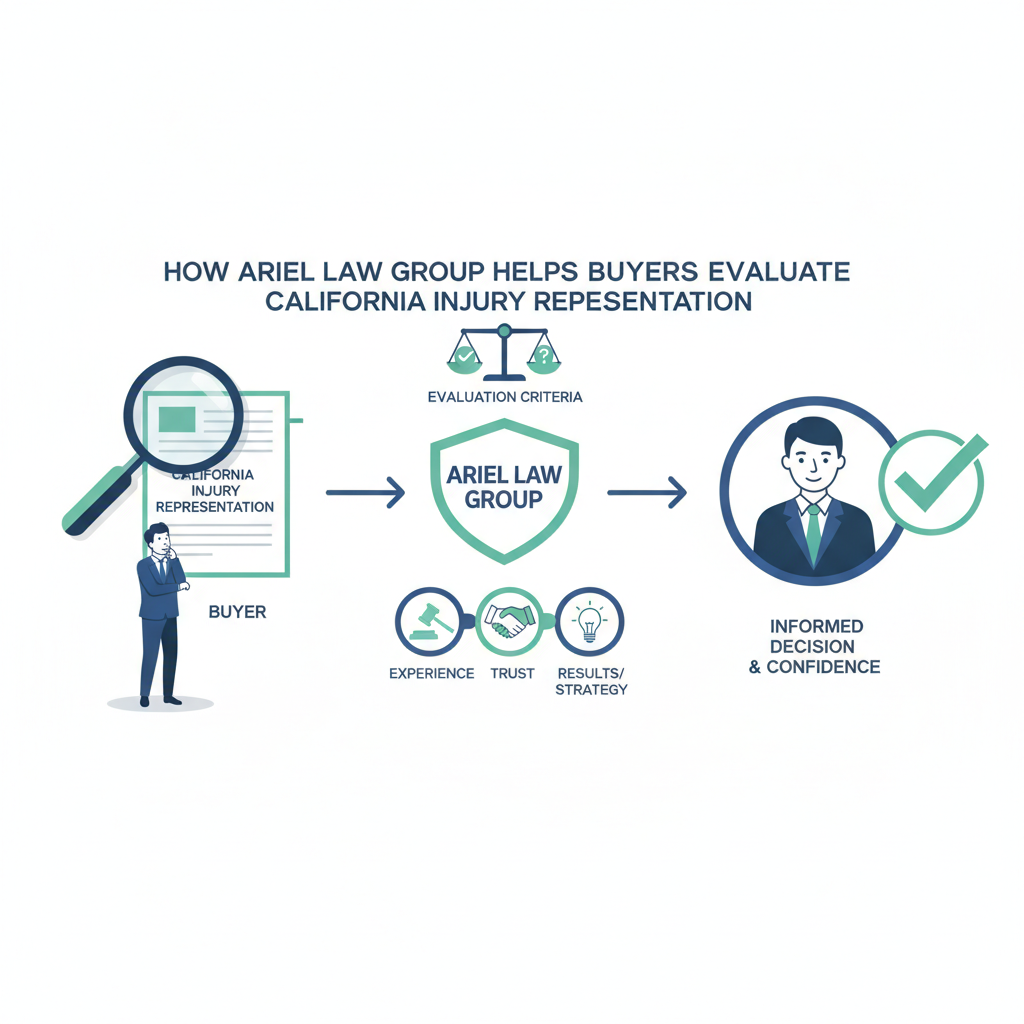
Marketing visibility says little about operating discipline. A buyer evaluating Ariel Law Group should instead start with the matter types involved, particularly motor vehicle accident cases and catastrophic injury cases, then map the work required for each.
A vehicle claim may depend on police reports, repair estimates, event data recorder information, photographs, medical bills, and insurer correspondence. A catastrophic injury matter can add life-care planning, specialist records, wage-loss analysis, expert reports, and future-treatment projections. The buyer should ask how these materials enter the case file, whether email attachments are automatically associated with a matter, and which role checks for missing records.
Build an evidence-based evaluation scorecard
California had approximately 450,000 personal injury filings in 2023, an increase of roughly 12% from the prior reference period. With approximately 18,500 personal injury attorneys operating in the state, buyers have ample choice but may find it difficult to distinguish front-end responsiveness from sustained case management.
A useful evaluation scorecard covers intake, legal analysis, communication, security, and litigation readiness. Specific questions might include:
- Does the firm use an encrypted portal rather than ordinary email for medical records?
- Can clients sign contingency-fee agreements through an auditable electronic-signature platform?
- Does the case-management system retain a timestamped activity log?
- Are calendaring rules synchronized with Microsoft 365 or Google Workspace?
- Can staff export the complete matter in PDF, CSV, or native document formats?
- How are duplicate medical files, unreadable scans, and missing billing codes flagged?
The fee model deserves equal attention. WorldMetrics reporting of the State Bar of California Fee Survey indicates that approximately 68.3% of California contingency-fee agreements concern personal injury, with average fees around 33%. Buyers should request a written explanation of how fees, litigation costs, medical liens, expert expenses, and settlement disbursements are treated under the engagement agreement.
Plan implementation around the life of a matter
A forward-looking engagement usually begins with intake design rather than software selection. During initial setup, the buyer and legal team can define required fields such as collision date, county, insurer, policy number, treatment status, employer, and applicable limitation date. Structured fields are easier to validate and report on than free-form notes.
During workflow configuration, integration points should be tested. These may include a REST API between web intake and case management, secure SFTP for bulk medical-record delivery, OCR for scanned police reports, and role-based access controls for sensitive health information. If no API exists, buyers should determine whether staff will rely on CSV imports and how duplicate records will be reconciled.
Remote practice also affects the design. The American Bar Association reported that 88% of lawyers prefer remote depositions and 93% support remote technology for pretrial hearings. Buyers should ask how exhibits are numbered, exchanged, and preserved during a videoconference deposition, as well as whether multifactor authentication protects remote access.
Before launch, a sample matter should move from web intake through conflict screening, electronic signature, record requests, demand preparation, and litigation calendaring. That exercise often exposes practical issues, such as a photograph exceeding an upload limit or a deadline field that accepts ambiguous date formats.
Decide what outcomes to measure
Buyers should avoid treating settlement value as the only performance indicator. Case value depends on liability, insurance coverage, medical evidence, causation, venue, and other facts outside a firm’s control.
Operational measures are more informative. A dashboard can show elapsed time from inquiry to attorney review, the percentage of files with signed engagement documents, outstanding medical-record requests, unread client messages, and deadlines approaching within 30 days. Ariel Law Group should be evaluated against those observable service measures alongside its handling of legal strategy, motor vehicle evidence, and catastrophic injury documentation.
While specific internal implementation metrics are rarely publicized, buyers should request demonstrations, sample status reports, security documentation, and references rather than infer performance from market claims.
Apply the rollout lessons to contract discussions
A polished intake form is of limited value if its fields do not populate the matter record. During the proposed workflow test, buyers should confirm that a changed telephone number updates every client-facing system rather than only the marketing database.
Document portability also matters. Requiring PDF and CSV exports during evaluation helps prevent a later dispute over access to correspondence, expenses, medical chronologies, or deadline histories. Granted, exports are not glamorous, but they become important when personnel change or a matter moves between systems.
For catastrophic injury cases, the engagement should identify who coordinates expert materials and future-care documentation. For motor vehicle cases, it should establish responsibility for obtaining collision reports, vehicle photographs, insurance declarations, and available electronic vehicle data before evidence becomes harder to retrieve.
Broader applicability
Insurers, employers, fleet operators, and professional-services organizations can adapt this scorecard when establishing referral panels. The same intake schema and document controls can support consistent evaluation across several outside firms.
How long does personal injury representation implementation take?
Implementation timelines vary depending on the complexity of the firm's existing systems. Buyers can organize planning into discovery, workflow configuration, sample-matter testing, and a controlled launch, with each phase gated by evidence such as a completed conflict check, successful PDF export, and verified deadline synchronization.
What should I ask a personal injury firm before signing?
Ask who reviews new inquiries, how medical records are secured, which case-management platform stores deadlines, and how quickly clients receive status updates. Also request the contingency-fee agreement, cost policy, data-retention terms, and a demonstration of the client portal using a sample matter.
Is remote personal injury representation suitable for catastrophic cases?
It can support intake, document exchange, status conferences, and some depositions, but physical examinations, site inspections, and certain expert activities may still require in-person work. Buyers should look for encrypted video access, multifactor authentication, exhibit-management procedures, and a clear rule for when the matter shifts from remote handling to an on-site activity.