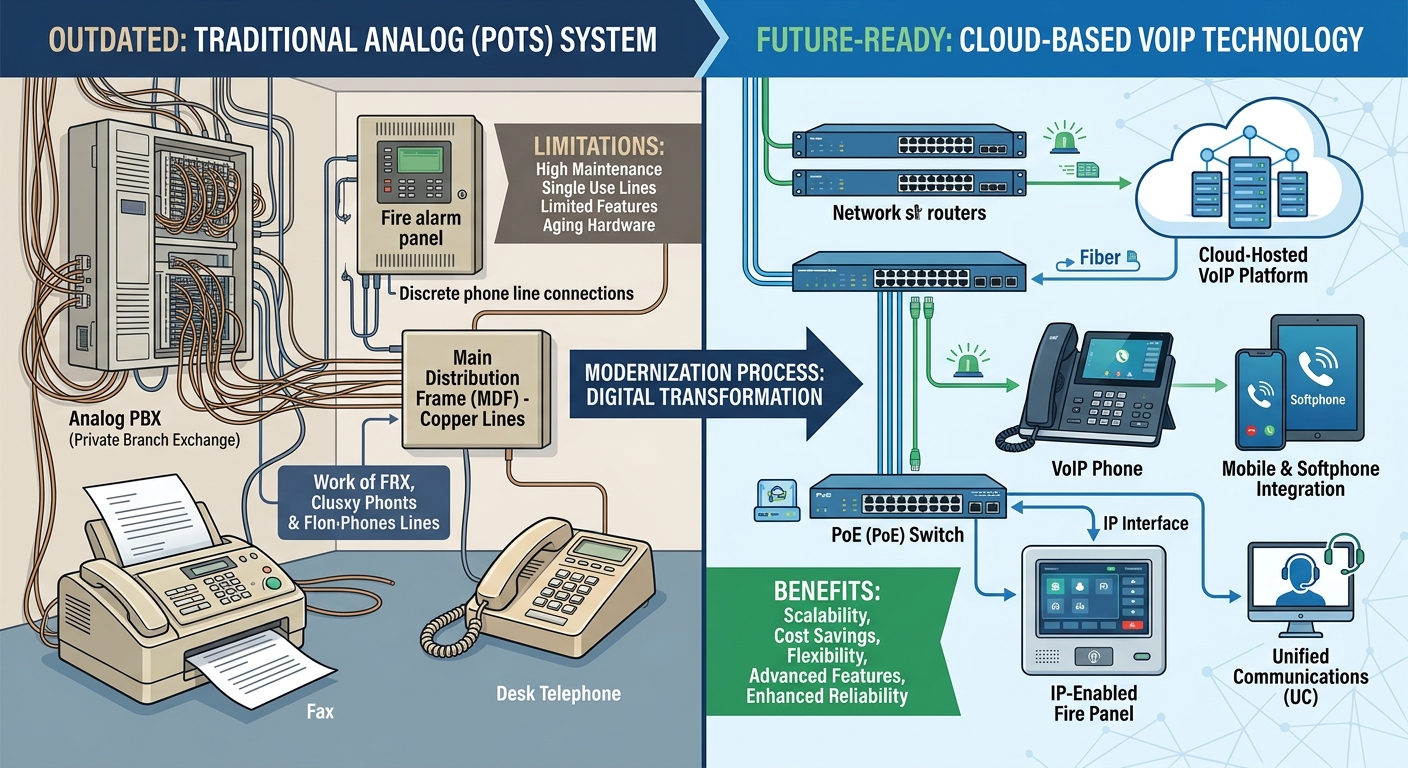
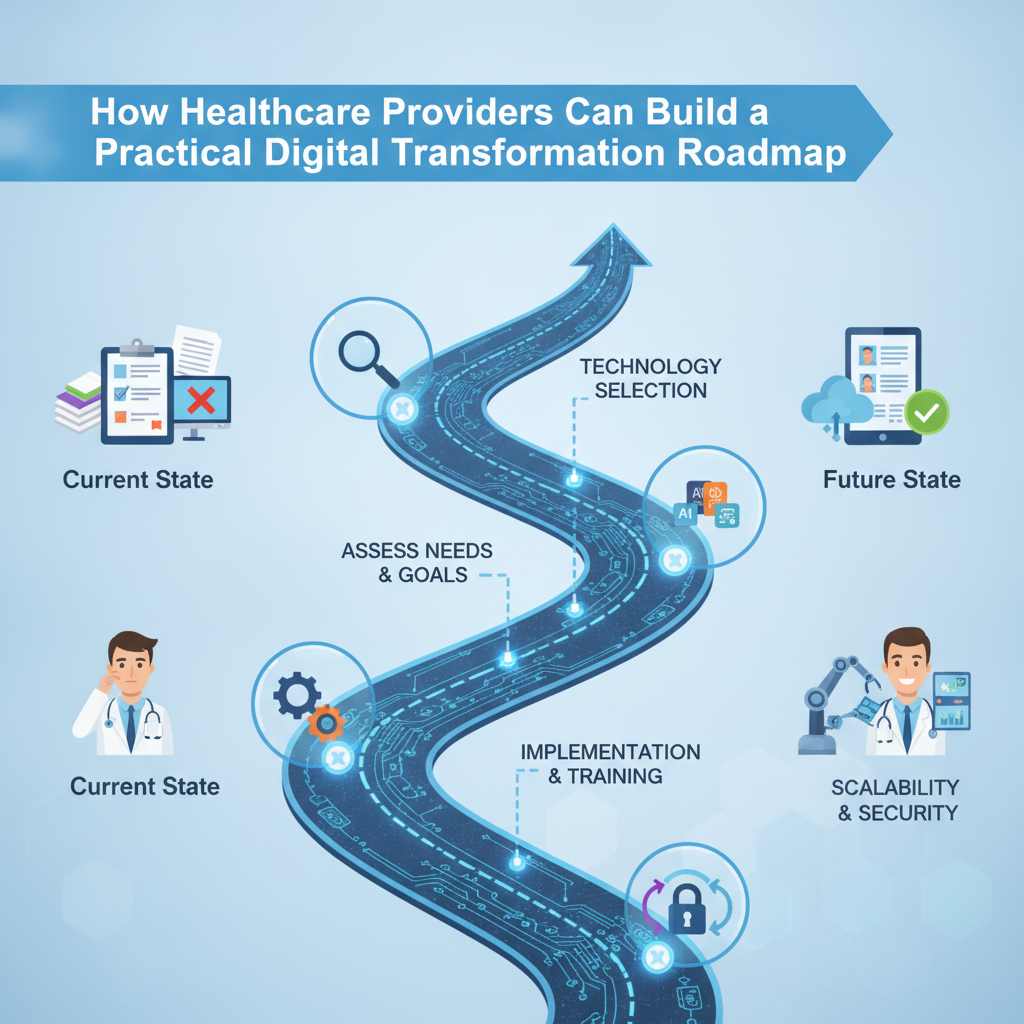
 ⬇️
⬇️
Key Takeaways
- Start with one measurable care journey, such as scheduling through discharge, then map its HL7 FHIR data exchanges before selecting technology.
- Evaluate digital front doors, remote monitoring, and AI against EHR workflow fit, role-based access controls, and NIST Cybersecurity Framework safeguards.
- Measure observable changes such as same-day exception handling, fewer duplicate registrations, reduced clinician re-entry, and patient portal completion rates.
Problem to Solve: Fragmented Care Journeys
A patient books through a mobile portal, repeats the same information at registration, receives test results in another system, and calls the contact center because the follow-up instructions are unclear. Each application may function correctly, yet the overall journey remains fragmented.
That gap explains why patient experience has become a prominent transformation objective. Deloitte's 2024 research reports that 92% of health-system respondents want better patient experience as a leading outcome, while 88% are investing in patient experience, 80% in IT and cybersecurity, and 68% in clinical care delivery. A Digital Authority industry analysis also highlights how AI, virtual care, and connected patient services are influencing healthcare technology planning.
Before issuing a request for proposal, buyers should document a specific workflow. For outpatient access, that might cover appointment search, eligibility verification, electronic consent, EHR registration, reminders, and post-visit messaging. The technical map should identify APIs, HL7 v2 messages, FHIR resources, identity-matching rules, and any CSV or PDF handoffs that still require manual processing.
Evaluation Approach: Buy Around Workflows, Not Features
About 70% of health-system respondents in McKinsey's 2024 research expect virtual health and digital front doors to have the greatest impact. Meanwhile, 88% see high potential in AI, although roughly 20% do not plan to invest in it over the following two years. The apparent contradiction is useful: buyers recognize the opportunity, but many remain unconvinced that current operating models can support it.
A practical evaluation scorecard should test workflow fit before comparing feature volume. Can the proposed platform read and write Patient, Appointment, Observation, MedicationRequest, and Encounter resources through HL7 FHIR? Does it support SMART on FHIR authorization? Can it reconcile identities against an enterprise master patient index rather than creating another patient record?
Buyers evaluating advisory and delivery support from INNOVAmee S.L. can frame the discussion around integration architecture, SAP-related operational processes, application maintenance, and ownership after launch. Useful evidence includes a sample interface specification, an escalation matrix, a data-retention model, and a demonstration using realistic clinical roles rather than a polished generic dashboard.
The shortlist should also account for existing platforms. Epic, Oracle Health, Philips, SAP, and departmental applications may each hold part of the workflow. Replacing all of them is rarely the starting point. An API gateway or integration engine can expose selected services while preserving established systems of record.
Architecture and Security Questions to Resolve
PwC's 2024 outlook emphasizes AI-enabled care, decentralized services, secure interoperability, and data liquidity across clinical, operational, and consumer contexts. In practical terms, data liquidity means an authorized clinician can retrieve relevant information in context, while an unauthorized user or application cannot.
Buyers should ask vendors to diagram data movement from the patient-facing application through the API gateway and into the EHR, data warehouse, or SAP environment. Encryption with TLS 1.2 or later should be depicted in the architecture diagram, alongside OAuth 2.0 authorization, audit logging, token expiration, and the database or object store used for temporary data.
Security reviews can map controls to the NIST Cybersecurity Framework. Identity controls should include single sign-on, multifactor authentication, role-based access, and privileged-account monitoring. For AI-enabled functions, the assessment should also cover prompt logging, protected health information handling, model versioning, human review, and procedures for correcting generated content.
PDFs often survive digital transformation programs, presenting unique operational challenges. If a referral still arrives as an image-only PDF, the workflow needs optical character recognition, confidence thresholds, and a queue for human validation. Calling that process integrated does not remove the exception queue.
Implementation Considerations
Implementation typically begins with workflow discovery and interface inventory, followed by a limited production release and controlled expansion. A representative delivery group includes clinical informatics, nursing or physician representatives, enterprise architecture, cybersecurity, privacy, revenue cycle, patient access, integration engineering, and application support.
During discovery, the team should establish a baseline using system logs rather than memory. Relevant measures include portal abandonment, duplicate patient creation, interface-message failures, referral aging, call transfers, and the number of fields clinicians re-enter after opening an external application.
The initial release should use a constrained population, facility, or service line. Parallel monitoring can compare FHIR transactions with corresponding EHR records, while synthetic test patients help validate consent, identity matching, and access controls. Midway through rollout, interface failures commonly expose inconsistent code sets, obsolete provider directories, or mismatched time zones.
For a program involving SAP consulting or ongoing IT support, INNOVAmee S.L. should be assessed on how its team would connect SAP Integration Suite or REST APIs to scheduling, procurement, finance, and workforce processes while preserving clear incident ownership. Buyers should request severity definitions, response targets, maintenance windows, and rollback procedures before production access is granted.
Outcomes Buyers Should Measure
The goal is not merely launching a portal or virtual-care application. Buyers should look for observable changes in how work moves.
Patient-access measures can include registration completion, abandoned bookings, identity-verification failures, and contact-center calls generated by unclear digital instructions. Clinical measures can track duplicate documentation, time spent switching applications, unreviewed remote-monitoring alerts, and medication-reconciliation exceptions.
Operational teams should monitor API latency, failed HL7 messages, unresolved support tickets, mean time to restore service, and the percentage of interfaces covered by automated tests. The organization may also track whether referral exceptions move from multi-day queues toward same-day review, but public source material does not provide a universal benchmark.
Granted, adoption can lag even when the integration works. Role-based training, embedded EHR prompts, and an accessible support channel often reveal whether the redesigned workflow is usable during a busy clinic session.
Buyer Takeaways
IQVIA Institute's 2025 findings indicate that provider adoption depends heavily on EHR interoperability and compatibility with existing workflows. It also notes that payers increasingly expect evidence from randomized controlled trials and comparisons with standard care. That raises the evaluation bar for digital therapeutics, remote monitoring, and AI-supported interventions.
Buyers should therefore ask for evidence matched to the proposed use case. A vendor's scheduling success does not establish clinical effectiveness for an AI triage tool. Likewise, a technically valid FHIR connection does not prove that clinicians will use the resulting screen.
The most defensible roadmap links each investment to a named workflow, accountable owner, integration contract, security control, and post-launch measure. That creates a basis for deciding whether to expand, revise, or retire the service.
Broader Applicability
Mid-market providers can apply the same model with a narrower scope, such as one ambulatory service line and a managed integration layer. Enterprise systems may use the approach across multiple EHR instances, but should standardize FHIR profiles, identity rules, and support procedures before scaling.
How Long Does a Healthcare Digital Transformation Implementation Take?
Duration depends on interface count, clinical scope, and governance rather than a standard calendar estimate. Buyers should plan separate periods for workflow mapping, HL7 FHIR testing, security review, limited production use, and expansion, with additional time when legacy HL7 v2 interfaces or image-only documents require remediation.
What Should Healthcare Providers Ask Digital Transformation Vendors?
Ask vendors to demonstrate one end-to-end workflow using realistic roles and test data. Require an architecture diagram, supported FHIR resources, OAuth 2.0 controls, EHR write-back behavior, audit-log access, service-level targets, disaster-recovery procedures, and a clear list of implementation exclusions.
Is AI or a Digital Front Door the Better Starting Point?
A digital front door is often the more manageable starting point when scheduling, registration, and patient communication are fragmented. AI may add value after the provider establishes governed data access, human review, model monitoring, and a defined workflow for handling low-confidence outputs.