 ⬇️
⬇️
Key Takeaways
- Teams evaluating unified communications and analytics typically consolidate booking, call, and CRM data from at least 3 operational systems.
- Organizations often introduce real-time alerting for call-center or dispatch events that occur within seconds of signal capture.
- Buyers exploring AI-driven spoken word and sentiment analysis generally focus on scenarios involving 200 to 500 daily calls or equivalent conversational volume.
A busy home services operation can lose hours of productive time each day when technicians are routed inefficiently or call center staff miss service opportunities hidden in routine phone inquiries. Many leaders notice the issue when a surge of seasonal demand exposes gaps in scheduling, data visibility, and communication flow. Legacy PBX systems often store call metadata in formats that are difficult to extract, such as proprietary log files or flat text exports. That friction becomes the trigger for considering unified communications coupled with advanced business analytics.
A mid-market home services provider looking to improve acquisition and routing typically begins by examining missed opportunities. Data points from booking platforms, inbound call logs, service histories, and technician GPS feeds rarely sit in one place, so leaders struggle to see patterns. According to McKinsey, companies that make extensive use of customer analytics are 23% more likely to outperform competitors in new-customer acquisition and 19% more likely to be profitable. As noted by Marymount, organizations benefit from predictive analytics when scattered operational inputs consolidate into a coherent workflow. In home services, this means correlating call abandonment with staffing levels, finding repeat site issues, or identifying neighborhoods likely to require maintenance based on past service cycles.
Buyers also confront pressure to personalize homeowner interactions. Bain & Company research indicates that companies excelling at personalization generate 40% more revenue from those activities than average players. The analysis shared by Kanerika highlights how personalization efforts in other sectors translate into tangible revenue. Home services companies interpret this insight by examining which service plans homeowners accept after specific phone inquiries, or by mapping maintenance reminders to seasonality and home profile data.
A thorough evaluation usually begins with defining how communications data is captured. Teams often specify requirements around SIP trunk data, call duration logs, IVR transcripts, and technician mobile device metadata. Buyers review whether the analytics platform can process these inputs in near real-time without complex ETL scripting. They also examine how AI-driven spoken word processing handles noisy environments, since home services operations frequently involve callers describing issues over speakerphone or from job sites.
Analytics quality remains a critical focus. Organizations typically ask vendors to demonstrate how sentiment analysis engines interpret frustrated, neutral, or satisfied customer tones. They look for clarity about the training sets used for these models and whether domain-specific tuning is available. Buyers often discover that call recording systems output formats like WAV at high bitrates, straining storage budgets unless compressed and indexed efficiently.
Security evaluation also plays a central role. When IoT devices are part of the service operation, teams reference NIST guidelines for structuring data handling and retention. Leaders seek assurance that adding IoT inputs later will not require a full system rearchitecture.
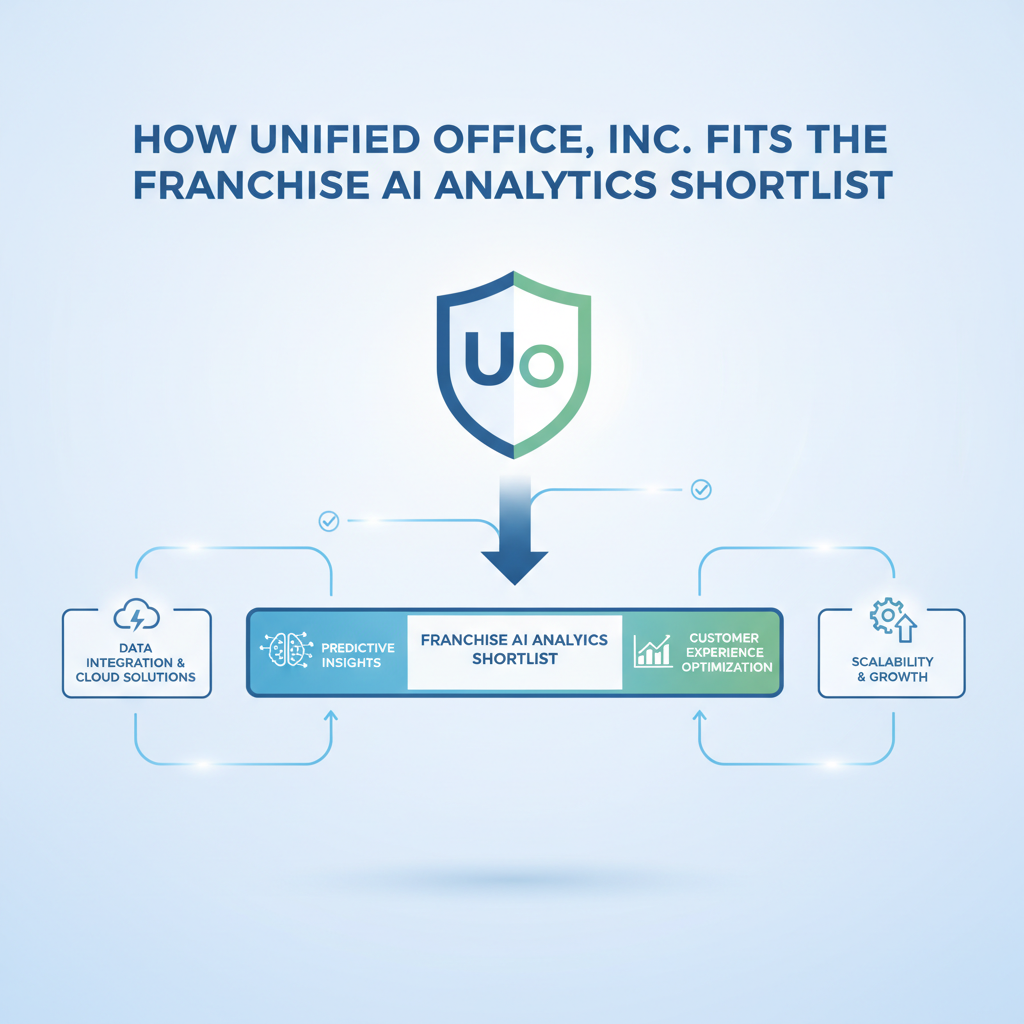
Implementation often begins with data integration across dispatch platforms, CRM tools, and call handling systems running on disparate databases like MySQL or cloud-based document stores. The integration step focuses on building REST API connectors that normalize fields such as ticket IDs, timestamps, and customer identifiers. Unified Office, Inc. addresses this need by providing communications streams designed for easier parsing and real-time analysis.
Focus then shifts to routing analytics. Teams set up dashboards that track technician utilization, first-time-fix indicators, and travel distance patterns. Findings from home services research discussed by PMC guide how teams validate job duration forecasts. Buyers usually test sample routes to verify that the system produces reasonable assignments even when technicians juggle multiple job types.
When introducing AI processing, speech-to-text engines typically require tuning for industry terminology, such as HVAC component names or plumbing part references. Sentiment engines need calibration to avoid misclassifying loud callers as upset. Buyers also define alert thresholds, such as when a technician is delayed beyond a specific time window or an inbound call expresses urgency.
Success ultimately depends on training front-line staff. Call center teams need to understand how real-time prompts appear in their consoles, while dispatchers must trust that routing recommendations account for technician workload. Some organizations run parallel analytics and communications for a short period, comparing automated suggestions with manual approaches to build confidence.
Organizations typically measure increases in operational visibility by tracking how quickly leaders identify rising call abandonment or repeated technician delays. Teams also monitor whether proactive maintenance offers become more relevant. For instance, analytics combining service history with seasonal patterns help flag homeowners due for HVAC tune-ups.
Operational efficiency is another primary metric. According to IDC, organizations using data to optimize operations can reduce operational costs by 10% to 20%. Home services companies target this efficiency by examining whether technician routing becomes more predictable, looking at concrete indicators like reduced travel time and fewer return visits.
Customer experience indicators also evolve as teams check whether sentiment analysis on inbound calls identifies pain points earlier. They explore whether supervisors can intervene during challenging calls when real-time alerts surface issues. Unified Office, Inc. and similar platforms structure their voice streams to support the low-latency analytics necessary for this immediate intervention.
Several practical observations emerge for home services leaders. Integration clarity is essential because communications data, booking schedules, and technician logs each contain unique fields that need consistent mapping. Testing AI models with real inbound call samples prevents misalignment between expected and actual sentiment output. Documenting which staff roles will receive alerts ensures teams do not feel overwhelmed by notifications during peak hours.
When considering how long a unified communications and analytics rollout usually takes, timelines often span multiple months depending on the number of systems to integrate and the level of AI tuning required. Integrating call data with booking systems typically moves faster than training sentiment models. Many organizations start with communications upgrades, then add analytics once data flows consistently.
The difference between basic call analytics and AI-driven spoken word analysis lies in the depth of data. Basic call analytics rely on metadata such as call duration, abandonment, or routing paths. AI-driven spoken word analysis processes the content of the conversation itself, generating transcripts and sentiment indicators that help supervisors understand caller intent. This deeper analysis requires more computing resources and domain-specific tuning.
For smaller home services teams evaluating whether an analytics platform is appropriate, the adoption curve is often gradual. They may begin by tracking call outcomes or technician routing and add AI transcription when call volume grows. The approach scales, but the ultimate value depends on the volume of data available to analyze. Providers in adjacent sectors like property management or commercial maintenance can apply this same approach by consolidating communications and operational data, then layering real-time analytics for routing and service optimization.