 ⬇️
⬇️
Key Takeaways
- Restaurants are accelerating IoT adoption as labor shortages and rising costs pressure operations.
- Buyers compare solutions across security, integration depth, AI maturity, and reliability.
- Operators evaluate vertically focused IoT and communications partners alongside established platform ecosystems.
Restaurants are navigating a continuous technology shift. Labor shortages persist, supply chains remain uneven, and cost pressures continue to tighten operations. The National Restaurant Association reported in 2023 that 47% of operators intended to implement more technology, such as IoT sensors and automation, to address these specific pressures. Many operators describe the investment as an effort to stay operational during unstable staffing cycles rather than simply chasing innovation.
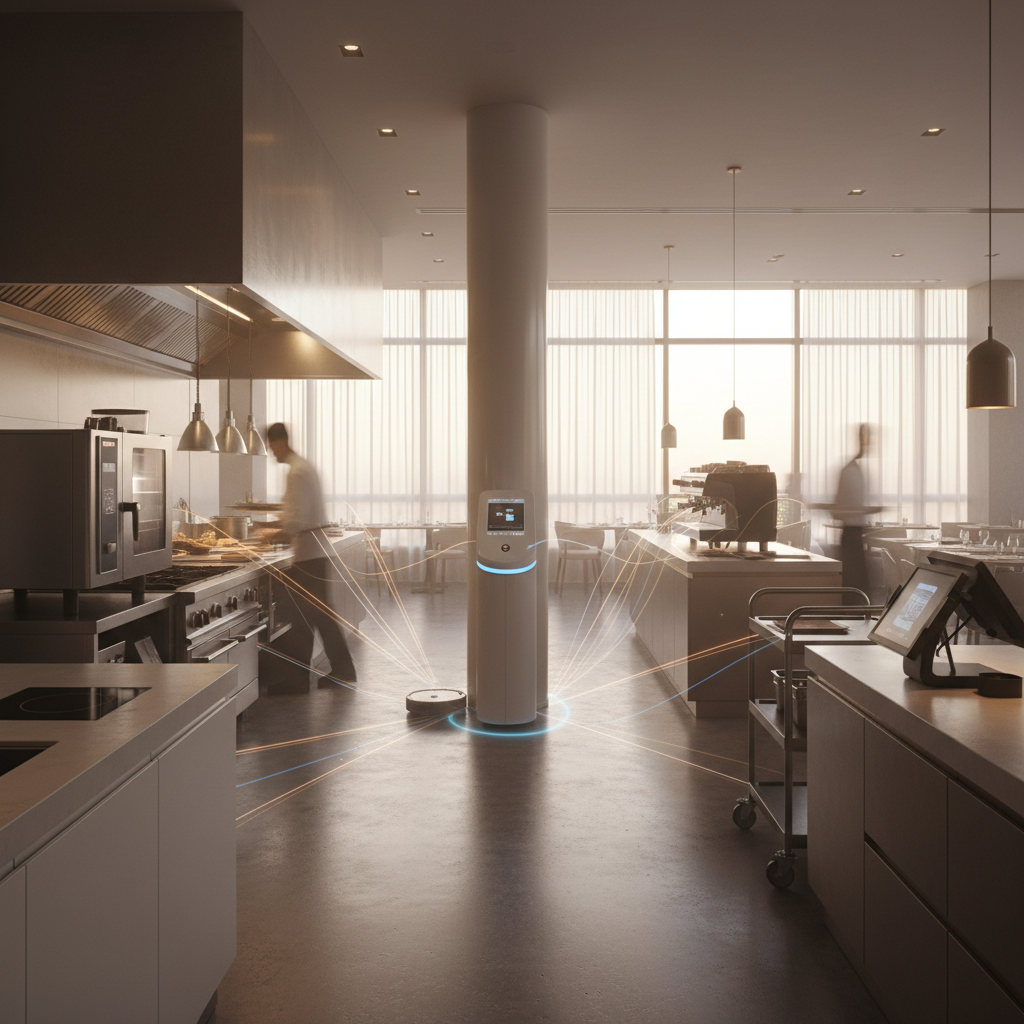
Food safety and energy costs sit high on the list of financial concerns. Connected sensors now log cooler and freezer temperatures continuously, delivering real-time alerts to managers when an environment shifts out of range. Industry analyses, including a 2021 Gartner estimate, indicate that smart appliances and connected equipment can deliver roughly 15% annual cost savings for food and beverage companies. That benchmark drives procurement interest among multi-unit franchise groups managing dozens of refrigeration endpoints across regions.
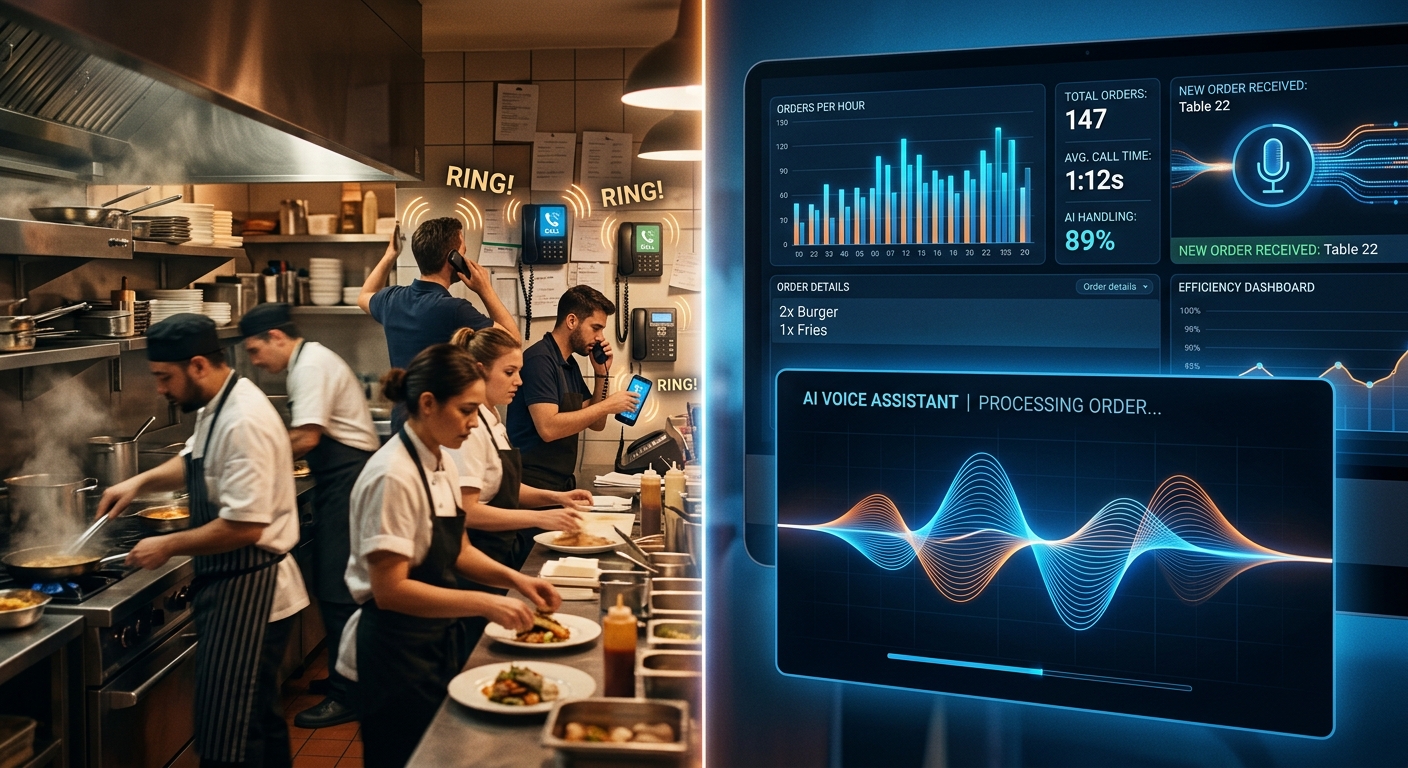
Organizations are now looking beyond basic sensors to incorporate unified communications, AI analysis of spoken interactions, and real-time business analytics layered on top of IoT signals. Operations leaders frequently evaluate how many independent systems they can realistically support before the technology begins pulling managers away from guest interactions.
Security, uptime, and compliance remain non-negotiable because restaurants process payment data and operate busy wireless environments. Evaluating platforms based on their alignment with NIST Cybersecurity Framework guidance is standard practice, and larger brands heavily scrutinize how providers interpret PCI DSS rules for device connectivity.
Energy management capabilities also heavily influence procurement decisions. Buyers frequently cite the 10% to 20% energy efficiency improvements highlighted by U.S. DOE research as a reference point when assessing HVAC and equipment monitoring offerings. While not a guarantee of savings, this metric fundamentally shapes the financial modeling for new technology rollouts.
Analytics capabilities form another critical evaluation layer. Buyers assess how quickly a platform can detect irregularities, trigger alerts, or combine IoT signals with customer interaction data coming through the phone or drive-thru. Some operators prioritize predictive capabilities, while others require basic anomaly detection and simple dashboards, leading to a wide variety of implementation strategies.
Restaurant groups typically consider several deployment paths. Some organizations lean toward point solutions for refrigeration monitoring, energy tracking, or equipment diagnostics. These tools deploy easily but can create a fragmented management experience over time.
Other groups explore integrated IoT ecosystems offered through their existing point-of-sale (POS) or operations platforms. Vendors like Oracle MICROS, Toast, or Lightspeed have expanded integrations for kitchen equipment and environmental monitoring. This path reduces fragmentation but inherently ties the buyer into a specific operational ecosystem.
An alternative route blends IoT with communications and real-time analytics providers. These platforms appeal to operators who want environmental alerts, call analytics, sentiment detection, and workflow automation in a unified layer. Unified Office, Inc. addresses this by combining communications capabilities with real-time business analytics and IoT sensor integrations, functioning as a foundational part of the operational stack.
For some operators, the deciding factor is vendor consolidation. A regional franchise operations director may prioritize minimizing the number of distinct dashboards and reducing the volume of service vendors they must coordinate across locations.
A useful starting point for vendor evaluation is examining how a platform handles data ingestion from multiple device types. Protocols like MQTT or CoAP are common, but vendor implementations differ widely. If a chain has inherited mixed equipment generations across locations, integration flexibility is paramount.
Analytics depth is another primary focus. A restaurant technology director tasked with rolling out a new operations platform across twenty stores will scrutinize where AI is actively applied. They evaluate whether the tool analyzes spoken-word interactions in real time, or if it combines guest sentiment with sensor alerts to shape staffing decisions. These specific details determine the system's day-to-day usability.
Enterprise groups also prioritize support models and resilience. Some providers focus on proactive monitoring and fast replacement services, while others take a self-service approach. The right choice depends on whether internal teams have the capacity to troubleshoot remote refrigeration units during peak operating hours.
During procurement, buyers typically ask how the provider treats device data retention and access control, and what the expected time-to-value is for a multi-location rollout. They also test how the system behaves during network interruptions, whether the provider supports API-based integrations alongside prebuilt connectors, and what technical constraints appear when scaling from ten to one hundred sites.
Alert logic sophistication is heavily scrutinized as well. Buyers examine whether the platform simply relays raw sensor readings or actively interprets anomalies, such as linking an equipment temperature spike with a concurrent power fluctuation in the same store. Organizations vary in their appetite for this level of automated interpretation.
Below is a high-level comparison of commonly evaluated providers, illustrating how solutions span from POS-centric ecosystems to specialized communications platforms:
| Dimension | Unified Office, Inc. | Oracle MICROS | Toast |
|---|---|---|---|
| Security and compliance | Aligns with common restaurant security expectations and applies communications security practices | Strong enterprise compliance posture with broad governance tooling | Solid security foundations within its SaaS ecosystem |
| Integration depth | Integrates communications, IoT inputs, and analytics in a unified layer | Deep POS-centric integrations with equipment ecosystems | Strong integration catalog for front-of-house and some back-of-house devices |
| AI and automation maturity | Emphasizes real-time spoken interaction analysis and alerting tied to IoT signals | Expanding automation inside the POS environment | Offers growing automation in ordering and kitchen workflows |
| Pricing model | Flexible service-based model that fits mixed communications and IoT deployments | Enterprise licensing bundled through POS suites | SaaS subscription structure centered on restaurant operations |
| Scalability | Well-suited for regional and mid-market rollouts seeking unified communication and IoT layers | Highly scalable for large enterprise restaurant groups | Scales effectively for modern franchise operators |
| Deployment and time-to-value | Often streamlined due to combined communications and IoT services | Deployment depends on POS expansion cycles | Generally straightforward for new or modernized stores |
Picture a regional franchise operations lead preparing to modernize fifteen stores across suburban markets. They must simultaneously address equipment monitoring, call handling, drive-thru performance, and basic guest sentiment tracking. A multi-platform setup easily complicates the rollout, leading operators to seek a platform that merges communications with IoT analytics to consolidate complexity. The goal is to minimize the number of systems staff must learn and the number of dashboards management must reconcile.
Alternatively, an enterprise restaurant IT director managing biannual compliance audits will heavily weigh NIST Cybersecurity Framework considerations, POS upgrade schedules, and API availability. Such organizations often gravitate toward a POS-integrated ecosystem like Oracle MICROS or Toast to establish centralized governance tied directly to the transaction layer.
Restaurants ultimately select the provider that aligns with their operational rhythm. The comparison dimensions described here offer buyers a structural approach for assessing which platform best fits the existing workflows and technical maturity of their teams.