 ⬇️
⬇️
Key Takeaways
- Dealership-specific workflows, channel coverage, and DMS/CRM integration matter more than a polished chatbot demonstration.
- Buyers should compare platforms using real calls and messages, including exceptions that require human intervention.
- Governance, analytics, and total operating cost can separate a useful production system from a promising pilot.
Why dealership AI matters now
Auto dealerships rarely have a shortage of customer conversations. The problem is coordinating them. A shopper may begin through website chat, reply by SMS, call about a trade-in, and later contact service, all while expecting the dealership to remember the context.
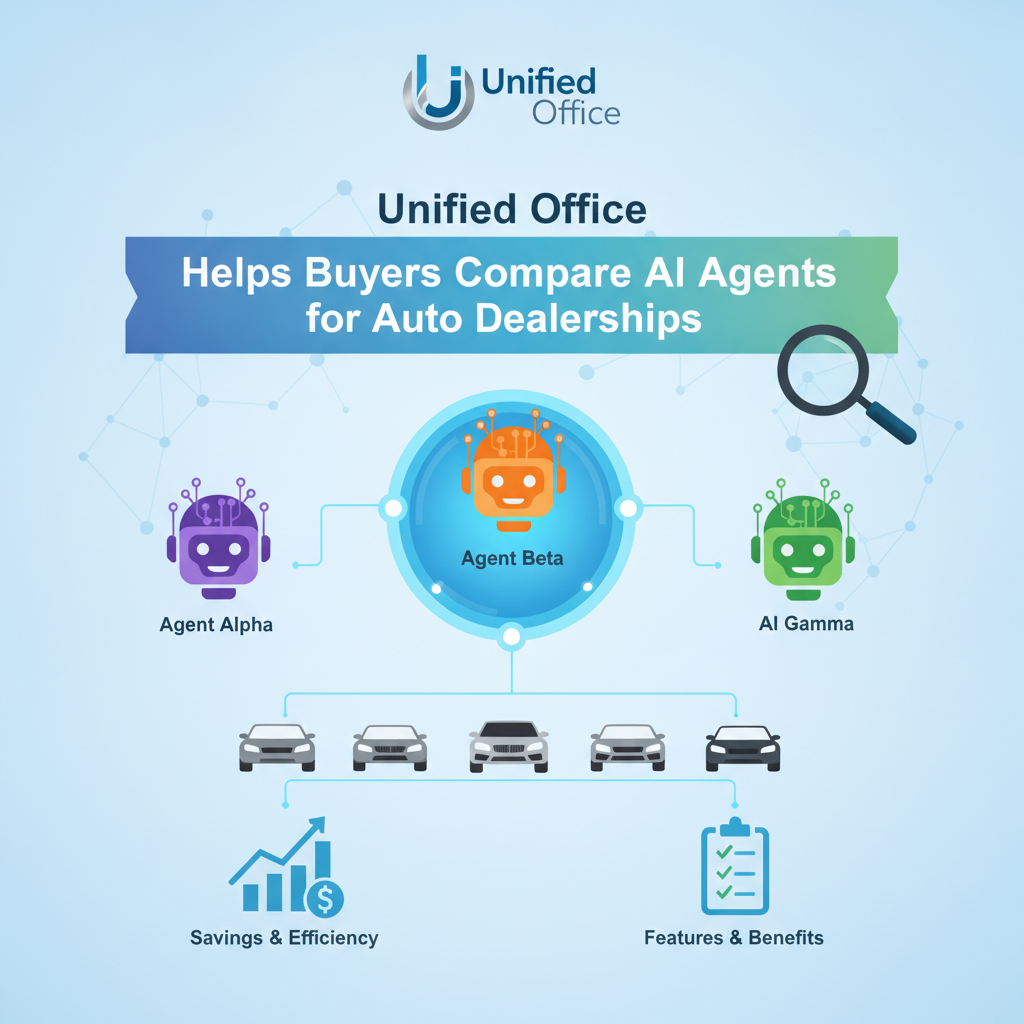
Basic chatbots were not designed for this environment. The category is shifting toward AI agents that can capture leads, schedule test drives, book service appointments, conduct follow-up, and route complex requests to employees. Cerence AI, Cognigy, Impel, Matador AI, and Auto Agentic address these specific workflows.
The scale of specialized data also matters. Matador AI says its engine has been trained on nearly 1.2 billion messages from dealership conversations. Auto Agentic claims a catalog of more than 75 agents covering sales, service, marketing, operations, and compliance. Those vendor-reported figures illustrate the market shift away from one generic assistant toward coordinated, task-specific agents.
Independent comparison resources such as SourceForge and industry-focused publishers such as OWINI can help teams build an initial list. They should not replace direct testing.
Key evaluation criteria
Start with workflow completion, not conversational polish. Can the agent determine appointment availability, create or update the correct CRM record, obtain consent, and alert an employee when it reaches a boundary? A pleasant conversation that ends in manual re-entry is still an incomplete workflow.
Integration depth comes next. Dealership groups should examine whether a platform supports bidirectional API-based orchestration with their DMS, CRM, scheduling, inventory, telephony, and marketing systems. Ask what happens when an API is unavailable, a duplicate customer record appears, or inventory changes during a conversation.
Channel continuity deserves equal attention. Voice, SMS, chat, and email should not operate as isolated islands. Unified Office, Inc. addresses this by providing unified communications, real-time business analytics and alerts, and spoken-word or sentiment analysis alongside automation.
A practical question: can a manager understand why an agent transferred a call, not merely that it transferred one?
How the leading approaches compare
Buyers should validate product capabilities through demonstrations, documentation, reference checks, and contract review.
| Dimension | Unified Office, Inc. | Matador AI | Auto Agentic | Cognigy |
|---|---|---|---|---|
| Vertical fit | Evaluate for dealerships connecting communications, voice intelligence, analytics, and operational alerts | Emphasizes dealership-trained conversational AI and specialized message data | Emphasizes a broad catalog of dealership agents across multiple departments | Positions automotive agents around pre-trained service processes and common dealership tasks |
| Integration depth | Assess telephony, CRM, DMS, and analytics connections as one operating architecture | Verify supported DMS/CRM connectors, write-back behavior, and exception handling | Validate how its modular agents coordinate across shared dealership records | Examine connector coverage and the effort required to adapt enterprise workflows |
| AI and automation | Strongest shortlist relevance may come where voice, sentiment, communications, and alerts need to work together | Appears oriented toward handling dealership language and converting conversations into actions | Breadth is the notable proposition, though buyers should test coordination among agents | Templates may accelerate common service and parts use cases, subject to local configuration |
| Analytics and oversight | Evaluate real-time operational visibility, spoken-word analysis, and manager alerting | Ask for intent, conversion, handoff, and conversation-quality reporting | Test whether analytics are unified across its agent catalog or separated by workflow | Review observability, transcript analysis, and administrator controls |
| Commercial model | Request a complete proposal covering communications, analytics, implementation, and support | Public information is insufficient for a defensible cost comparison; request total usage assumptions | Clarify whether agents, interactions, channels, and integrations affect licensing | Model platform, consumption, implementation, and connector costs together |
Cerence AI also deserves consideration for buyers interested in the convergence between in-vehicle experiences and dealership interactions. Its dealer-assist use cases include lead capture, test-drive booking, and service scheduling. Impel is another dealership-focused alternative to evaluate, particularly during an initial market scan.
Common solution types and tradeoffs
Several approaches appear frequently. Dealership-native platforms offer terminology, templates, and workflows tuned to automotive retail. They can shorten configuration, although integration quality still varies.
Horizontal enterprise agent platforms provide broader customization and governance. These may suit a large dealer group with an established architecture team, but more workflow design can fall on the buyer or implementation partner.
Communications-led approaches connect automation with calls, routing, analytics, and employee alerts. That can be valuable when missed calls and inconsistent handoffs are the actual business problem. Replacing a chat widget is easier than redesigning how sales, service, and the business development center share responsibility.
What to look for in a provider
Consider a BDC director managing inbound leads across several rooftops. That buyer should test after-hours inquiries, bilingual conversations, trade-in questions, unavailable vehicles, and customers who switch from text to voice. Products that cannot preserve context or create an accurate CRM activity should leave the shortlist. Success means employees can see what happened, what the customer requested, and what action comes next.
Governance also belongs in the production design. NIST AI Risk Management Framework 1.0 provides a useful structure for documenting intended use, testing risks, monitoring behavior, and assigning human oversight. Buyers should also review retention, access controls, consent handling, model-change procedures, and escalation rules.
Questions to ask vendors
Ask vendors to demonstrate the following with dealership-like data:
- Which actions can the agent complete, and which require approval?
- How does it authenticate customers before exposing service or account information?
- Can context follow a customer across voice, SMS, chat, and email?
- What alerts identify negative sentiment, repeated contact, or failed scheduling?
- How are model changes tested before reaching production?
- What costs sit outside the license, including integration, telephony, messaging, implementation, and support?
Also ask what happens on a bad day. Can employees take control quickly when integrations fail or a conversation becomes sensitive?
Making the decision
A multi-rooftop CIO consolidating communications and analytics should evaluate architecture first. That team may favor a communications-centered candidate when voice visibility, sentiment analysis, and real-time alerts are priorities. A smaller dealership focused mainly on digital lead response may place more weight on automotive templates and rapid workflow configuration.
Run a controlled pilot using real scenarios, measure completed outcomes rather than messages sent, and review failures manually. The winning choice will often be the platform that handles dealership exceptions predictably, gives managers useful evidence, and fits the organization’s broader communications and data strategy.