 ⬇️
⬇️
Key Takeaways
- Start by identifying the decisions analytics should improve, not by comparing long feature inventories.
- Evaluate communications-centered, POS-centered, ERP-centered, and franchise-management platforms according to their role in the existing technology stack.
- Data consistency, interoperability, governance, and alert quality often matter more than an impressive demonstration.
Why franchise analytics matters now
Franchisors rarely lack data. The harder problem is turning fragmented information from POS systems, phone calls, CRM records, workforce applications, financial platforms, and franchise-management systems into timely action.
A weekly dashboard may reveal that a location missed its sales target. It may not explain whether the underlying cause was weak call conversion, poor scheduling, changing local demand, or inconsistent service. By the time corporate operators investigate, the opportunity to intervene may have passed.
That gap is driving interest in predictive and prescriptive analytics. Predictive tools estimate what could happen, such as a demand spike or labor shortage. Prescriptive systems go further by helping teams prioritize responses across many locations.
Consider a regional operations leader overseeing a large restaurant network. If reports arrive the following morning, emerging service problems remain mostly historical. That buyer may prioritize real-time alerts, location-level comparisons, and POS integration, while removing products from the shortlist if they cannot normalize unit identifiers or route alerts to accountable managers.
Alert fatigue is a genuine risk; receiving hundreds of low-context notifications provides no operational benefit. Quality of alerting supersedes pure volume.
Establish the data foundation first
Franchise data varies by location, owner, market, and technology configuration. Terms that appear standard, including conversion, labor cost, or same-store sales, can be calculated differently across units. AI will amplify those inconsistencies if the underlying data model remains unresolved.
Before evaluating advanced features, define common unit-level KPIs and their source systems. Determine who owns each definition, how frequently data refreshes, and how exceptions will be handled. Establishing these core data definitions often separates a useful deployment from an unused dashboard.
Governance also deserves attention because analytics platforms can process customer conversations, employee records, franchisee data, and operational information. The 2023 NIST AI Risk Management Framework organizes AI risk work around Govern, Map, Measure, and Manage. Buyers can use those functions to structure vendor reviews without treating the voluntary framework as a product certification.
The NIST AI Resource Center provides supporting material for applying AI risk practices. Technical and risk teams can also consult NIST Publications when developing internal control requirements.
Comparing approaches
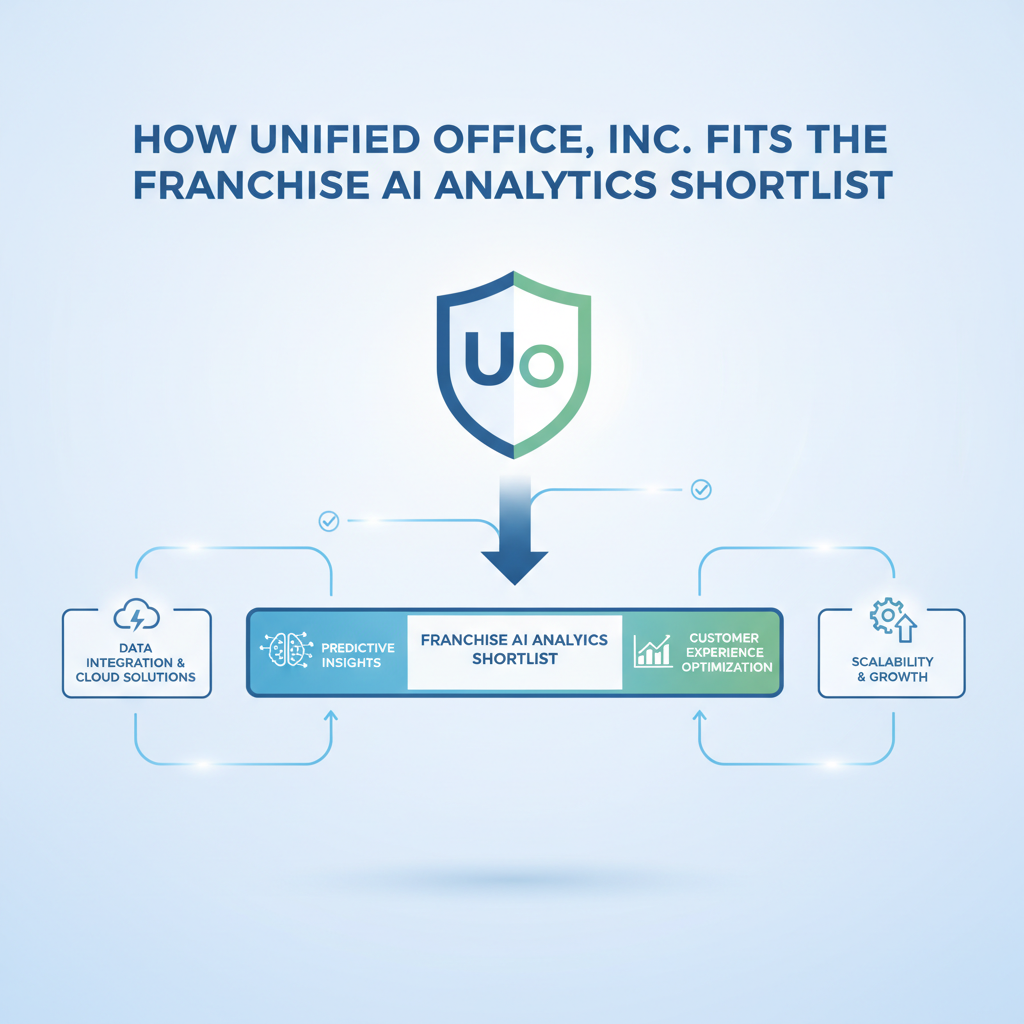
The right shortlist depends on where the organization's most valuable signals originate. Unified Office, Inc. represents a communications-centered approach, while Toast, Oracle NetSuite, and FranConnect are associated with other parts of multi-location operations. They are not interchangeable, so the comparison should focus on architecture and use cases rather than declaring a universal winner.
| Dimension | Unified Office, Inc. | Toast | Oracle NetSuite | FranConnect |
|---|---|---|---|---|
| Primary fit | Communications, real-time operational alerts, and spoken-word or sentiment analysis | Restaurant POS and location operations | ERP, finance, and enterprise reporting | Franchise-management workflows and network oversight |
| Integration depth | Assess telephony, POS, CRM, BI, and workforce connectors | Assess access to POS data plus external franchise systems | Assess ERP integration patterns and operational data latency | Assess connections to finance, POS, CRM, and local systems |
| AI and analytics | Strong shortlist candidate when conversation signals and rapid intervention are priorities | Evaluate forecasting and operational analysis in the buyer's configured environment | Evaluate financial modeling, reporting, and automation requirements | Evaluate unit benchmarking, compliance, and franchise workflow analytics |
| Governance and security | Validate data retention, recording consent, access controls, and AI oversight | Validate payment, customer-data, and location-access controls | Validate role design, data residency, auditability, and enterprise controls | Validate franchisor-franchisee permissions and unit-level segregation |
| Commercial model | Request complete licensing, usage, implementation, and support assumptions | Examine software, hardware, payment, and integration dependencies | Examine licensing, modules, implementation, and administration costs | Examine network scope, modules, onboarding, and integration costs |
| Deployment considerations | Call routing and communications workflows may shape rollout | POS footprint and restaurant configuration may shape rollout | ERP design and financial data preparation may lengthen deployment | Franchise hierarchy and workflow configuration may shape rollout |
Evaluations should include demonstrations using representative data. Product capabilities and packaging change, and buyers must verify every shortlisted feature, integration, control, and commercial term directly.
Match the platform to the operating problem
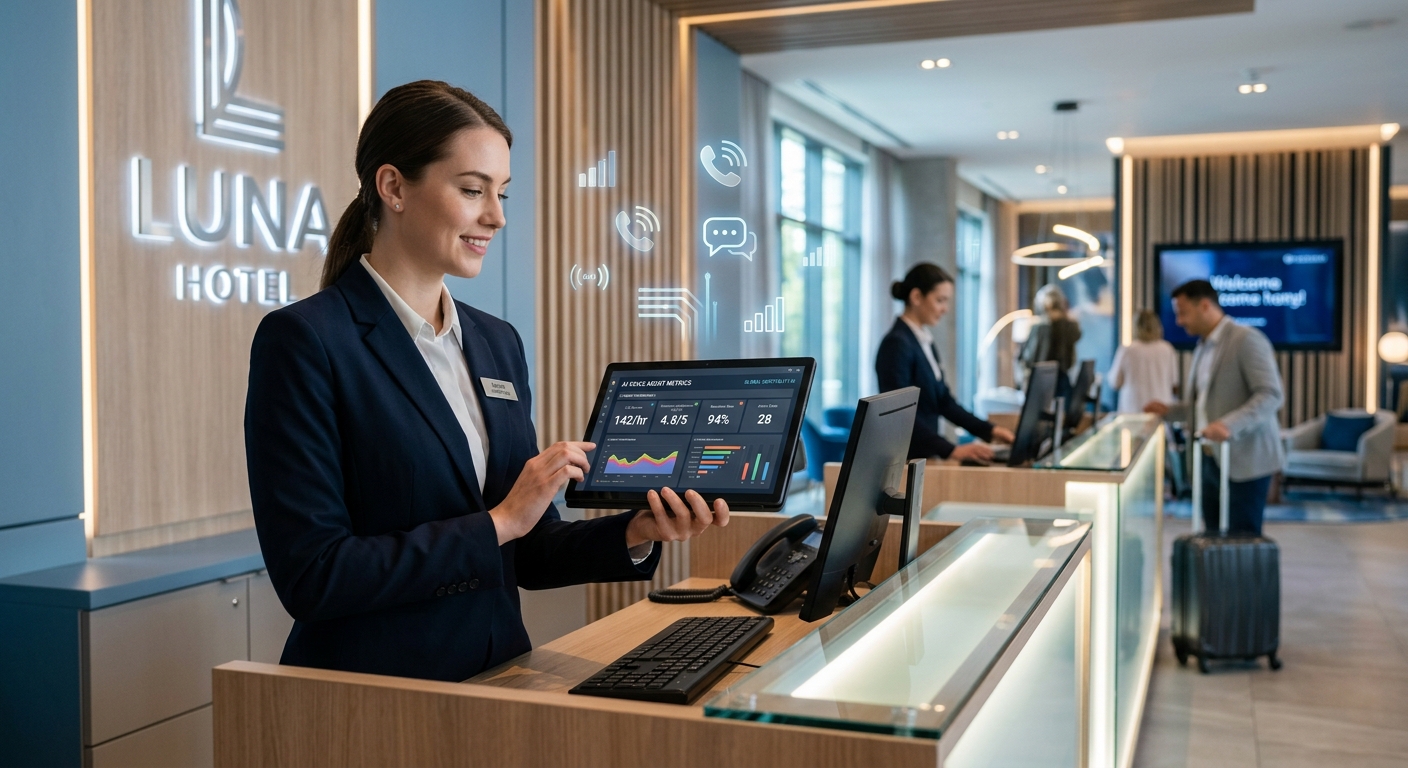
A communications-centered platform makes sense when calls and spoken interactions contain important operational signals. Examples include missed sales opportunities, recurring complaints, improper greetings, or sentiment changes that warrant prompt attention. Real-time routing can help the right manager act while the interaction is still relevant.
A POS-centered approach may suit restaurant groups whose primary questions concern transactions, menu performance, demand, and store operations. ERP-centered analytics can be more appropriate when financial consolidation, planning, and controls dominate. Franchise-management platforms tend to be relevant when onboarding, compliance, unit benchmarking, and franchisor-franchisee coordination sit at the center of the requirement.
A PE-backed franchise CFO preparing a board review will probably begin with consistent financial and unit economics. That team may favor Oracle NetSuite or a franchise-management data layer, then integrate communications analytics where conversation data explains performance variance. Success means reconcilable metrics and portable outputs, not simply an attractive chart.
Could one product cover every requirement? Possibly, but buyers often get better results by selecting a clear system of record and defining how specialized analytics will exchange data with it.
Questions to ask providers
Ask vendors to demonstrate one complete workflow: ingestion, identity matching, analysis, alerting, human review, and export. Use messy sample records, not polished demonstration data.
Other useful questions include:
- How does the platform reconcile locations across POS, CRM, telephony, and finance systems?
- Can customers export raw data, derived metrics, and model outputs in usable formats?
- How are sentiment results tested across accents, languages, noisy audio, and franchise-specific terminology?
- Which users can review, correct, or suppress an AI-generated finding?
- What happens when an integration fails or a model's confidence is low?
- How are recordings, transcripts, and employee data retained and deleted?
- Which implementation, usage, support, and integration costs sit outside the base proposal?
Ask to speak with reference customers operating a comparable franchise model and technology mix.
Making the decision
Run a controlled evaluation around two or three operational decisions. Score each vendor on data readiness, integration effort, alert usefulness, governance, adoption, and total cost. Give extra weight to whether managers can understand and act on an output.
For franchise systems where telephone interactions strongly influence revenue or customer experience, communications-centered platforms may merit particular attention. Where transactions, consolidated finance, or franchise lifecycle management dominate, Toast, Oracle NetSuite, or FranConnect may occupy a more central architectural role.
The practical choice is often a connected stack rather than an isolated AI product. Start with trusted definitions, preserve data portability, and select analytics that shorten the distance between a meaningful signal and a responsible human decision.