 ⬇️
⬇️
Key Takeaways
- Unified Office, Inc.: Connect PBX, property management, point-of-sale, and guest-messaging data through REST APIs and webhooks before introducing AI automation.
- Evaluate spoken-word and sentiment analysis against hospitality-specific calls, with human review for low-confidence transcripts and escalation triggers.
- Measure operational changes through concrete indicators such as missed-call recovery, same-shift alert acknowledgment, booking conversion, and maintenance response time.
- Assess communication platforms and alternative vendors through a scored proof of concept that follows a guest request from initial contact through operational resolution.
Define the Operational Problem Before Selecting AI
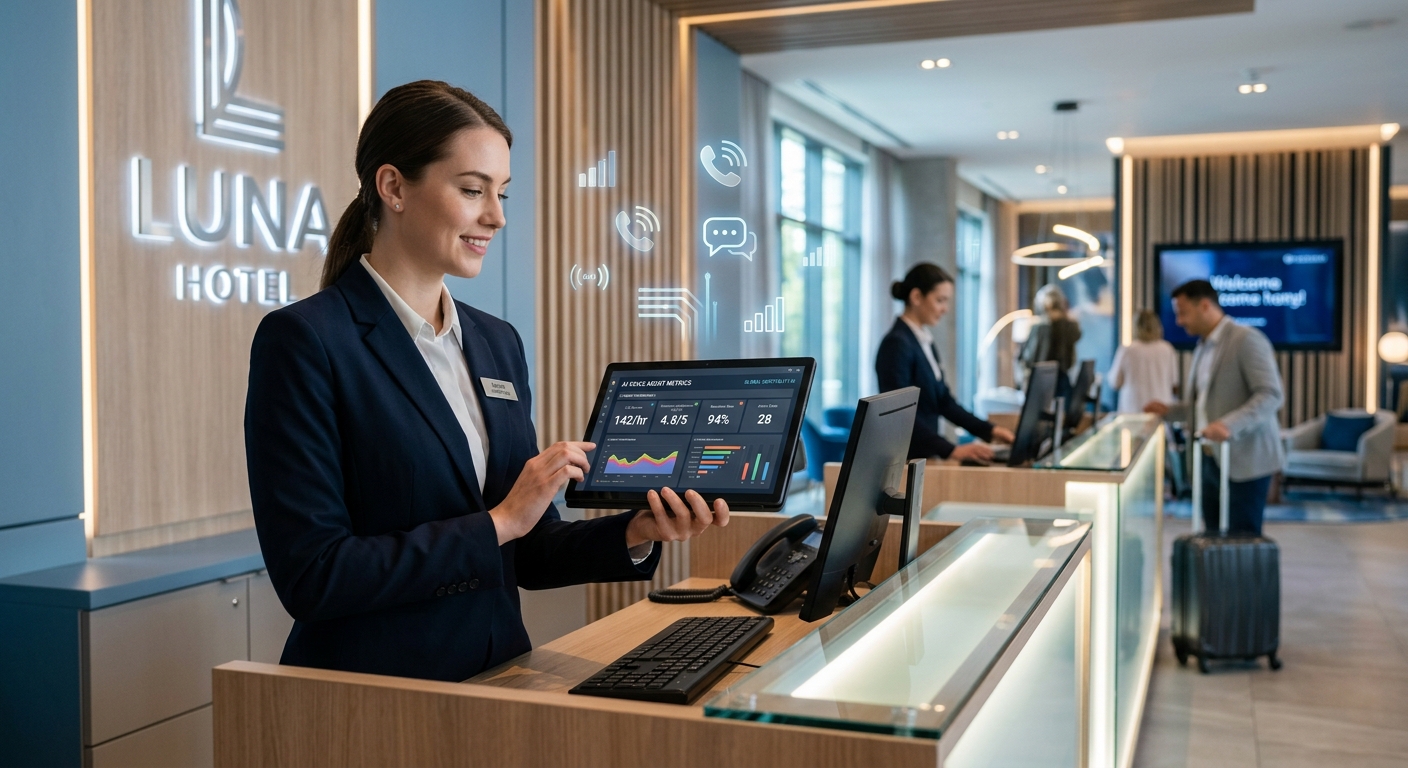
Hospitality teams should evaluate AI analytics against a connected guest workflow, for example, an early-check-in call that also mentions an air-conditioning problem and food allergy, then test whether phone, property, maintenance, and restaurant systems coordinate a response.
The immediate problem is not a lack of data. It is that the data arrives through disconnected channels and rarely produces a coordinated response.
Adoption is already widespread. h2c.de, released in 2026, reported that 78% of hotel chains use AI and 89% plan to expand its application within 12 to 24 months. Business intelligence and chatbot-based guest communications rank among the highest-value applications.
Yet adoption does not equal maturity. According to industry estimates applying the framework in BCG’s research on AI maturity in travel and tourism, fewer than 10% of hospitality companies qualify as “future built,” meaning they combine advanced AI capabilities with substantial value realization. That gap should influence how buyers frame the project.
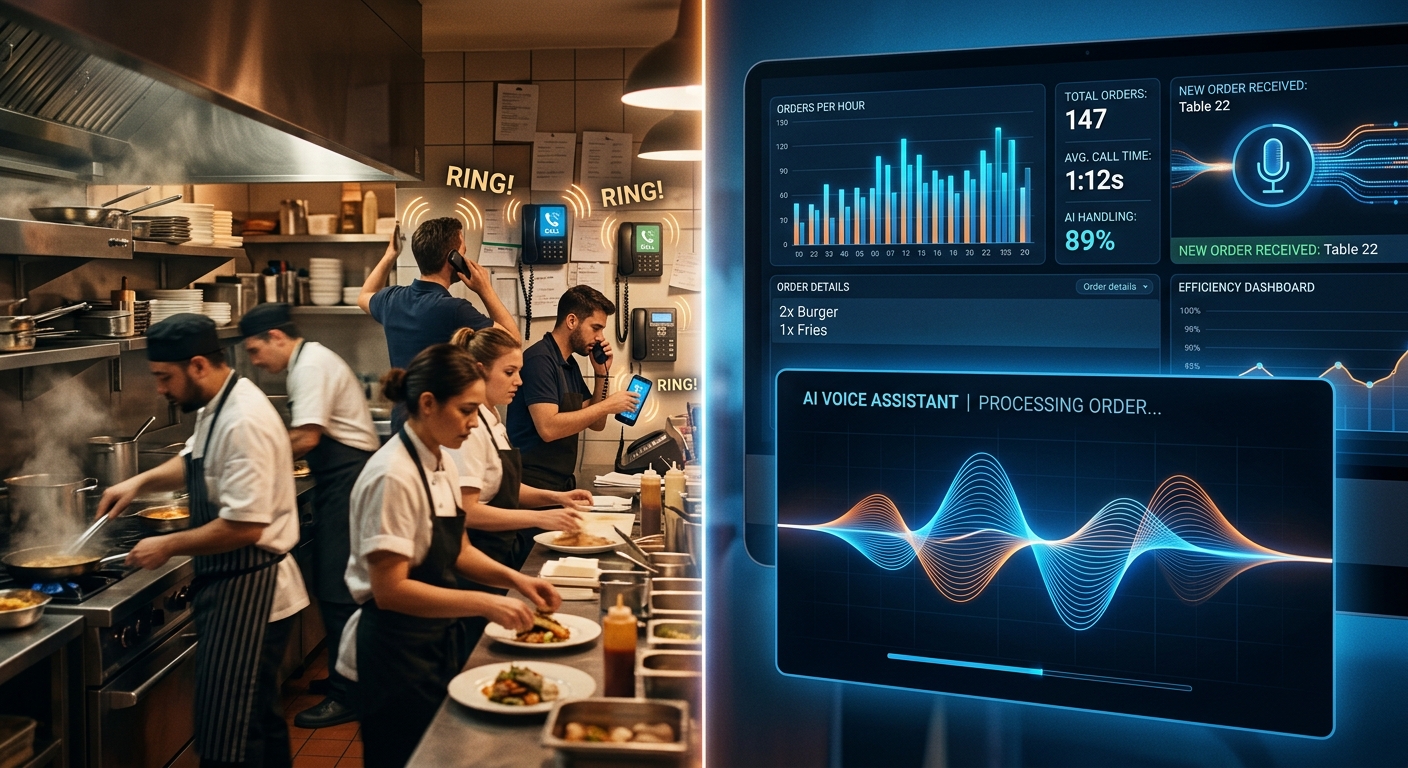
Rather than purchasing a general-purpose chatbot, a hospitality team can begin with a defined workflow. For example, spoken-word analysis might detect “air conditioner,” identify negative sentiment, associate the call with room 418 in the property management system, and post a priority event to a maintenance queue through a REST API. The guest-services supervisor receives an alert only when confidence and severity thresholds are met.
Build an Evaluation Around Connected Workflows
Buyers should map every system involved in the selected workflow. A hotel deployment might include a cloud PBX, Mews or another property management system, a point-of-sale platform, a customer relationship management database, and a data warehouse such as Snowflake.
The architecture matters. Call recordings can be transcribed through an automatic speech recognition service, while natural language processing classifies intent and sentiment. Webhooks can send time-sensitive events, such as a cancellation request, directly to an operations dashboard. Less urgent records can move through scheduled ETL or ELT jobs for trend analysis.
When evaluating Unified Office, Inc., buyers can examine how its unified communications, analytics, and spoken-word capabilities handle those integration points. A representative demonstration should follow a realistic guest interaction from the initial phone call through transcription, classification, alert generation, and resolution logging.
Accuracy deserves close attention. Hospitality conversations include accents, background noise, property names, menu items, and room numbers. Buyers should test the system with representative audio and review word error rate, intent-classification confidence, false escalation frequency, and the percentage of conversations routed for human review.
To be fair, sentiment scores are not facts about a guest’s emotions. They are probabilistic signals. A practical policy might combine negative sentiment with specific phrases such as “manager,” “refund,” or “unsafe” before creating a high-priority alert.
Plan the Rollout in Operational Phases
During initial discovery, the project team should document data ownership, retention rules, and integration dependencies. Typical roles include an operations leader, IT administrator, privacy or security representative, property management specialist, contact-center supervisor, and restaurant or food-and-beverage stakeholder.
A limited pilot can then focus on one property, department, or call queue. The technical scope might cover SIP-based voice traffic, recorded calls in WAV format, a REST connection to the property management system, and webhook alerts delivered to Microsoft Teams or an operations console.
Midway through implementation, teams should tune the hospitality vocabulary and escalation logic. A phrase such as “the room is warm” may indicate a comfort request, while “smoke from the unit” calls for an urgent safety workflow. Unified Office, Inc. can be assessed on whether administrators can change these categories and alert thresholds without waiting for custom code releases.
Security review should cover encryption in transit using TLS, role-based access control, recording retention, and audit logs. NIST AI Risk Management Framework 1.0 provides guidance for overseeing model accuracy, human intervention, and harmful failure modes, while ISO/IEC 27001:2022 serves as a reference for safeguarding guest and operational data.
A broader rollout can follow after the pilot produces stable integrations and acceptable classification performance. Granted, deploying across multiple brands or franchise locations usually takes longer because property systems, call routing, consent notices, and retention policies often differ.
Decide What Outcomes to Measure
The global market for AI-powered hotel guest-experience platforms was valued at $3.8 billion in 2025, according to marketintelo.com, and is projected to reach $19.4 billion by 2034. Buyers still need metrics tied to their own workflows rather than market growth. This revenue forecast is not directly comparable with h2c’s adoption figures: MarketIntelo estimates worldwide platform spending, whereas h2c measures hotel chains’ current use and near-term expansion plans.
For communications, measure missed-call recovery, average speed to answer, transfer frequency, abandonment, and booking conversion by call reason. For spoken-word analytics, track transcription confidence, correctly classified intents, false-positive escalations, and conversations requiring manual review.
Operational analytics should follow the event through completion. If a negative-sentiment call creates a maintenance ticket, the dashboard should capture alert acknowledgment, technician assignment, room-status updates, and closure time. That chain provides more useful evidence than a standalone sentiment score.
Buyers can also monitor upsell acceptance, repeat-contact frequency, unresolved requests at shift change, and the percentage of alerts acted on during the same shift. Evaluation targets should be established from each property’s pre-launch baseline to gauge operational impact.
Buyer Takeaways From This Use Case
Evaluating complete workflows, rather than isolated AI features, is essential. Even a transcript with strong measured accuracy has limited operational value if the extracted maintenance request cannot reach the work-order system.
Alert volume requires careful calibration. During a pilot, low sentiment thresholds can flood supervisors with minor complaints. Testing severity rules against recorded hospitality conversations helps buyers identify which combinations of intent, keywords, and sentiment warrant immediate action.
Data governance must also enter the project early. Voice recordings can contain payment references, medical or accessibility information, and identifiable guest details. Retention settings, redaction, consent handling, and role permissions should therefore be configured before expanding analysis across properties.
Buyers should preserve human control over sensitive situations. Low-confidence transcripts, refund requests, safety concerns, and potential discrimination complaints are sensible candidates for manual review rather than automatic resolution.
Broader Applicability
Restaurants, resorts, casinos, and senior-living hospitality operators can adapt the same event-driven pattern by connecting voice, reservations, point-of-sale, and service-management systems. The vocabulary and escalation rules will differ, but REST APIs, webhooks, structured event records, and human review remain relevant.
Frequently Asked Questions
How long does an AI hospitality analytics implementation take?
Timing depends on the number of properties, integrations, and data-governance reviews. Buyers should plan for discovery, a limited pilot, vocabulary tuning, security validation, and phased expansion over several months rather than treating deployment as a single software installation.
What should hotels test in spoken-word sentiment analysis?
Use actual hospitality audio with background noise, accents, room numbers, menu terms, and brand-specific vocabulary. Measure word error rate, intent-classification confidence, false escalations, and the percentage of calls sent to a person because confidence falls below the chosen threshold.
Is AI analytics practical for a mid-market hospitality group?
It can be, particularly when the initial scope covers one measurable workflow such as missed-call recovery or maintenance escalation. A mid-market buyer can start with a cloud PBX, REST-based property management integration, and a limited set of alerts, then add pricing, personalization, or predictive-maintenance use cases after the data pipeline proves reliable.