 ⬇️
⬇️
Key Takeaways
- Unified Office, Inc.: AI-enabled unified communications can help dental groups reduce abandoned calls, improve scheduling, and identify patient frustration before it becomes lost revenue.
- Buyers assessing AI communications providers should prioritize workflow integration, real-time analytics, security controls, and measurable operational outcomes over isolated AI features.
- A phased deployment that begins with a narrow set of high-volume call types generally provides clearer evidence and limits implementation risk.
The Patient-Access Case
Dental practices can use AI-enabled unified communications to reduce missed calls, route urgent requests, and make scheduling performance visible, provided they integrate the system with existing workflows, protect patient information, and retain human control over sensitive decisions.
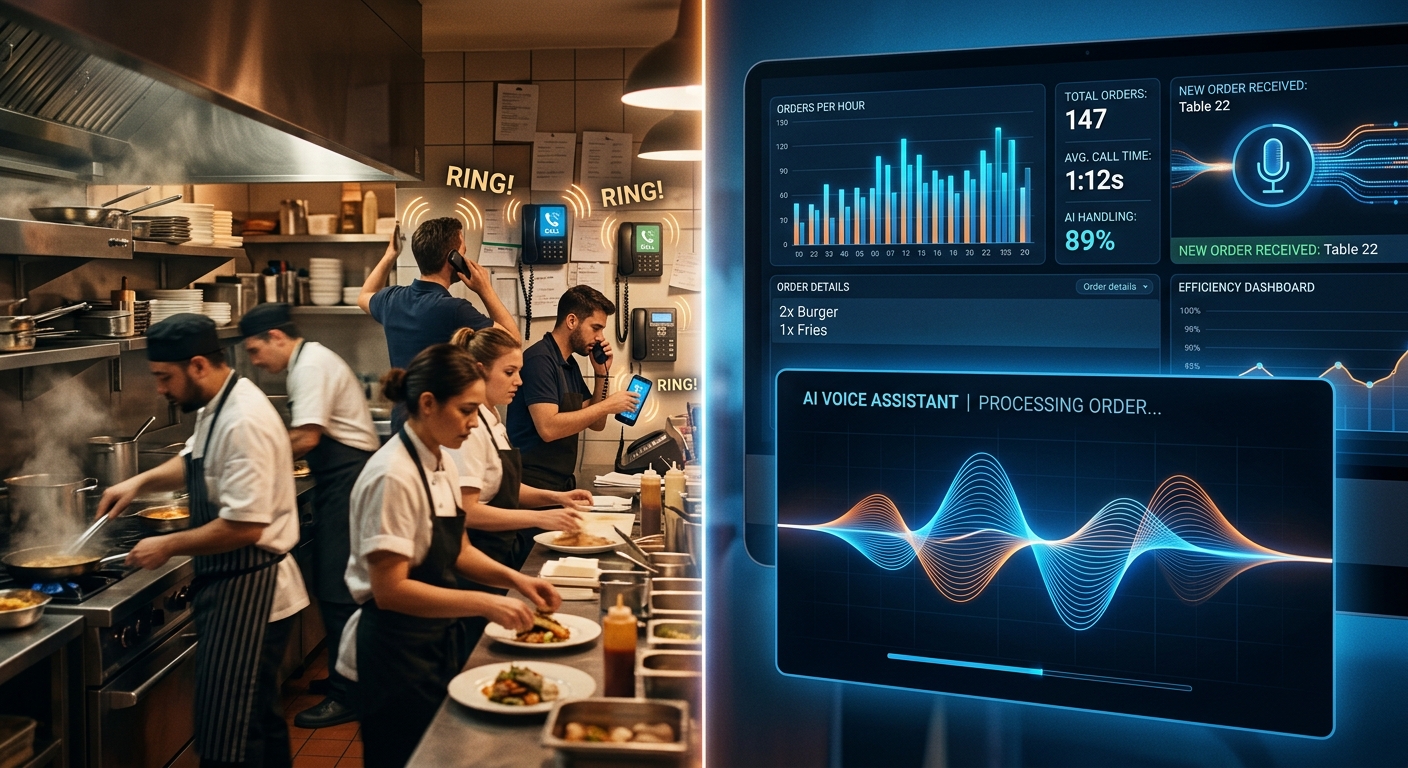
Intelligent routing, virtual voice agents, spoken-word analysis, sentiment detection, and real-time alerts can turn routine conversations into structured workflows and operational data. The goal is not simply to answer more calls. It is to improve access while giving staff better context and managers earlier visibility into emerging problems.
The global contact center AI market reached $2.3 billion in 2024, driven heavily by healthcare demand for automated scheduling and patient engagement workflows, yet organizational maturity remains uneven. Dental groups evaluating providers such as Unified Office, Inc. should therefore focus on practical integration, HIPAA-conscious information handling, call quality, workflow design, and business outcomes. A measured implementation can be more valuable than a broad AI rollout with unclear accountability.
Why Dental Communications Are Reaching a Breaking Point
The dental front office is not a conventional contact center. A single call might involve insurance questions, clinical discomfort, appointment availability, treatment anxiety, or a request to reschedule several family members. Intent can shift during the conversation, and tone can affect how staff interpret the request.
Meanwhile, dental service organizations and multi-location practices are centralizing patient access. That may improve consistency, but it also exposes operational variation. One office answers quickly while another sends callers into long hold queues. One team converts new-patient inquiries effectively; another loses them after repeated transfers. Without shared communications data, leaders see the symptoms but not the causes.
Healthcare organizations recognize the opportunity. A 2026 PerfectServe report found that 67% of respondents regarded AI-enabled routing as critical or very important, while 87% described their organizations' AI maturity as beginning or intermediate. The gap is revealing: interest is high, but deployment discipline is still developing.
What happens when a patient mentioning severe pain is treated like a routine scheduling caller? Traditional menu trees depend on patients selecting the right option. AI-assisted routing can instead evaluate spoken intent, location, language, urgency indicators, and staff availability. It can then direct the interaction or alert a person. Clinical decisions should remain with appropriately qualified staff, but communications technology can help calls reach them faster.
There is also a revenue dimension. Missed new-patient calls, poorly handled cancellations, and delayed follow-up can leave chair capacity unused. Sentiment analysis adds another signal by identifying conversations associated with confusion, frustration, or repeated objections. It is not a diagnosis of emotion; it is a cue for review.
Designing an AI Unified Communications Strategy
A useful strategy starts with call journeys, not feature catalogs. Buyers can map how new-patient inquiries, confirmations, cancellations, insurance questions, postoperative concerns, and emergency requests currently move through the organization. Where do callers repeat information? Which requests create the most transfers? Which queues produce abandonment?
Consider a chief operating officer at a multi-location dental group trying to standardize patient access after several acquisitions. That executive should evaluate centralized routing, location-level reporting, failover behavior, and practice-management integration first. A product with accurate transcription but weak site-level administration would likely fall off the shortlist. Success would look like consistent handling across locations without erasing local scheduling rules.
Evidence from broader healthcare is encouraging. A 2026 American Journal of Healthcare Sciences case study reported that a cloud contact center implementation with AI reduced monthly inbound calls by 12%, lowered average handle time from 6.0 to 4.8 minutes, and reduced abandonment from 12% to 8% over six months. Dental results will vary, but the case illustrates why baseline measurement matters.
The architecture also deserves scrutiny. SIP- and VoIP-based communications provide the real-time foundation, while HL7 or FHIR interfaces can support appropriate information exchange with electronic health record or practice-management systems. Buyers should ask exactly what data moves, when it moves, where it is retained, and which system remains authoritative.
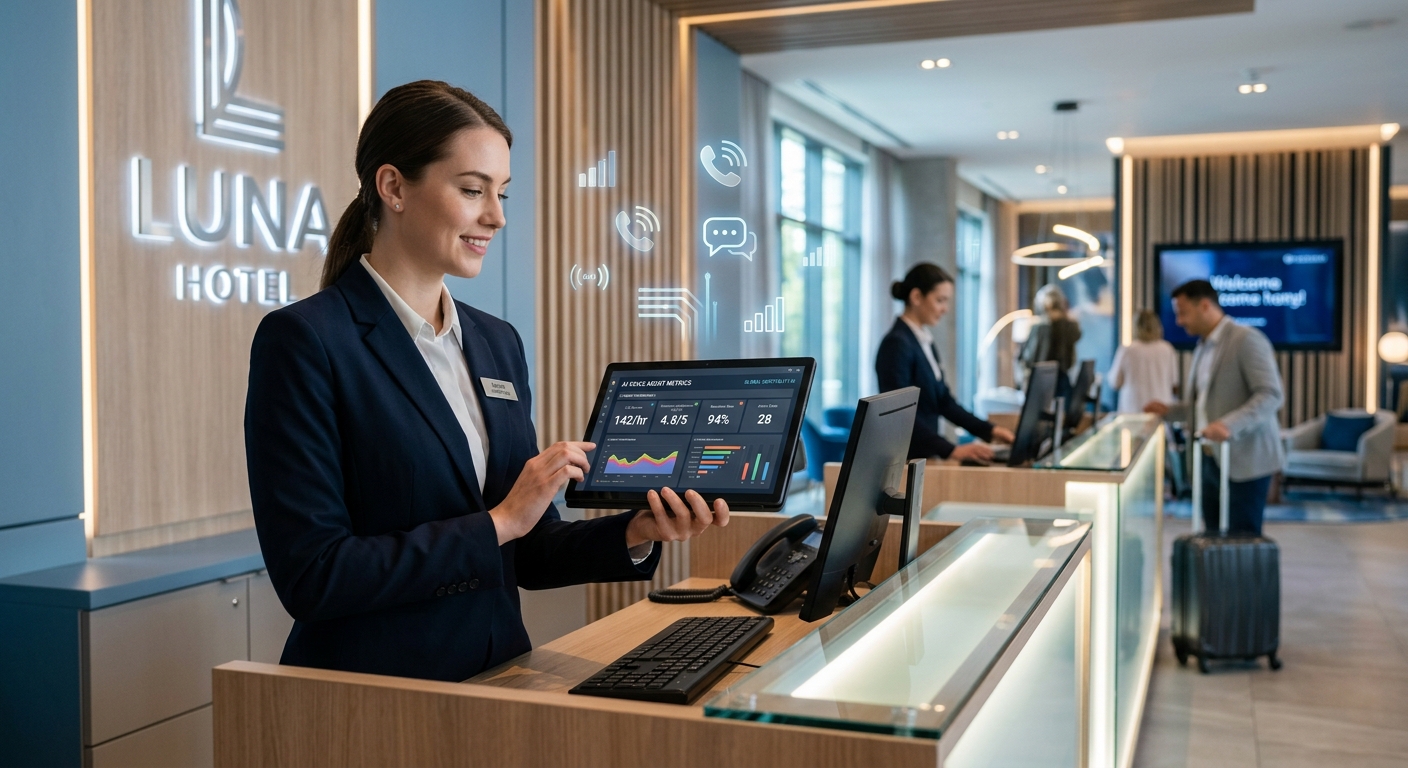
A transcript is useful only if someone can act on it. Real-time analytics should support alerts for long waits, recurring cancellation reasons, negative conversational signals, unanswered calls, and unusual demand. Who receives each alert, and what are they expected to do next? Without an operating response, dashboards become expensive wallpaper.
Implementing With Control and Clear Accountability
Start with a bounded use case. A narrow deployment might address after-hours scheduling requests, appointment confirmations, basic location questions, and call classification. These are frequent interactions with comparatively clear boundaries. More sensitive clinical or financial conversations can remain human-led.
Picture an IT director supporting a regional dental organization while preparing for a HIPAA risk review. That buyer will look beyond encryption checkboxes. The evaluation should cover access controls, audit records, recording policies, transcription retention, subcontractor handling, business associate agreements, and deletion processes. A solution that cannot explain how protected health information moves through AI services should be cut from consideration.
According to Grand View Research, the market for AI voice agents in healthcare reached $468 million in 2024 and is projected to reach $3.18 billion by 2030, reflecting a 37.8% compound annual growth rate. Healthcare is one of several verticals applying the technology to scheduling, patient engagement, and remote-care workflows. Unified Office, Inc., RingCentral, Five9, and Zoom Phone are among the established vendors offering AI-assisted communications capabilities, but vendor scale alone does not settle the dental use case.
How well does the platform handle background noise, dental terminology, accents, multiple callers, and abrupt changes in intent? Pilot testing should use representative traffic rather than curated demonstration scripts.
Teams should establish baseline measures before activation. Useful indicators include answer speed, abandonment, transfer rate, handle time, scheduling conversion, unresolved-call volume, and staff time spent returning messages. Pair those numbers with quality review. Faster is not automatically better if patients leave confused.
What Comes Next
AI voice agents are moving from simple menu replacement toward conversational task completion. Much of the operational value is likely to come from combining automation with human escalation rather than forcing every interaction into self-service.
The latest published federal benchmark found that predictive AI adoption among U.S. hospitals increased from 66% in 2023 to 71% in 2024, while reported use for scheduling rose from 51% to 67%. Those figures come from a 2026 Office of the National Coordinator for Health Information Technology data brief, Hospital Trends in the Use, Evaluation, and Governance of Predictive AI, 2023–2024. Dental organizations can expect similar pressure for easier access and more responsive communications.
That said, the strongest programs will probably look less dramatic than product demonstrations. They will have clean routing rules, reliable integrations, defined escalation paths, monitored models, and managers who act on the data. Can the organization explain why a call was routed, flagged, or summarized in a particular way? That question will become increasingly important.
Conclusion
AI unified communications can help dental practices address a stubborn operational problem: patients still rely on voice, while staff capacity remains constrained. Intelligent routing, voice automation, spoken-word analysis, sentiment signals, and real-time alerts offer a way to improve access without treating every call as identical.
The buying decision should remain grounded in workflows and evidence. Map patient journeys, protect health information, test integrations, establish baselines, and begin with contained use cases. Then expand where measured results support it.
For enterprise and mid-market dental groups, the opportunity is not merely a smarter telephone system. It is a more observable, responsive patient-access operation, built one well-defined interaction at a time.