 ⬇️
⬇️
Key Takeaways
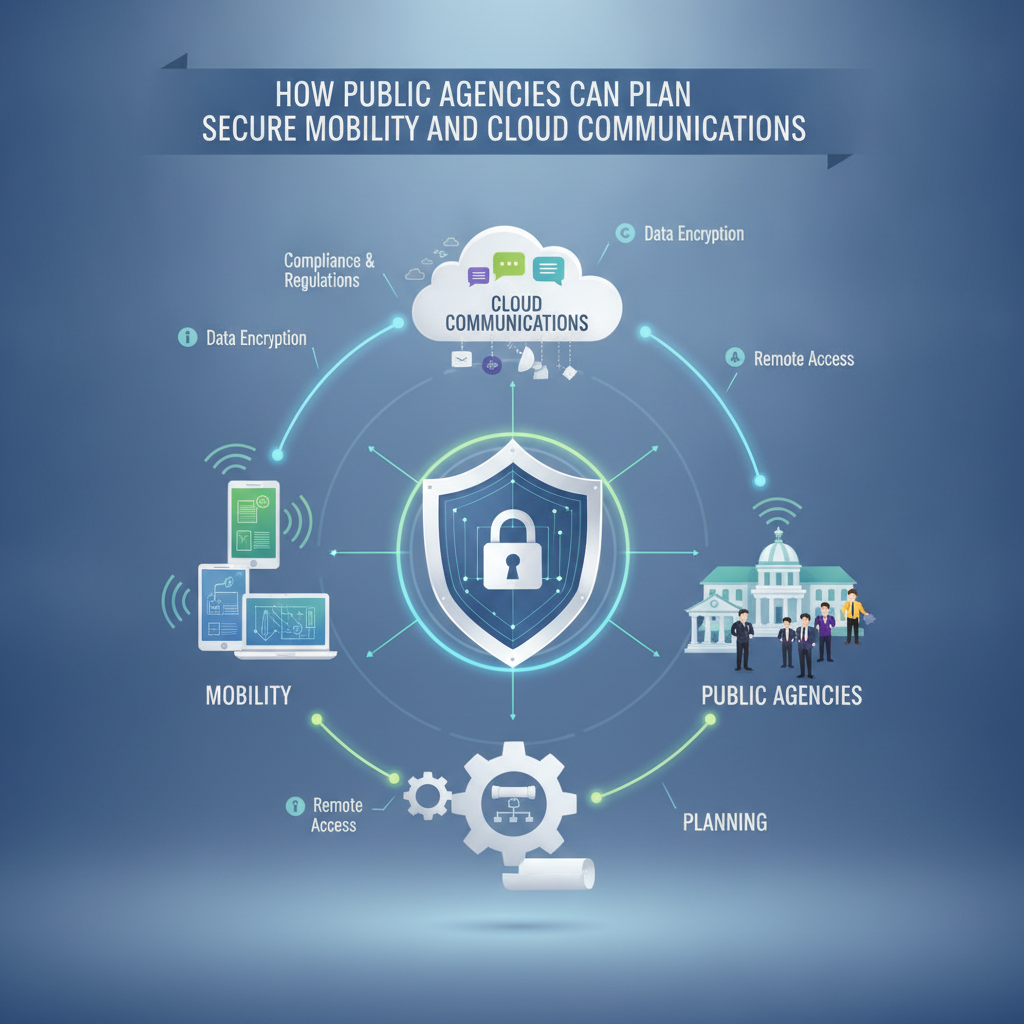
- A practical evaluation should test Cloud PBX, unified communications, and contact-center workflows against encryption, remote-wipe, NG911, and accessibility requirements.
- Phased deployment can begin with a limited user group and validate SIP trunking, single sign-on, mobile-device management, call routing, and location data before broader migration.
- Post-launch measurement should track abandoned calls, first-contact resolution, failed device enrollments, emergency-location accuracy, and same-day exception handling.
Define the Operational Problem Before Comparing Vendors
A field inspector loses connectivity while uploading photos. A remote benefits specialist cannot transfer a caller to the correct department. A public-safety callback reaches a general office number instead of the employee who placed the call. These are separate incidents, but they often expose the same architectural problem: mobile devices, telephony, identity, and contact-center systems are being managed as disconnected services.
Government mobility planning therefore extends beyond purchasing smartphones. Buyers may need to support remote employees, field crews, public-safety personnel, contractors, and residents contacting an agency through voice, SMS, or web channels. Each workflow places different demands on authentication, device control, call recording, retention, accessibility, and emergency location.
The U.S. Department of Transportation documented an interagency planning model through its Mobility Services for All Americans work. The useful lesson for communications buyers is coordination: deployment decisions benefit from shared service definitions, governance, and operating procedures rather than department-by-department purchases.
A buyer can make this concrete by mapping 10 to 20 high-volume workflows. Each map should identify the user, managed endpoint, identity provider, data destination, escalation route, and required record. For example, a missed transit-support call might create a ticket through a REST API, retain a recording in encrypted object storage, and route a callback to a queue rather than an individual extension.
Build an Evaluation Around Workflows and Controls
Feature matrices can obscure the harder questions. A Cloud PBX may offer mobile calling, yet still require careful validation of E911 or NG911 location behavior, network failover, shared-line appearances, and records retention.
An evaluation involving 101VOICE should examine how Cloud PBX, unified communications, and contact-center functions connect to the agency’s existing environment. Relevant integration points can include Microsoft Entra ID or another SAML identity provider, SIP trunks, mobile-device management, CRM records, help-desk platforms, and analog adapters for fax machines, elevators, or emergency phones.
Security review should cover AES encryption for stored data, TLS and SRTP for signaling and media, multifactor authentication, role-based administration, remote wipe, and device-compliance policies. Federal mobile guidance identifies encryption, strong authentication, managed-device policies, and remote erasure as baseline controls. Buyers should ask vendors to demonstrate those controls in an administrative console rather than accept a checklist response.
Public-sector education buyers can also use association resources to understand how communications suppliers present their government capabilities. The California IT in Education publication and the California Association of School Business Officials buyer guide illustrate the role that sector-specific channels play in early vendor discovery. Procurement teams still need to validate contractual, accessibility, security, and interoperability claims independently.
Plan the Rollout in Operational Phases
During discovery, the agency can inventory direct-inward-dial numbers, hunt groups, auto attendants, call queues, common-area phones, recording policies, and analog lines. A session border controller or SIP test environment can reveal codec, firewall, and network-address-translation issues before production traffic moves.
The pilot phase should include several user types rather than one technically comfortable department. A useful group might include a field worker on LTE or 5G, a contact-center agent, a remote supervisor, a records administrator, and an emergency-management representative. Testing should cover Wi-Fi-to-cellular handoff, SAML login, remote wipe, voicemail transcription, queue overflow, call recording, and location-aware emergency calling.
During broader deployment, 101VOICE can be assessed on number-porting procedures, contact-center routing, endpoint provisioning, escalation ownership, and integration support. Buyers should request a rollback plan that preserves legacy SIP service until porting, emergency calling, and inbound queue behavior have passed acceptance testing.
Obstacles frequently appear at the edges. An analog door phone may require an ATA using SIP, a courthouse may block voice traffic through an old firewall rule, or a remote employee’s home router may mishandle UDP sessions. A documented exception register helps the project team assign each issue to networking, identity, telecom, security, or vendor support.
Decide What Success Will Look Like
Post-launch reporting should connect technical performance to public service. Cloud PBX dashboards can expose call completion, packet loss, latency, jitter, and device-registration failures. Contact-center reports can show abandoned calls, queue time, transfer frequency, first-contact resolution, and callback completion.
The agency should also measure inclusion. Smartphone-based services can expand access while excluding residents who lack compatible devices, reliable data plans, or confidence using digital channels. Keeping a published telephone route, accessible IVR prompts, text alternatives, and staffed escalation paths prevents a mobile-first program from becoming mobile-only.
Because every deployment environment differs, buyers should establish baseline metrics before migration and compare equivalent periods after launch, while accounting for seasonal demand such as tax deadlines, enrollment periods, severe weather, or benefit renewals.
Buyer Takeaways From the Planning Process
Workflow mapping can prevent an attractive UC feature from displacing a required public-sector function. If emergency callbacks currently reach a dispatch queue, that behavior should appear in acceptance criteria before phone numbers are ported.
The mixed-user pilot matters because office staff rarely uncover the same failures as field personnel. Testing an iOS or Android softphone over cellular service can expose handoff and authentication problems that remain invisible on wired desk phones.
Finally, analog endpoints deserve early attention. Fax lines, alarms, intercoms, and elevator phones can delay migration when teams discover them during final cutover rather than during the inventory phase.
Where This Model Applies
State agencies, municipalities, transit authorities, school districts, and public utilities can adapt this playbook by changing the workflow inventory and retention rules. The same architecture also applies to regulated mid-market organizations that combine mobile employees, public contact queues, and legacy voice endpoints.
How long does a government Cloud PBX implementation take?
Timing depends on number portability, procurement, integrations, and legacy endpoints. Buyers should plan separate discovery, pilot, migration, and stabilization phases, with additional time for SIP testing, emergency-location validation, accessibility review, and analog-line remediation.
What should a public agency test during a mobility pilot?
The pilot should test managed iOS and Android devices, SAML 2.0 authentication, remote wipe, Wi-Fi-to-cellular handoff, SRTP media encryption, call recording, queue overflow, and NG911 location behavior. Include field, contact-center, supervisory, records, and emergency-management roles so the test reflects different network and compliance conditions.
Is unified communications practical for a small government IT team?
It can be, provided administrative work is clearly divided between internal staff and the provider. A small team should ask who handles device provisioning, number ports, SIP troubleshooting, identity integration, retention settings, and after-hours escalation, then document those responsibilities in the service agreement.