 ⬇️
⬇️
Key Takeaways
- Voice AI projects work better when telephony, identity, messaging, compliance, and automation are evaluated as one operating environment.
- PBX coexistence, SIP connectivity, SMS and MMS support, and human escalation remain central buying criteria.
- Enterprises should begin with bounded use cases, measurable service outcomes, and governance controls before expanding automation.
Executive Summary
Voice AI is moving from experimental meeting transcription into live enterprise communications. Microsoft Teams can now combine voice isolation, speaker attribution, Copilot capabilities, task-specific agents, and conventional telephone services. Microsoft has also introduced real-time voice agents in Copilot Studio for Dynamics 365 Contact Center, with an extension into Teams Phone on the roadmap.
While this expands operational capabilities, it does not remove the difficult parts of telephony. Enterprises still need to connect PBXs and SIP trunks, preserve telephone numbers, support emergency calling, manage SMS and MMS, and route conversations to people when automation reaches its limits.
The practical question is not simply, "Which voice model sounds most human?" It is whether the complete communications design can operate reliably under real business conditions. Buyers should assess the call path, AI architecture, carrier services, security model, governance controls, and user experience together.
Why Voice AI Matters Now
Employees and customers increasingly expect communications to move across channels without losing context. A customer may send a text, call the main number, receive an automated answer, and then need a specialist. Inside the business, that interaction may touch Teams, a CRM platform, a contact center, a legacy PBX, and a carrier network.
Even if each individual component works well independently, the end-to-end experience can still fail without proper integration.
Microsoft is steadily bringing AI closer to live communications. Its Teams capabilities include voice isolation, voice profiles, speaker identification, Copilot in Teams, and specialized agents. According to Microsoft Learn, agents in the Teams environment can support collaboration and role-specific workflows. Teams Phone Agents are also being positioned to screen calls, answer questions, and route callers without forcing them through rigid menu trees.
Meanwhile, real-time voice agents are generally available through Copilot Studio for Dynamics 365 Contact Center. Their planned expansion into Microsoft Teams Phone points toward a communications model in which AI participates directly in calls rather than analyzing them only after the fact.
The Enterprise Problem Is Larger Than the AI Agent
A voice agent still depends on a telephone environment. It needs a number, an inbound route, media connectivity, identity controls, escalation logic, and access to approved business information. If SMS or MMS is part of the journey, messaging introduces additional carrier and consent considerations.
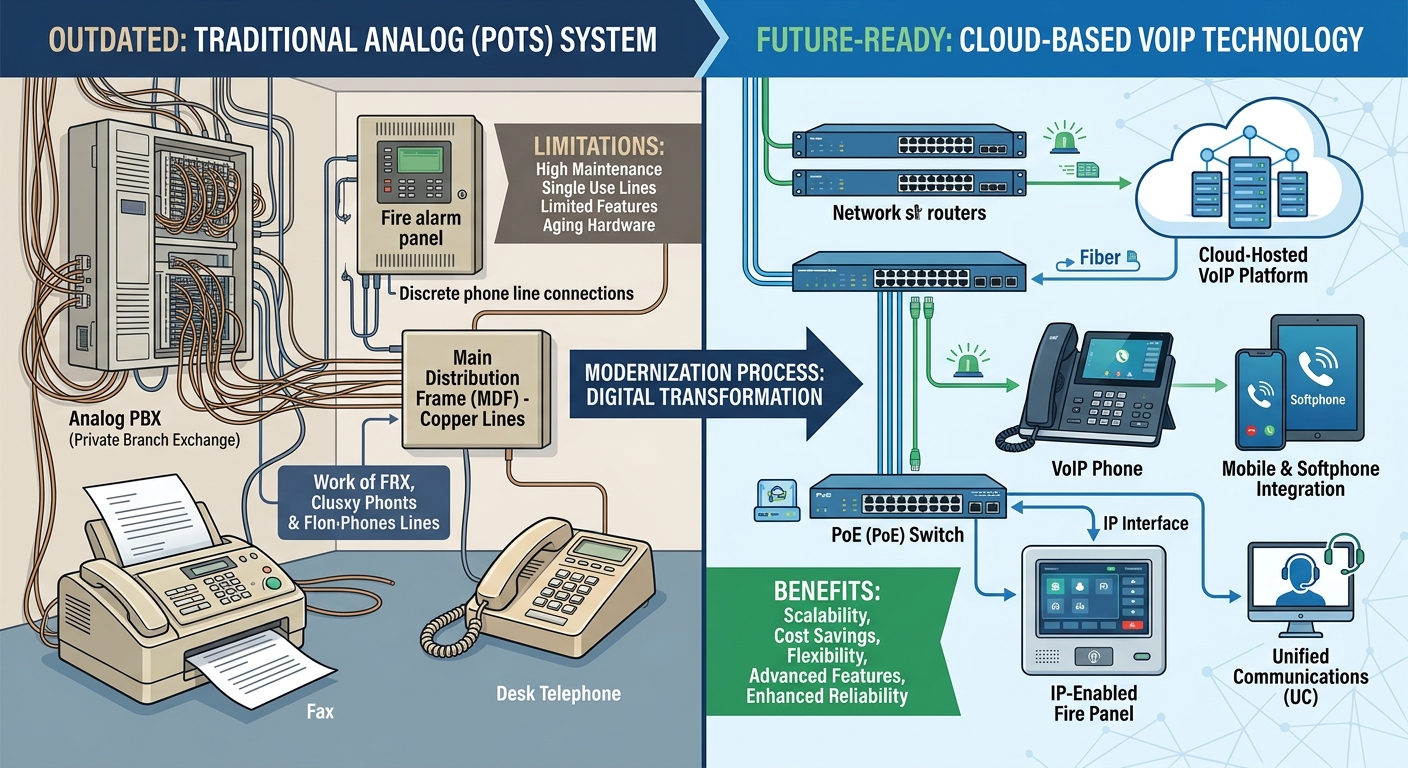
Consider a CIO integrating several acquired businesses. One subsidiary uses an on-premises PBX, another has cloud calling, and a third relies on mobile phones. The first evaluation priority should not be conversational style. It should be whether a proposed architecture supports phased PBX coexistence, SIP trunk connectivity, number migration, policy consistency, and reliable routing into Teams.
Solutions that require an immediate, company-wide replacement of functioning voice infrastructure may fall off that shortlist. Success would look more practical: users gain a consistent Teams experience while legacy systems are retired according to business readiness rather than vendor pressure.
Providers such as TeamMate Technology operate in this integration layer, where Teams telephony, existing PBX services, SIP connectivity, and business messaging need to function as a coherent service.
SMS and MMS deserve similar scrutiny. Can users communicate from recognizable business numbers? Are conversations retained according to company policy? How are opt-outs, inappropriate content, and shared-number access handled? The Federal Communications Commission provides guidance relevant to unwanted calls and messages, but organizations also need counsel and carrier-specific review for their actual use cases.
Designing the Technical and Operating Model
For interactive voice applications, Microsoft points developers toward a Microsoft Graph Cloud Communications bot using the Real-time Media Platform. This pattern provides access to live audio for low-latency workflows. It also introduces engineering questions around media processing, bot permissions, application hosting, monitoring, and resilience.
Third-party offerings, including AudioCodes VoiceAI Connect and CSC Voice AI, illustrate the growing integration market around Teams voice automation and contact-center scenarios. Buyers should distinguish packaged connectors from custom development platforms. One may reduce implementation work; the other may offer greater control. Neither choice removes the need for testing.
A contact-center director replacing a fixed interactive voice response menu has a different decision path. That buyer should first test interruption handling, background noise, accent variation, authentication, transfer accuracy, and recovery when the agent does not understand. A polished demonstration is not enough. What happens when the caller changes the subject halfway through a sentence?
Human escalation should preserve context wherever possible. Callers tend to react poorly when an AI agent gathers information and the employee asks for it all again.
Governance matters too. Voice profiles and policy configuration affect speaker attribution in managed Teams spaces. Recording, transcription, retention, and model access should therefore be treated as policy decisions, not default technical settings. The NIST AI Risk Management Framework offers a useful structure for identifying, measuring, managing, and governing AI-related risk without prescribing one product architecture.
Implementation Priorities
A bounded rollout is usually more informative than a broad launch. Start with a call type that has a clear purpose, stable source data, moderate risk, and an obvious transfer path. Appointment status, office routing, service triage, and internal help-desk calls may be reasonable candidates depending on the organization.
Measure completion, transfer quality, abandonment, latency, transcription accuracy, and employee rework. Also review failures manually. Numbers can show where a problem exists, but call samples often reveal why.
Security teams should examine application permissions, media handling, transcript storage, identity boundaries, administrative roles, and supplier access. Telecommunications teams should test call quality, failover, emergency services, number presentation, and carrier routing. Business owners need authority over the answers an agent is permitted to give.
A small detail, but an important one: design the fallback experience early. Voice AI will encounter uncertainty. The differentiator is often not avoiding every error, but recovering cleanly.
Outlook and Conclusion
Voice AI in Microsoft Teams is evolving toward direct participation in enterprise calls, supported by Copilot Studio, Teams Phone, Microsoft Graph, and a growing partner ecosystem. Over time, distinctions among meetings, contact centers, telephone calls, and business messaging may become less visible to users.
The architecture underneath will still matter. Enterprises should evaluate AI agents alongside PBX migration, SIP connectivity, SMS and MMS governance, identity, compliance, and operational support.
The sensible path is incremental: select a concrete use case, map the full communications journey, test under imperfect conditions, and expand only when service evidence supports it. Voice AI can make Teams a more capable communications hub. The value, however, will come from disciplined integration rather than novelty alone.