 ⬇️
⬇️
Key Takeaways
- Nelson County adopted a one-year moratorium on all new data center applications.
- Other Kentucky communities are advancing large-scale projects, including an Anthropic lease in Hawesville.
- Statewide debates now center on energy demand, water use and how local grids can handle hyperscale growth.
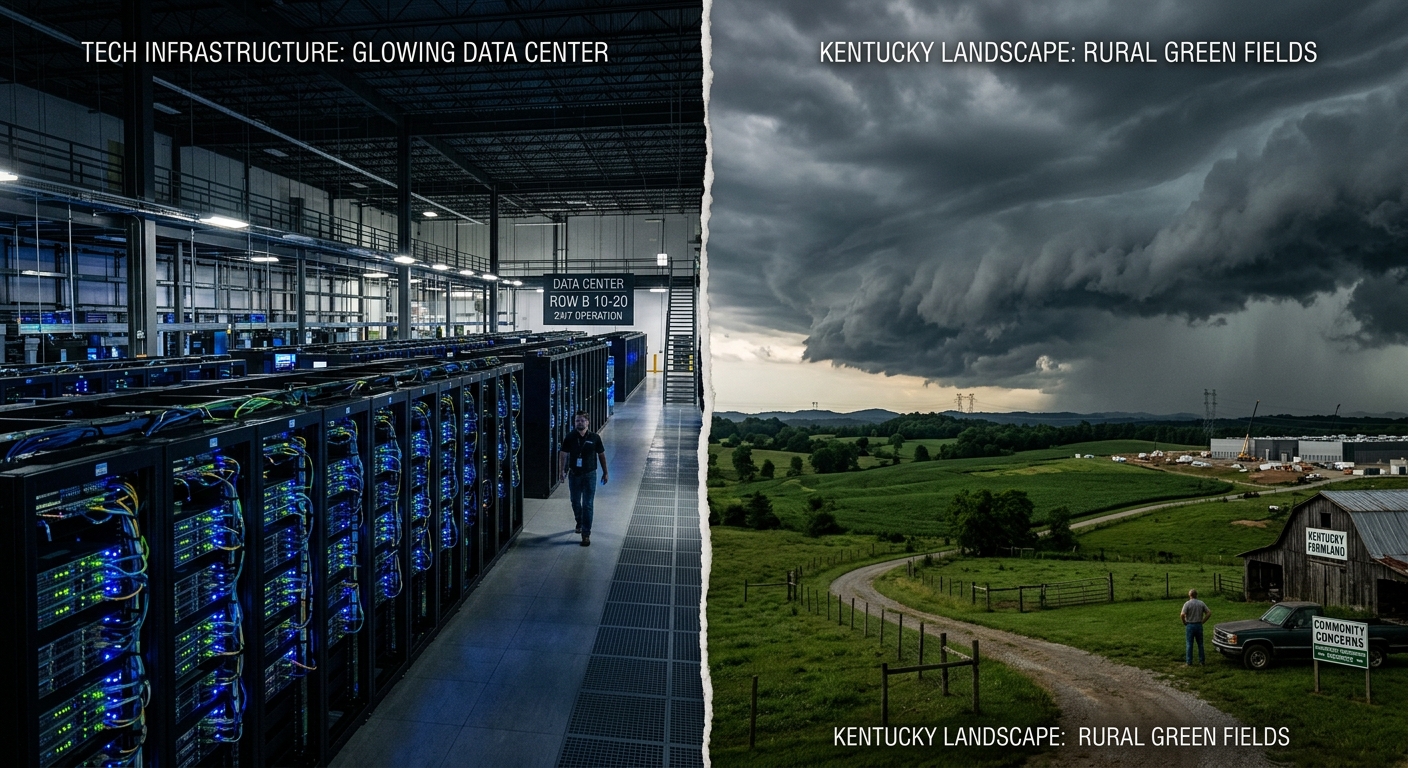
Kentucky communities are moving in very different directions on data center development, and that contrast has become more visible over the past week. Nelson County officials approved a one-year pause on all data center applications after questions surfaced about whether a project might be in early discussion.
In Nelson County, the decision happened quickly. Fiscal Court members cited confusion around what a prospective data center might entail, and a District 1 magistrate voiced a concern that echoed through the meeting. The magistrate's comment that he did not know what kind of animal the project represented reflected the uncertainty many local leaders feel when evaluating large digital infrastructure proposals. Local officials continue to question what this type of facility means for water use and long-term electricity costs.
One day earlier, the city council in London drafted a two-year pause of its own. Several other Kentucky jurisdictions, including Lexington-Fayette, have taken similar steps in recent months to evaluate zoning, grid capacity and long-term resource planning.
Elsewhere, momentum is building. In Hawesville, the operator of a former aluminum plant announced a 20-year agreement with Anthropic to create a major AI infrastructure campus on 750 acres. The plan to stage development across multiple phases suggests a prolonged period of construction and grid interconnection activity. Large buildouts like this often raise questions about utility readiness, prompting neighboring counties to take a closer look at their own power-delivery timelines.
Industry analysts have noted similar trends nationally. Guidance from the NIST Cybersecurity Framework and related resilience publications shows how modern data center planning increasingly blends cybersecurity, cooling continuity and risk management. While these frameworks were not designed for zoning debates, local governments often treat them as reference points when evaluating operational continuity. The engineering side adds another dimension. Power density and interconnection standards described by the IEEE remain limiting factors for many hyperscale projects, especially when transmission capacity is already strained.
Local residents frequently express a desire for regional growth while seeking clarity about what expansion means for their monthly utility bills. Many support infrastructure progress, but argue that operators should cover their own resource impacts. These comments mirror concerns raised in several Kentucky counties, showing that utility and environmental questions resonate across the region.
Not every locality is hitting pause. Some jurisdictions are wagering that data center campuses can stimulate investment and local tax revenue, opening the door for large hyperscale projects, while others want more time to examine the trade-offs.
Studies by McKinsey indicate that hyperscale demand is likely to keep rising as AI workloads grow. The challenge for Kentucky is figuring out how to integrate this growth without overwhelming regional utilities. Power connection delays are already common in parts of the country, and operators frequently report longer waits for utility upgrades. That context influences local officials when deciding whether to approve large new projects.
Kentucky's conversation is unfolding at a moment when electricity demand from data centers is climbing in federal forecasts. Many counties simply want better visibility into how water consumption, transformer upgrades and grid resilience will be managed. The mix of moratoriums and green lights across the state illustrates how communities are balancing near-term investment opportunities with long-term infrastructure responsibilities.
Some counties are leaning into development, hoping to attract major operators like Microsoft, Amazon Web Services or Google Cloud. Others are stepping back until they have more data in hand. Kentucky serves as a case study in how states negotiate the practical resource pressures of the AI era.