 ⬇️
⬇️
Key Takeaways
- Nscale committed to covering cleanup and repair costs after stormwater controls failed at its Monarch Compute Campus construction site.
- The incident highlights rising regulatory and community scrutiny on flood and drainage impacts tied to large data center projects.
- Regulators and industry analysts note that climate-resilient design practices are becoming a competitive requirement for hyperscale development.
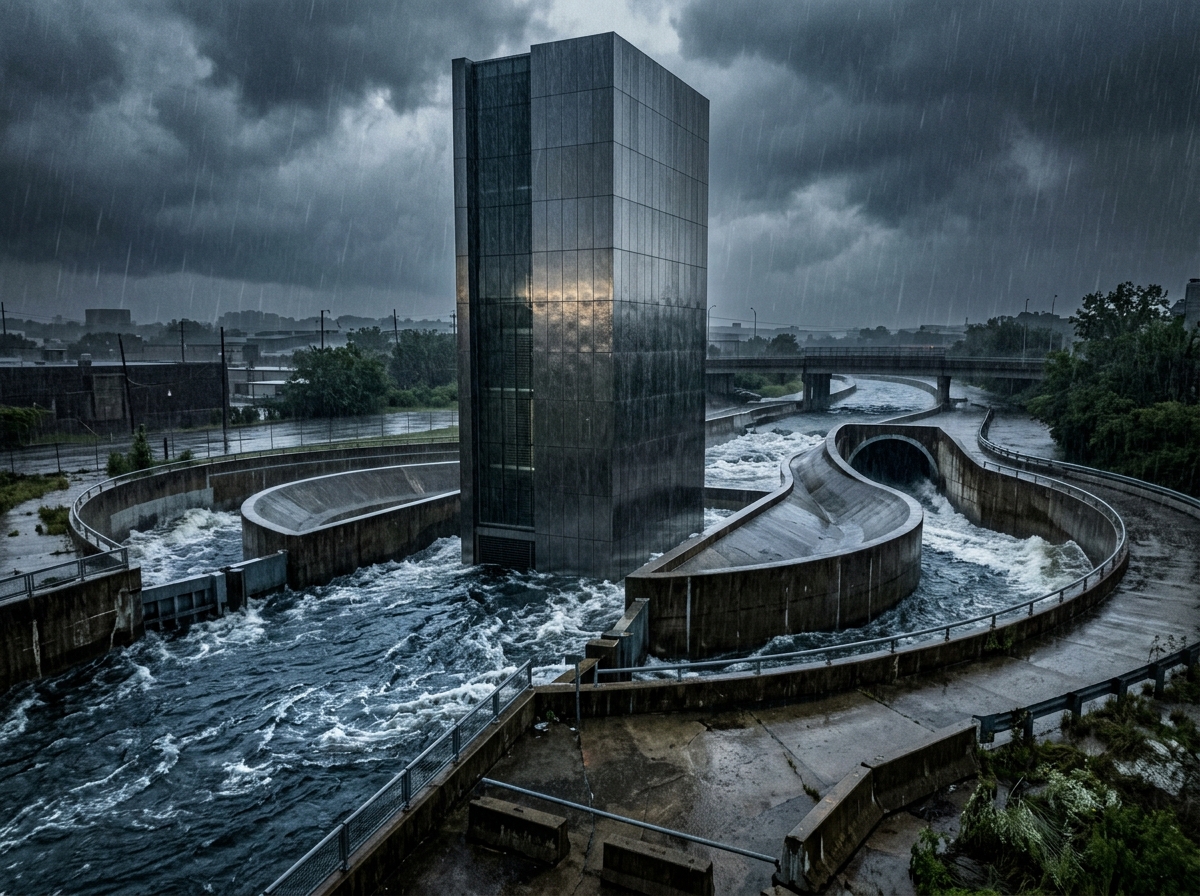
Residents along University Lane in Mason County faced flooding over the weekend after intense rainfall pushed water from the Monarch Compute Campus construction area into nearby homes. The facility, tied to Fidelis New Energy and operated by Nscale, is in its early construction stages. The project demonstrates the operational risks of managing local watershed behavior during hyperscale development.
According to statements provided to WSAZ, a heavy storm dropped roughly a month's worth of rain in 48 hours, overwhelming temporary erosion controls in place during construction. One section of silt fencing failed under the pressure of fast-moving runoff, resulting in water entering the garages and crawlspaces of adjacent homes.
The site manager stated that emergency response teams arrived within an hour of the first call and remained on site to address the runoff. While stormwater controls had passed a recent inspection, the rainfall intensity exceeded the design limits of the temporary system. Crews have since rebuilt the failed fencing, added drainage channels, raised low-lying areas to redirect water, and increased sediment protection. The developers are covering hotel stays, meals, and all cleanup and repair costs for affected residents.
State legislators reported that Nscale acknowledged a breach in the silt retention area that impacted portions of the Meadowlands Estates subdivision. They emphasized that the damage appeared limited to specific home infrastructure and that no injuries occurred. Representatives from the West Virginia Department of Environmental Protection and the Governor's Office engaged the West Virginia National Guard to evaluate the situation, with discussions ongoing regarding both immediate fixes and longer-term mitigation.
Stormwater management challenges around data centers are becoming a recognized industry risk. Large facilities require massive earth movement and introduce wide swaths of impervious surface. The International Energy Agency projects global data center power demand to reach 35 GW by 2030, up from about 17 GW in 2022, and that demand correlates with expanding construction footprints. Hyperscale campuses often span more than 1,000 acres, a scale that can alter local drainage patterns if not engineered with specific watershed resilience. In Mason County, Kentucky, residents have raised similar concerns about flooding linked to proposed hyperscale developments, prompting local governments to strengthen zoning and review processes.
Research from Gartner notes that environmental risk, including watershed stability, is increasingly factored into data center site selection. Deloitte reports that resilience planning shifts from a compliance exercise into an operational necessity when operators scale to regional footprints. McKinsey has similarly identified land use conflicts as a rising area of operational risk for cloud and AI compute operators. Consequently, developers are adjusting construction budgets to account for enhanced watershed protection.
National guidance from FEMA and NIST recommends that critical facilities integrate flood risk mapping and advanced stormwater detention into their site planning. The U.S. EPA's stormwater best practices mandate detention basins, permeable surfaces, and layered erosion control to minimize impacts during large-scale earthwork.
Project crews are preparing for additional rainfall and will maintain an ongoing presence until repairs and permanent protective measures are complete.
Hyperscale data center growth introduces environmental and infrastructure variables that require robust planning prior to breaking ground. As the incident demonstrates, vulnerabilities to extreme weather can manifest during the initial grading phases, necessitating climate-resilient engineering long before facilities become operational.