 ⬇️
Key Takeaways
- Green plans a phased data center campus on a roughly 250,000-square-meter former ABB site in Birr, Aargau
- Waste-heat reuse, closed-loop cooling and potential grid-balancing services are central to the development concept
- The project enters a fast-growing Swiss market facing sharper scrutiny over electricity, water and local infrastructure
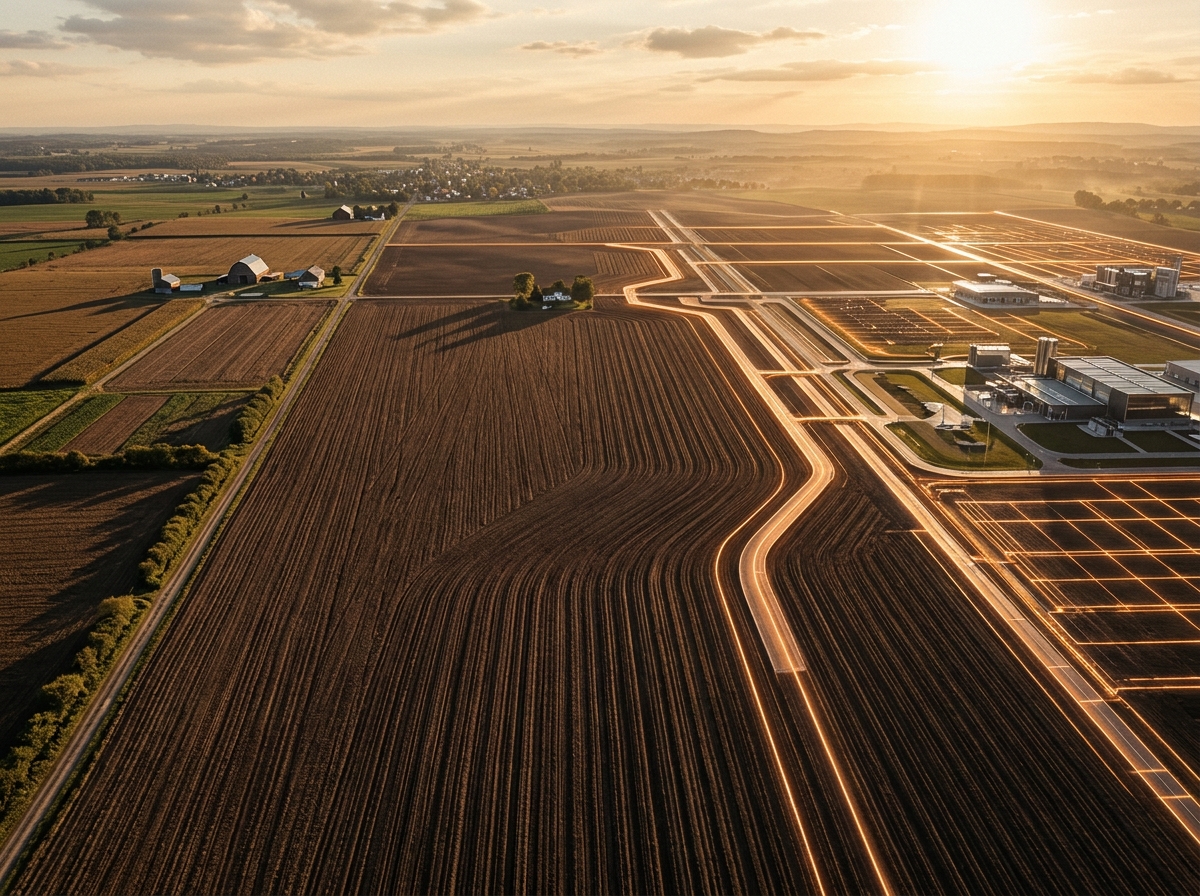
Green has acquired a large industrial site in Birr, in the canton of Aargau, for a new data center campus intended to expand Switzerland’s digital infrastructure. The roughly 250,000-square-meter property was formerly occupied by ABB and offers enough land for development in multiple phases.
That phased approach is important. Rather than committing the entire site to one construction program, Green can potentially align individual buildings and power requirements with customer demand, permitting and infrastructure availability. It also gives the developer room to respond as server density, cooling technology and artificial intelligence workloads evolve.
The industrial history of the location may help, too. Former manufacturing properties can offer useful characteristics for data center projects, including established transport access and proximity to substantial energy infrastructure. Converting such a site also avoids putting the full development footprint on previously undeveloped land. Still, Green has not disclosed the planned IT capacity, total investment or construction schedule for Birr.
Sustainability features are prominent in the concept. Green plans to use a closed-loop cooling system designed to limit water consumption, while waste heat from computing equipment could be supplied for use outside the campus. The developer is also examining whether the facility could provide grid-balancing services, an increasingly relevant capability as electricity systems accommodate variable generation and large new loads.
Efficiency inside the campus is only part of the discussion. Switzerland already has more than 100 commercial data centers, and their share of national electricity consumption has increased from 3.6% in 2019 to approximately 6% to 8% currently (source) (source). JLL forecasts that the share could reach 15% by 2030.
That growth reflects strong commercial demand. Telecom Review Europe projects the Swiss data center market will expand from approximately $960 million in 2025 to $2.47 billion by 2031, representing a compound annual growth rate of 17.09%. Demand from cloud services, AI systems and data-intensive enterprise applications is encouraging developers to secure sites before suitable power and land become harder to obtain.
Competition is already visible. Green’s Metro Campus in Dielsdorf is reported at 35 MW, while STACK Infrastructure’s Beringen project is reported at 36 MW. Vantage Data Centers’ development in Volketswil is considerably larger at approximately 100 MW. Global Technical Realty’s CH One campus in Hausen/Lupfig adds another nearby point of comparison.
Birr therefore places Green in an active development corridor rather than an uncontested market. What will distinguish one campus from another when customers are comparing similar claims about resilience and efficiency? Power availability, delivery timing, connectivity, heat-reuse arrangements and the ability to support higher-density computing are likely to carry more weight than campus size alone.
The wider European policy direction adds another layer. According to the European Commission, data centers in the EU consumed 68 TWh of electricity in 2024, with consumption projected to reach 114 TWh by 2030. Reporting under the EU Energy Efficiency Directive is bringing greater attention to Power Usage Effectiveness, Water Usage Effectiveness, Energy Reuse Factor and Renewable Energy Factor. The Commission is also evaluating an EU-wide rating scheme and minimum performance standards.
Switzerland is outside the EU, but operators serving regional and multinational customers are likely to encounter similar expectations. Energy-management systems aligned with ISO 50001:2018 can help provide a structured basis for measuring consumption and improving operations, while transparent water and heat-reuse data can make sustainability claims easier to assess.
Much remains unspecified at Birr, particularly capacity, delivery dates and prospective heat customers. Those details will determine the project’s commercial and local impact. Even so, Green’s acquisition shows how the Swiss data center market is changing: land remains crucial, but access to power, measurable efficiency and integration with surrounding energy systems increasingly shape whether a large campus can progress.