 ⬇️
Key Takeaways
- Johor has 65 data-centre projects at various approval or development stages, with operational IT capacity reaching 1,110MW in 2026.
- Residents’ concerns include construction noise, transmission infrastructure, electricity and water use, and possible effects on property resale.
- Operators such as TM Nxera, Google and Microsoft face growing pressure to show measurable efficiency and stronger community engagement.
Johor’s fast-growing data-centre sector is meeting a more grounded set of questions in Iskandar Puteri. Residents are reportedly concerned about construction noise, new transmission infrastructure, pressure on electricity and water systems, and whether nearby industrial development could affect property resale values.
The concerns arrive as Johor establishes itself as one of Asia-Pacific’s largest data-centre markets. According to the Knight Frank Data Centre Atlas 2026 and Invest Johor, the state has 65 projects at various approval or development stages. Operational IT capacity reached 1,110MW in 2026, placing Johor third in the region behind Tokyo and Singapore.
That ranking carries commercial weight. Johor benefits from its proximity to Singapore, available industrial land and growing connectivity, making it attractive to hyperscalers, cloud providers and colocation operators. Named developments include TM Nxera’s 64MW Iskandar Puteri campus, Google data centres and Microsoft’s Malaysian cloud infrastructure.
But capacity on paper is only part of the story. Cushman & Wakefield estimates that Johor has 602MW under construction and another 3,088MW in the development pipeline, in addition to its 1,110MW of operational capacity. If even a substantial share of that pipeline proceeds, grid planning and infrastructure delivery will become more visible to surrounding communities.
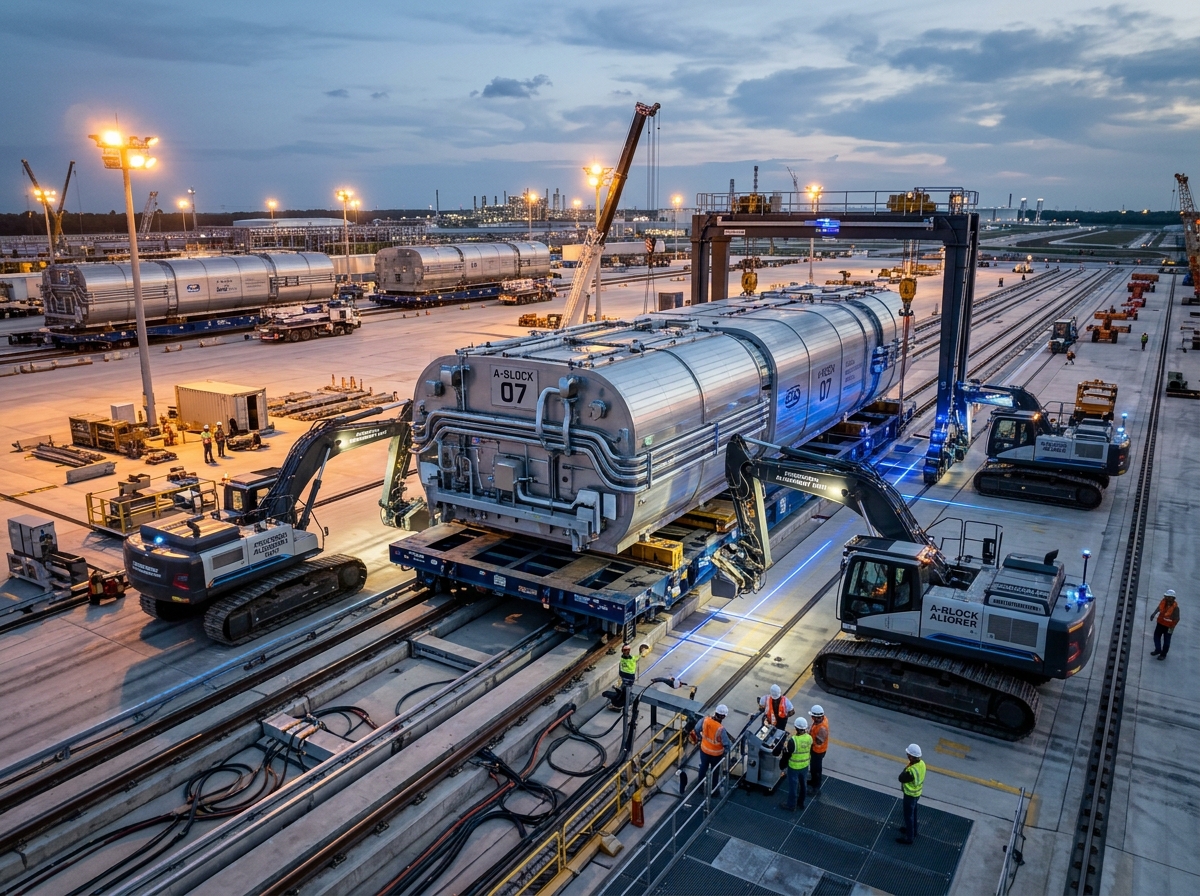
While a data centre may appear quiet once operational, the construction phase causes significant disruption. Heavy vehicle movements, earthworks and round-the-clock construction activity can affect nearby residential areas. Transmission lines, substations and supporting utility works also extend the physical footprint well beyond the server halls themselves.
Power demand is the largest strategic issue. Malaysian data centres consumed 603MW of electricity in June 2025, compared with 1,276MW of declared maximum demand. Meanwhile, Malaysia’s overall data-centre capacity is expected to nearly triple by 2030, growing at roughly 32% annually over the next five years, according to S&P Global Ratings, citing 451 Research.
Can electricity generation and transmission development keep pace without creating bottlenecks for other users? That is increasingly a planning question rather than a theoretical concern. Operators may need to provide clearer information about contracted capacity, backup generation, renewable-energy procurement and the timing of grid upgrades.
Water use is another sensitive point, especially when headline consumption figures appear without context. Johor data centres used 9.07 million litres of water per day, equivalent to 0.6% of the state’s combined domestic and non-domestic consumption. The statewide share remains relatively limited, but local effects can differ depending on facility concentration, cooling design and the capacity of nearby water infrastructure.
Efficiency reporting could help narrow the trust gap. Power Usage Effectiveness, commonly known as PUE, measures how much facility energy is used relative to the energy delivered to computing equipment. It does not capture every environmental impact, but consistent disclosure can make comparisons easier. The ISO 50001:2018 energy-management standard offers another established approach for monitoring consumption and improving operational performance.
Property concerns require more caution. Johor recorded 4,222 unsold completed homes and 9,946 unsold serviced apartments in the first half of 2026, the highest state totals nationally, according to NAPIC. Available data does not establish that data centres caused this oversupply, nor does it show a simple relationship between proximity to a facility and resale value. Housing supply, location, transport access, pricing and broader market conditions all matter.
Still, perception can influence buyer behaviour. Developers and data-centre operators could reduce uncertainty through construction schedules, noise controls, accessible complaint channels and early disclosure of utility works. A technically compliant project may still face resistance if residents learn about its practical effects only after machinery arrives.
For Johor’s digital-infrastructure sector, the business lesson is fairly plain. Securing land, capital and power connections gets a project moving. Maintaining community confidence may determine how smoothly the next wave proceeds.