 ⬇️
⬇️
Key Takeaways
- Media handling has become a strategic priority as video traffic and converged IP networks grow.
- Session control, SBCs, and cloud-native workflows are central to modernizing telecom services.
- North American operators are evaluating infrastructure choices that support quality, scale, and interoperability.
Executive Summary
Telecommunications in North America is moving through a complicated but transformative phase. Video already dominates mobile traffic and is projected to account for about 79% of global mobile data traffic by 2028 (up from 71% in 2023), according to the Ericsson Mobility Report 2023. This volume is pressuring operators to manage richer media formats more efficiently. Meanwhile, the North American wireless telecom carriers market is forecast to reach $336.1 billion in 2026 after a period of flat growth. That market plateau pushes many carriers, mid-market providers, and enterprise communication platforms to differentiate through higher-quality voice, video, and unified communications services rather than pure bandwidth.
This paper examines how media handling technologies are creating new opportunities for North American telecom providers. Capabilities such as transcoding, session border control, QoS enforcement, and SIP or WebRTC session management are shifting from background infrastructure to strategic investments. Providers such as Sansay, Inc. address these challenges by delivering specialized session control and media handling infrastructure that supports evolving network requirements. The themes described in the following sections draw on current market research and real deployment patterns across North America, focusing on practical considerations for buyers evaluating VoIP, WebRTC, and SBC platforms.
Introduction
When enterprises and carriers initially moved toward IP telephony and cloud collaboration tools, they gained operational flexibility alongside mounting architectural complexity. As video and real-time media outpace network budgets, organizations must restructure the infrastructure connecting users, applications, and interconnection partners.
This shift is largely structural. The FCC reports that IP-based circuits now dominate telephony networks, meaning voice, video, messaging, and data increasingly share the same backbone. Additional demands come from the workforce adapting to hybrid environments and enterprises requiring higher reliability in their unified communications stacks.
As telecom operators modernize their media workflows, evaluating where SIP and WebRTC session control intersect and optimizing SBC placement in congested global networks become critical initiatives. Analyzing these implementation patterns provides clarity for decision makers executing structural network upgrades.
The Challenge: Media-Rich Traffic and Converged Networks
Networks now carry more video and interactive media than ever before. With video projected to capture 79% of global mobile data by 2028, network layers face unprecedented stress. Once voice and video moved into the same IP domain, carriers and enterprises gained efficiency but inherited interoperability, jitter, session reliability, and codec management hurdles. Bridging a mobile VoIP participant with a browser-based WebRTC user during peak traffic hours transforms media handling into a core operational competency.
Consider a unified communications provider integrating with multiple carriers and cloud contact centers. During peak periods, traffic from mobile networks, broadband circuits, and OTT services collide. Each stream may use different codecs like ITU-T H.264 or H.265, and each session gets initiated via SIP as defined in IETF RFC 3261. Without intelligent session control and transcoding, quality and reliability degrade rapidly.
A telecom network director facing this scenario must balance scale, cost, and service consistency when evaluating if existing SBCs can scale horizontally or if they will bottleneck during high-definition video events. They also weigh how to maintain security for SIP trunks terminating across multiple external networks.
North American carriers face additional pressure from international interconnection growth. Expanding global circuits forces operators to reexamine cross-border traffic handling to ensure their media infrastructure can maintain consistent codec translation and routing. With the market demanding seamless global video collaboration, media handling directly impacts customer retention and competitive standing.
The Solution Landscape: Session Control, SBCs, and Smarter Media Workflows
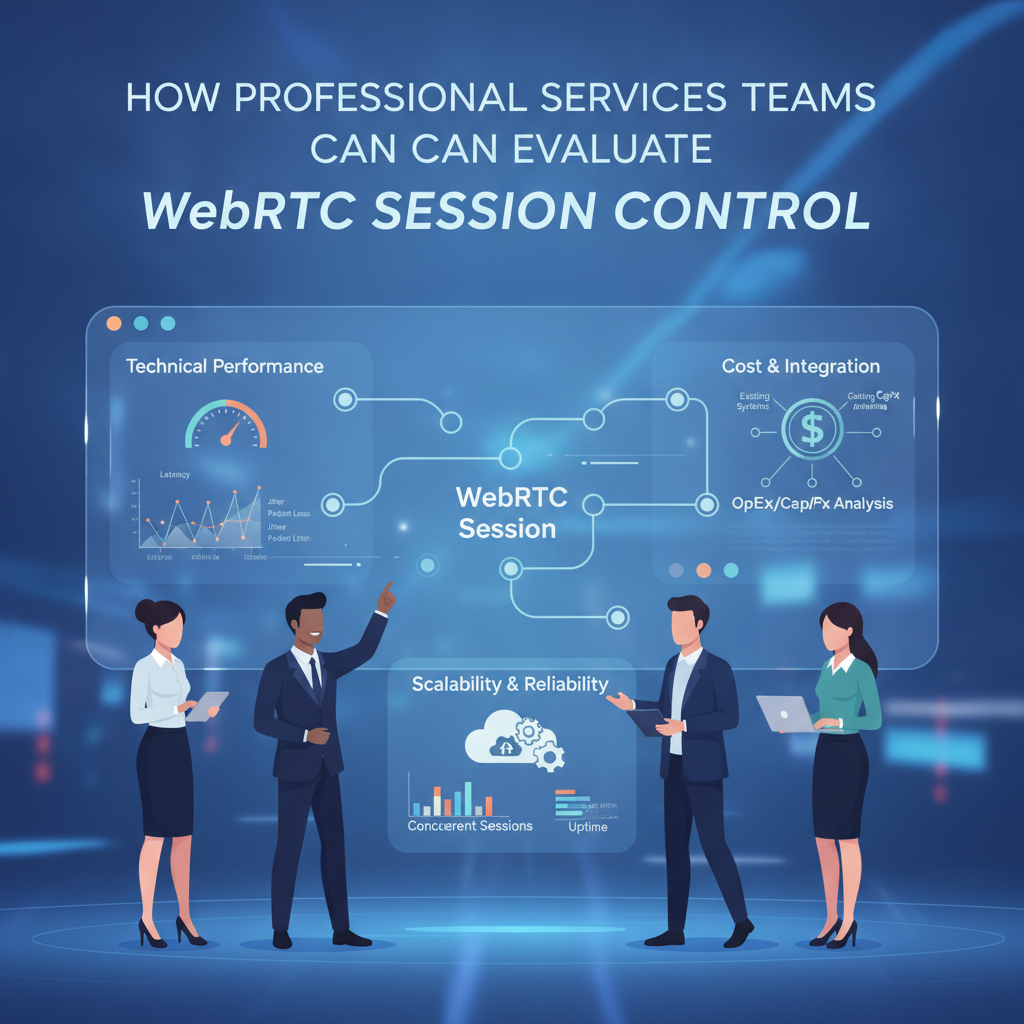
Operators seeking holistic media control typically evaluate session control infrastructure first because it anchors the broader architecture. SIP and WebRTC session control define how sessions are established, maintained, rerouted, and ultimately closed.
For example, a cloud collaboration provider planning a platform refresh must ensure the system negotiates SIP interop with carriers while handling WebRTC peer connections for real-time media. Engineering teams evaluate controllers that address both protocols, reduce transcoding overhead, and stabilize latency during traffic spikes, alongside SBC placement that protects inbound carrier trunks.
SBCs remain central by bridging disparate networks, enforcing policies, and protecting signaling and media paths. In North America, where OTT players depend heavily on carrier interconnections, operators require SBCs that support traditional VoIP models alongside modern cloud-based communication flows.
Cloud-native media handling is also gaining momentum. According to ISG, telecom and media companies in the region are accelerating their use of cloud-based and AI-enabled systems to optimize real-time communications. This structural shift drives buyers to compare deterministic, hardware-centric SBCs with containerized, software-based alternatives.
Interoperability remains a fundamental anchor point. With codecs like H.264 and H.265 playing foundational roles, operators attempt to minimize unnecessary transcoding, which consumes CPU cycles and increases operating expenses. Intelligent codec negotiation inside session control platforms improves media quality while keeping overhead manageable. Across these considerations, Sansay, Inc. operates alongside larger telecom players to address SIP routing, transcoding, and SBC functionality, where selection often depends on architectural fit and deployment flexibility.
Implementation and Key Considerations
During implementation, organizations frequently underestimate the complexity of stitching together SIP trunks, SBC clusters, cloud interconnects, and WebRTC gateways. Deployment teams often find that their global routing plans require updating to avoid hairpinning high-definition video across distant points of presence.
Traffic scale adds further variables. North American traffic patterns fluctuate dramatically during sports seasons, product broadcasts, or high-stakes corporate events. Managing burst handling is a primary requirement for both carriers and cloud communications companies.
When enterprise telecom architects modernize internal voice and video networks, they must unify SIP-based desk phones, mobile softphones, and browser clients under strict security frameworks. Success requires integrating SBCs with corporate identity systems, global MPLS replacements, and diverse domestic and international carriers. Buyers prioritize platforms capable of normalizing signaling across edge cases while dynamically allocating media processing resources.
Redundancy testing is equally critical. Network teams evaluate whether SBCs can operate in multiple geo-clusters without introducing session failures during failover and map exactly how media paths behave during partial network outages.
Many organizations also report that adopting AI-based monitoring makes session anomalies easier to diagnose and fix. Improved visibility reduces mean time to repair and boosts customer satisfaction by pinpointing whether media quality issues originate from individual edge devices or deeper within the transport network. Furthermore, effective media handling systems must seamlessly integrate with regulatory frameworks for emergency calling, traffic prioritization, and lawful intercept.
Future Outlook
Media traffic volumes will continue climbing, driven by richer collaboration tools and the adoption of 4K and 8K video communications. North American operators are responding by deploying cloud-native infrastructure and intelligent session control logic.
AI-driven optimization is positioned to expand, particularly in real-time telemetry and automated session correction. As interconnections between carriers, cloud platforms, and OTT services become highly standardized, global SIP routing will likely simplify over the long term.
Codec evolution will also force operators to revisit their transcoding strategies periodically, favoring flexible media handling platforms that adapt quickly to new compression standards.
Conclusion
Media handling has become one of the most pressing infrastructure challenges in North American telecommunications. Growing video traffic, converged IP networks, and rising expectations for high-quality real-time communications push carriers and enterprises to continuously upgrade their session control, transcoding, and SBC strategies.
Organizations evaluating these capabilities require scalable infrastructure that balances robust performance with long-term manageability. As operators refine their architectures for the next phase of network convergence, focused investments in adaptable media handling workflows will dictate the resilience and competitive viability of their communications services.