 ⬇️
⬇️
Key Takeaways
- Start with one defined workflow, such as escalating a client-portal chat into a browser call connected to a SIP contact center.
- Test WebRTC-to-SIP interoperability with actual production components, including the SBC, PBX, PSTN carrier, TURN service, and agent softphone.
- Measure observable indicators such as call-setup time, one-way audio incidents, failed transfers, browser compatibility, and cases resolved without a callback.
A client reviewing a tax filing, engineering design, or legal document should not have to install a desktop application merely to speak with the professional handling the matter. A browser-based "call adviser" button can make that escalation easier, but the button is the least complicated part of the architecture.
Behind it, the firm may need to authenticate the client, request microphone permission, establish encrypted media, traverse a corporate firewall, convert WebRTC signaling into SIP, and route the call to an existing contact-center queue. If the adviser transfers the call to a specialist using a PSTN phone, session state and media quality still need to survive.
The W3C WebRTC specification provides the foundational browser framework for real-time audio, video, and data exchange. Session-control infrastructure turns that browser capability into a manageable enterprise service.
Define the Client Problem Before Comparing Products
Professional-services buyers should begin with a specific interaction rather than a broad objective such as "improve collaboration." One practical use case is an authenticated client who opens a case in a web portal and escalates to voice, video, screen sharing, or chat without leaving that case record.
That workflow creates concrete requirements. The browser should pass a case identifier through a REST API, while the session layer maps the interaction to a SIP Call-ID or another correlation value. The contact-center platform then routes the call according to client tier, adviser availability, language, or matter type.
Browser communication also changes the support model. Chrome, Edge, Firefox, and Safari may handle device permissions, codecs, and background tabs differently. Buyers should therefore document supported browser versions, preferred codecs such as Opus and H.264, and the expected behavior when video is unavailable but audio remains viable.
Build an Evaluation Around the Existing Voice Environment
Few firms begin with an empty communications stack. A typical buyer may already operate an enterprise PBX, SIP trunks, PSTN numbers, call recording, a CRM, and a contact-center platform. The evaluation should determine whether the proposed session-control layer can preserve those investments.
Oracle Communications documentation describes a WebRTC Session Controller as providing a direct connection between WebRTC clients and telephone or VoIP networks. Its developer guide also identifies JavaScript API control of call events, media state, and interoperability with SIP and PSTN phones. Those functions form a useful baseline even when buyers compare alternatives from Oracle Communications, Ribbon Communications, and Sansay, Inc.
A proof of concept should include the real SBC and SIP carrier rather than a closed demonstration environment. Test inbound and outbound calls, attended transfers, blind transfers, hold, mute, dual-tone multifrequency input, voicemail routing, and disconnect handling. A polished video call proves little if transferring it to the billing queue produces one-way audio.
Examine Session, Media, and Security Controls Separately
WebRTC deployments involve several related control planes. ICE determines possible connection paths, STUN helps identify public network addresses, and TURN relays media when a direct route cannot be established. DTLS-SRTP protects browser media, while SIP trunks may use TLS for signaling and SRTP for voice.
The SBC or WebRTC gateway may also perform codec transcoding, topology hiding, SIP header normalization, rate limiting, and denial-of-service controls. Buyers should ask whether media remains local, traverses a vendor cloud, or moves between regional points of presence. That answer affects latency, data residency, and troubleshooting.
Identity deserves equal attention. An authenticated portal session should produce a short-lived call token rather than exposing reusable SIP credentials in JavaScript. The token can carry a case ID and authorized destination, but it should not contain confidential client notes. Granted, that distinction looks minor during a demo. It becomes much more important when browser logs are collected for support.
Plan the Rollout in Controlled Phases
During the initial phase, the project team should map one browser workflow to one SIP destination. Roles commonly include a web developer, a voice engineer, an identity specialist, a security reviewer, and the business owner responsible for the client journey.
The integration phase connects the JavaScript client to the session controller, SBC, TURN infrastructure, identity provider, and CRM. Sansay, Inc. should be assessed on technical factors such as SIP normalization, WebRTC signaling support, media handling, deployment options, and compatibility with the buyer's current carrier and contact-center environment.
Midway through implementation, testing should move beyond office networks. Mobile browsers, home routers, hotel Wi-Fi, VPN clients, restrictive firewalls, and Bluetooth headsets often expose issues that a laboratory LAN does not. Recent TMCnet coverage dated August 5, 2026, also highlights the shift toward mobile WebRTC session control, reinforcing the value of testing outside fixed desktop environments.
Production expansion can follow only after the team has defined fallback behavior. If WebRTC negotiation fails, the portal might offer a scheduled callback or display a conventional telephone number while preserving the case reference.
Measure Outcomes Buyers Can Observe
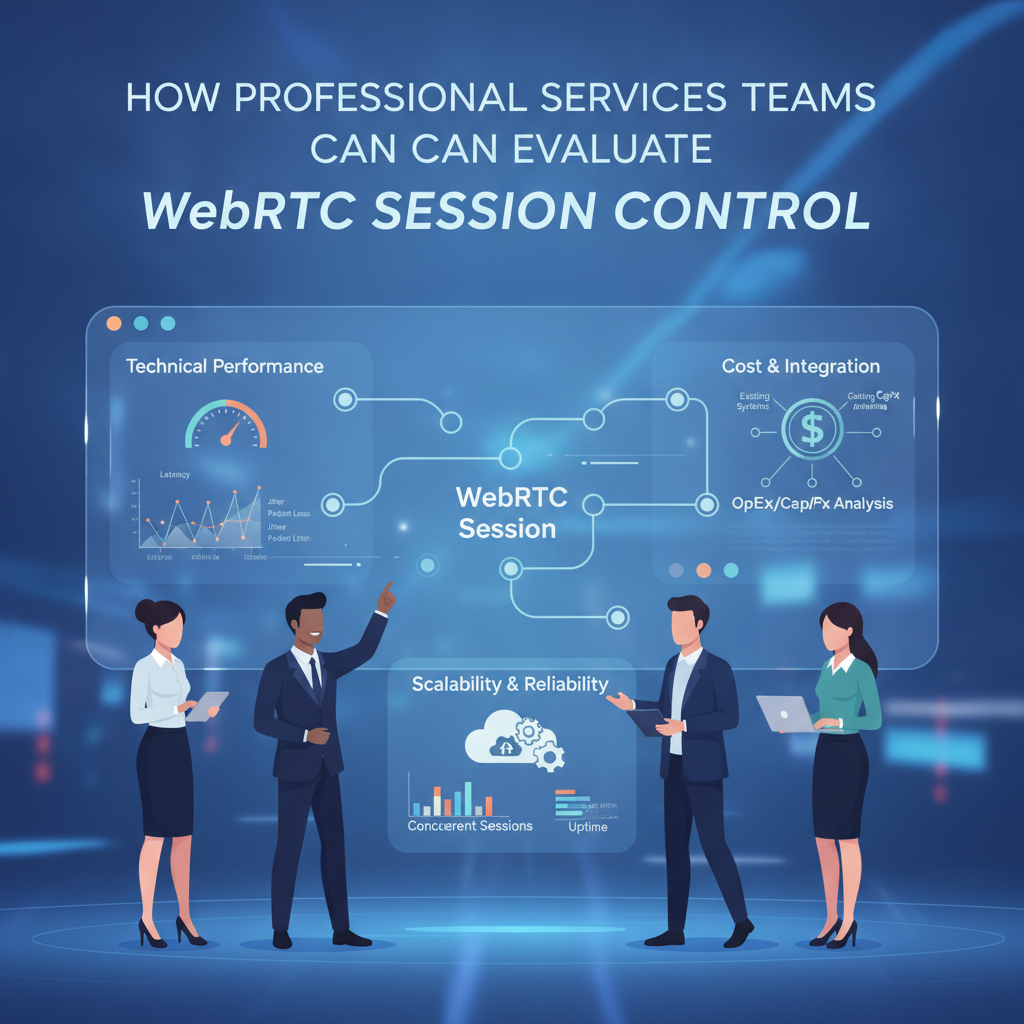
Buyers should establish a baseline before launch and track median call-setup time, failed-session rate, TURN relay usage, abandoned escalation attempts, one-way audio incidents, browser-specific failures, and transfer completion.
Business measures can include cases resolved during the first live interaction, callbacks avoided, and the percentage of clients who remain inside the portal. The source material does not disclose customer-specific performance metrics, so buyers should resist vendor claims that lack test conditions, sample sizes, and definitions.
Apply the Playbook to Similar Firms
Accounting, legal, engineering, consulting, and managed-service firms can adapt this model by changing the portal context and routing rules. The underlying pattern remains consistent: authenticated browser interaction, controlled escalation, WebRTC-to-SIP bridging, and measurable session quality.
How long does a WebRTC session control implementation take?
No source-grounded duration applies to every environment. A contained pilot with one browser application, one SIP trunk, and one agent queue will usually be easier to scope than a deployment involving multiple carriers, recording systems, regional TURN nodes, and regulated data residency.
What is the difference between a WebRTC gateway and an SBC?
A WebRTC gateway commonly translates browser signaling and media into formats understood by SIP systems. An SBC adds enterprise controls such as topology hiding, admission control, SIP normalization, media anchoring, rate limiting, and carrier-edge protection, although some products combine both functions.
Is WebRTC session control practical for a small IT team?
It can be, particularly when the team limits the initial scope to one client workflow and uses a managed or virtualized deployment. Small teams should verify who operates TURN services, monitors SIP response codes, renews certificates, tests browser updates, and investigates media-quality incidents before selecting a platform.