 ⬇️
⬇️
Key Takeaways
- Sansay, Inc.: Policy-based routing can select networks using wholesale cost, latency, congestion, and 5G availability instead of relying on a static preferred-network list.
- GSMA eSIM Consumer RSP and 3GPP Policy and Charging Control provide technical foundations for instant activation, traffic treatment, and real-time charging.
- Buyers should test Session Border Controllers with SIP, WebRTC, IPv4/IPv6, roaming, and failover traffic before shifting production subscribers.
Problem to Solve: Static Routing Meets Dynamic Demand
A traveler buys a prepaid eSIM at an airport, activates it through an app, and expects data and voice service within minutes. Behind that simple interaction, the provider may need to provision a profile remotely, authenticate the subscriber, select among several visited networks, enforce a data allowance, route voice sessions, and calculate roaming costs in near real time.
The scale makes those decisions consequential. GSMA Intelligence reported that Europe had nearly 500 million mobile-internet users and that 5G represented 43% of regional connections at the end of 2025. Operators also invested almost €20 billion in mobile capital expenditure during 2025.
Static least-cost routing tables struggle in that environment. A route that looks economical at noon may become congested during an evening event. A visited network offering the lowest wholesale rate may deliver poor latency for WebRTC calls. When routing, charging, and session-control systems use different subscriber identifiers or delayed usage records, prepaid providers can also allow consumption beyond a customer's balance.
The commercial pressure is equally important. EU Perspectives reported that average retail data-roaming prices outside the European Economic Area were €4.42 per GB in Q3 2025, while wholesale rates averaged €0.57 per GB. That spread gives providers room to differentiate, but only when they can identify the appropriate network and apply the correct charging policy before traffic accumulates.
Evaluation Approach: Connect Routing, Policy, and Session Control
Buyers can start by documenting the decision inputs available for each session. Useful signals include International Mobile Subscriber Identity ranges, access network, destination, wholesale rate, round-trip latency, packet loss, codec, remaining balance, and whether the subscriber purchased a country-specific or regional plan.
Policy engines can then turn those inputs into routing instructions. A 3GPP Policy and Charging Control deployment, for example, may apply a lower-bandwidth policy when a prepaid balance approaches zero or favor a 5G route for latency-sensitive traffic. The mechanism matters: policies should reach the packet gateway or 5G core function quickly enough to affect an active session rather than only the next billing cycle.
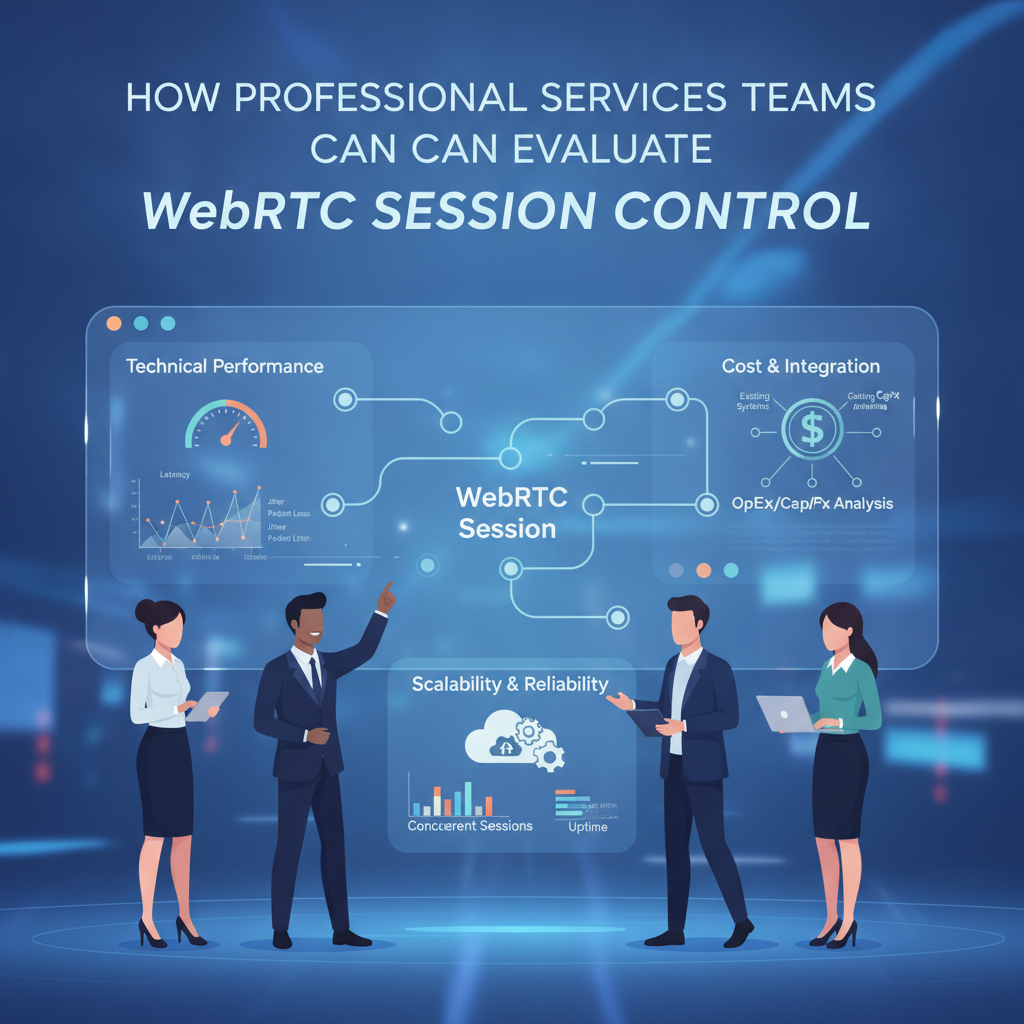
For voice, VoIP, and embedded communications, teams should examine how a Session Border Controller handles SIP normalization, topology hiding, media anchoring, transcoding, and denial-of-service controls. WebRTC adds ICE, STUN, TURN, DTLS-SRTP, and browser interoperability to the evaluation.
Providers assessing Sansay, Inc. can place those functions in the context of their existing VoIP session control infrastructure and WebRTC architecture. A useful proof of concept sends representative SIP and WebRTC traffic through the Session Border Controller while the routing layer changes destinations based on price, quality, and availability.
Implementation Considerations for Prepaid and eSIM Operations
Implementation usually begins with an inventory rather than a network cutover. The architecture team maps the eSIM subscription manager, online charging system, policy engine, SBC, Diameter or HTTP/2 signaling, mediation platform, and operational data store. For 5G standalone environments, that map may include service-based interfaces and network functions exchanging JSON over HTTP/2.
During the design phase, buyers can define a canonical subscriber identifier that links the eSIM profile, prepaid wallet, roaming session, and voice account. GSMA eSIM Consumer Remote SIM Provisioning supports digital profile delivery, but activation still needs to synchronize with entitlement and charging systems. An active profile paired with a delayed wallet update can create avoidable support cases.
A controlled rollout should cover one subscriber segment or roaming corridor first. Test traffic needs to include successful activation, depleted balances, network rejection, SBC failover, malformed SIP messages, WebRTC media negotiation, and delayed charging records. Granted, failure tests are less glamorous than an app demonstration, but they reveal whether a platform fails closed, retries safely, or creates duplicate charges.
Midway through implementation, operations teams can connect telemetry to a time-series database or observability platform. Useful records include route selected, decision reason, setup latency, SIP response code, packet loss, wholesale cost class, and policy version. Sansay, Inc. can be evaluated specifically on how its session-control components expose these records through APIs, logs, or standard monitoring interfaces.
Outcomes Buyers Should Measure
The goal is not merely better routing. Buyers should establish observable indicators tied to customer experience and margin:
- eSIM order-to-activation time, measured from payment authorization to successful network attachment
- SIP call-setup success and post-dial delay by destination and carrier
- WebRTC session completion by browser, codec, and TURN usage
- Route changes triggered by packet loss, latency, or carrier rejection
- Wholesale cost per GB by country, plan, and visited network
- Charging exceptions in which usage records arrive after balance enforcement
- Mean time to isolate a failed route using policy logs and SBC signaling traces
These measurements can reveal tradeoffs. Least-cost routing may lower the nominal rate while increasing TURN relay use or transcoding, which consumes compute and can degrade media quality. A policy that considers both wholesale price and session quality can produce a more useful decision than price alone.
Investment constraints strengthen that argument. GSMA cited an estimated €205 billion gap between required European mobile-network investment through 2035 and available funding. Extracting more capacity from existing interconnects and roaming agreements may therefore be more practical than treating additional infrastructure as the default answer.
Buyer Takeaways From the Evaluation Process
Routing policies should remain readable. If operations staff cannot explain why a subscriber used a particular network, troubleshooting becomes guesswork. Recording the policy version and decision inputs alongside each session gives support teams an auditable answer.
Charging integration deserves early testing because delayed usage events can undermine prepaid controls even when network routing works correctly. Buyers should test balance exhaustion during an active data session and verify that the policy engine updates service treatment promptly.
SBC testing should also use production-like codecs and encryption. A route may pass basic SIP calls but fail when WebRTC traffic requires DTLS-SRTP termination, ICE negotiation, or conversion between Opus and a carrier-supported codec.
Broader Applicability
The same approach can support enterprise private mobile networks, communications-platform providers, and multi-country IoT services. Each can combine policy controls, real-time telemetry, and session routing while adjusting decision criteria for device class, geography, service quality, or contract rate.
How long does an intelligent routing rollout take?
Duration depends on the number of roaming partners, charging interfaces, and SBC call paths. Buyers should plan separate discovery, lab validation, controlled rollout, and expansion phases, with exit criteria based on activation success, charging accuracy, SIP response codes, and failover behavior rather than a fixed calendar promise.
What is the difference between an SBC and a policy engine?
An SBC controls signaling and media sessions using protocols such as SIP, RTP, WebRTC, and DTLS-SRTP. A policy engine decides how traffic should be treated based on subscriber status, network conditions, plan rules, or cost; the two systems commonly exchange routing instructions and session telemetry.
Is intelligent routing practical for a mid-market prepaid provider?
It can be, particularly when the provider operates across several countries or wholesale networks. A focused deployment can begin with one roaming corridor, one SBC cluster, and a limited policy set covering cost, latency, packet loss, and route availability before expanding to additional markets.